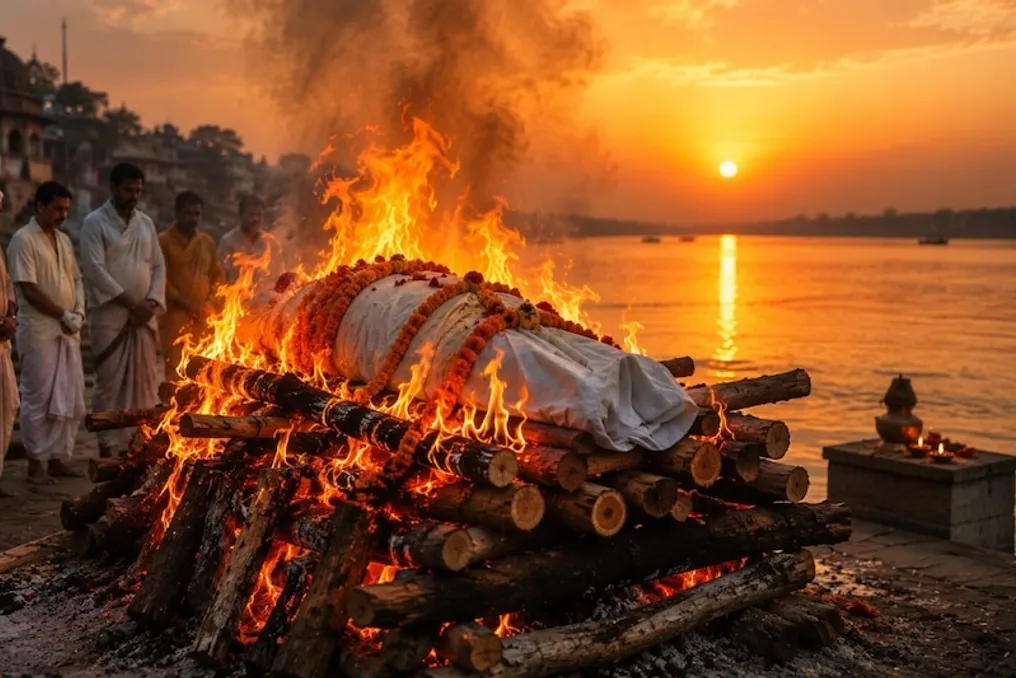
In Hinduism, there is a tradition of cremating the body after a person's death. However, in the case of small children and newborns, the burial process is viewed differently. According to many traditions, instead of burning their bodies, they should be buried in the ground.
Questions arise about the reasons for this approach: what happens to the soul of a newborn after death? Should a child who dies at such a young age face the difficulties of Yamaloka? And what should parents do to bring peace to the soul of the deceased child? These questions are illuminated in the Garuda Purana.
Garuda Purana:
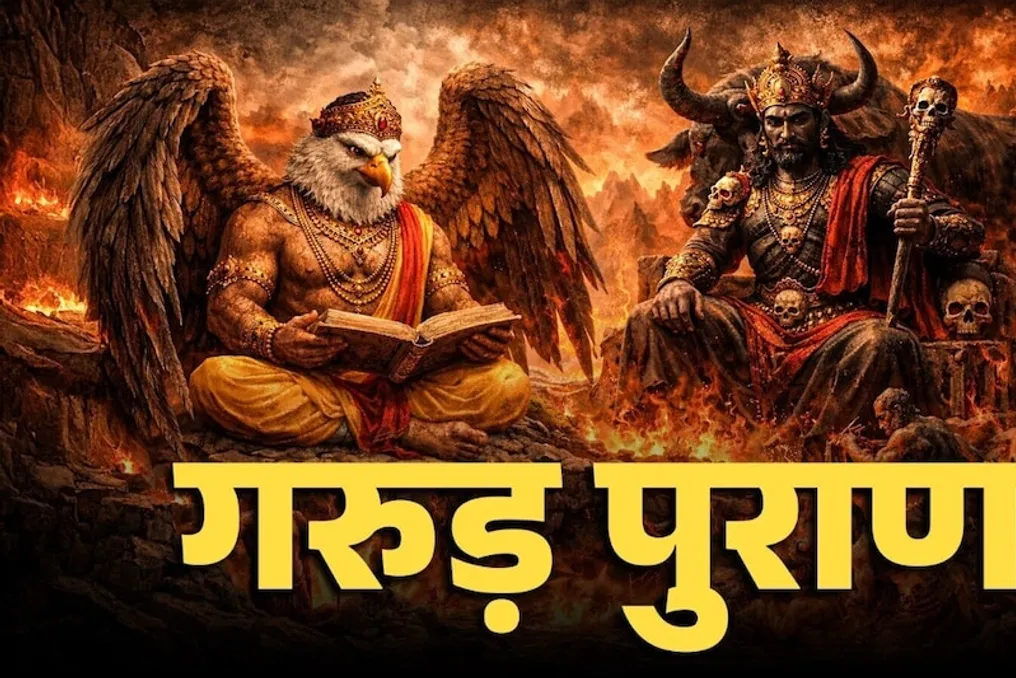
The Garuda Purana describes numerous rules related to death and last rites through a dialogue between Lord Vishnu and the bird Garuda. According to religious beliefs, if a woman experiences a miscarriage or a child dies before two years of age, their body should be buried. However, if the child dies after reaching two years of age, the tradition of cremation is maintained.
Why are the burial rules different for children?
According to the beliefs of the Garuda Purana, in early years of life, a child exists outside the understanding of worldly attachments and karma. As a person grows older, their attachment to the body, family, and the world increases. It is on this basis that the religious notion has developed that the soul of a small child does not experience the same strong attachment to the body as an adult, which is why the tradition of burial is adopted for them instead of cremation.
Do children have to suffer in Yamaloka?
According to religious beliefs, after death, the soul travels through various worlds depending on the deeds performed by it. However, special rules are established for children who die at a very early age. According to the beliefs of the Garuda Purana, if a child dies before two years of age, their soul directly reaches heaven. In such cases, there is no mention of punishment for sins based on their age.
What needs to be done for the peace of the soul of a deceased child?
The Garuda Purana emphasizes the importance of charity and good deeds for achieving peace for the soul of a deceased child. According to religious beliefs, after the child's death, their parents should offer milk donations according to the child's age. There is a belief that offering milk in an amount equal to the infant's months of life brings peace to their soul. Nevertheless, adherence to these rules varies across different traditions and regions.
Why are Shraddha rituals not performed for small children?
In Hindu religious traditions, there are separate rules regarding Shraddha rituals for small children. According to belief, Shraddha and associated special rituals are intended for those who have completed their rites, such as Mundan or Upanayana. For this reason, it is not considered traditional to perform Shraddha rituals for children who died at a very early age, similar to those performed for adults.
Different rules for children of different ages
According to the beliefs associated with the tenth chapter of the Garuda Purana, methods of burial and offerings are mentioned depending on the stage of the child's development. In the case of the fetus being destroyed still in the mother's womb, no special ritual is described. However, if the child dies before losing teeth, it is recommended to offer milk. At the time of infancy death, there is a tradition of offering pots of water and feeding sweet rice porridge. Upon death in childhood, feeding children of the same age and Brahmins is practiced. If the child dies at the age of five or older, the practice of offering pindas made from kheer (rice porridge) and ghee is mentioned.
Belief in the opening of gates to heaven for children
Religious narratives place great importance on the innocence and purity of children. According to one folk legend, after the death of a boy, Lord Vishnu opened the gates to heaven for him by his command. However, the boy did not wish to leave his parents to go to heaven. Then, seeing his feelings, Lord Vishnu forgave the sins of his parents and granted them a place in heaven. This story is passed down as a religious folk belief and reflects God's mercy towards children and their innocence.
What is necessary for the peace of the soul after death?
In Hinduism, death is seen not as the end of life, but as a stage in the soul's journey. The Garuda Purana also describes in detail many topics related to death, karma, the soul, and the afterlife. The rules for conducting funerals and religious ceremonies in the case of the death of small children differ from the rules for adults. Nevertheless, since these traditions are observed differently in various regions, denominations, and families, primary attention should be paid to family traditions and the advice of a relevant spiritual guide in a specific situation.