Vaibha Suryavanshi Retaliates Against Tilak Varma on Field After Duel Cup Incident
Read more
Aaj Tak
www.aajtak.in

Vaibha Suryavanshi Retaliates Against Tilak Varma on Field After Duel Cup Incident

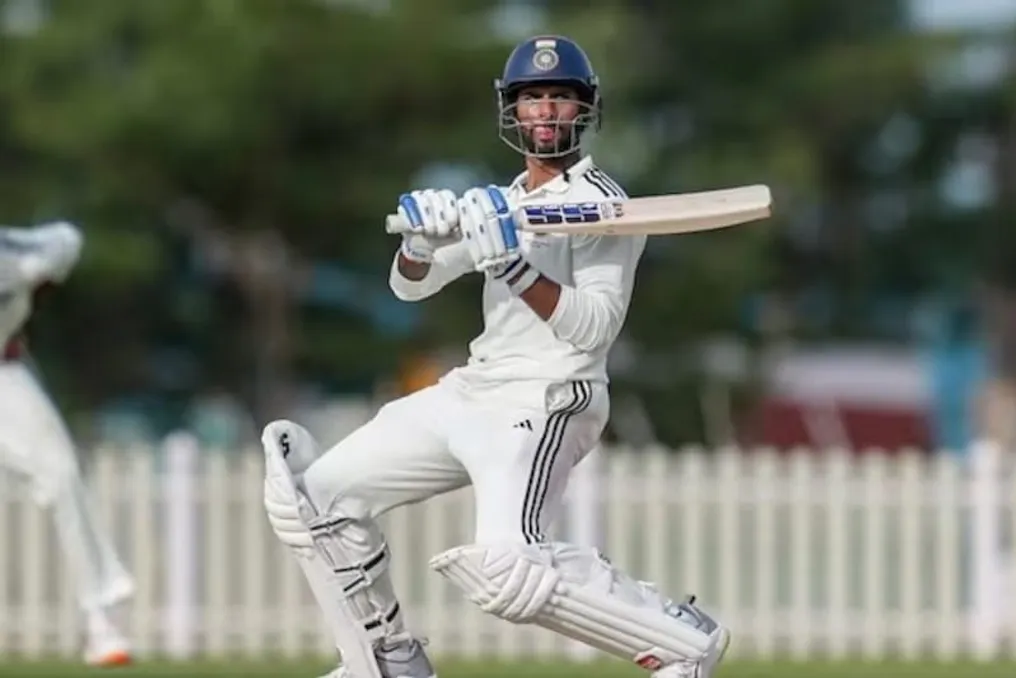
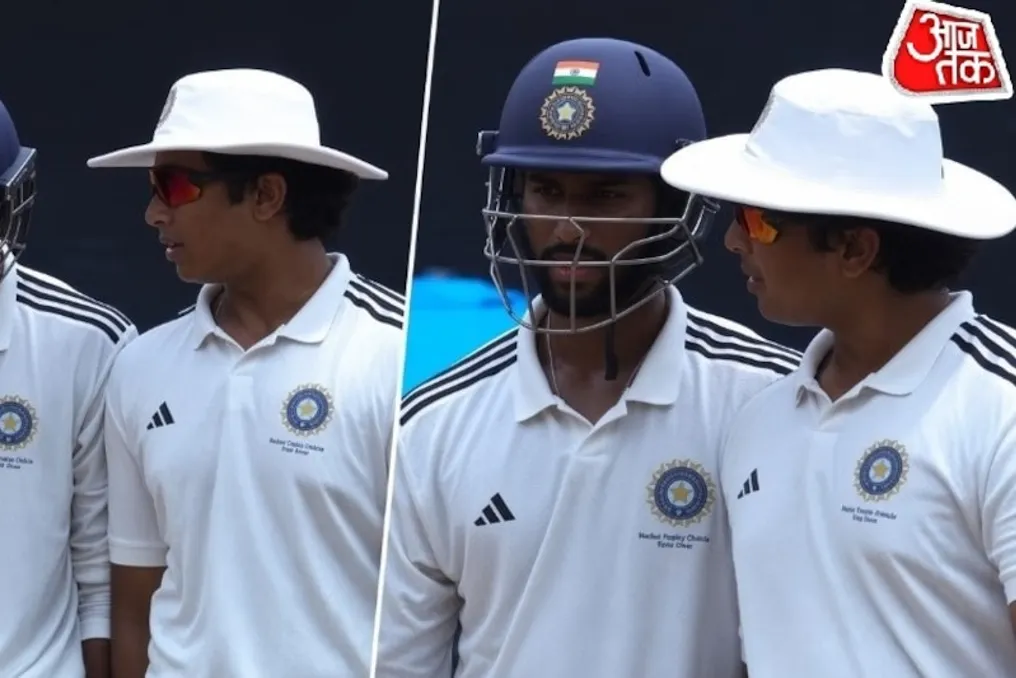
The confrontation between the East Zone and the South Zone continues in the Duel Cup final. On the fourth day of the match, a moment occurred that reminded observers of events from four days prior. Vaibha Suryavanshi, the vice-captain of the East Zone, responded to the South Zone captain, Tilak Varma, in his own manner.

The situation unfolded during the morning session on the fourth day. The South Zone team was attempting to catch up to the substantial score of 708 points amassed by the East Zone. The team's condition deteriorated, and eight batters were soon dismissed. At this point, Tilak Varma was trying to hold the game at one end.

It was then that Vaibha approached a batter. A brief conversation took place between them. Vaibha said something to Tilak, and then calmly walked away. This moment was significant for those present as it related to events from the first day of the final.

At the beginning of the final, players from the East Zone exerted strong pressure on the South Zone bowlers. The opening batters of the East Zone quickly accumulated runs in the first 10 overs, changing the atmosphere of the match.

During that time, Tilak Varma approached Vaibha Suryavanshi. An exchange of a few phrases occurred between them. At the time, it seemed that the South Zone captain was trying to exert pressure on the young Vaibha.

However, four days later, the situation had reversed. The match had completely shifted in favor of the East Zone, and Tilak himself was trying to pull his team out of a crisis. At such a moment, Vaibha also recalled the episode from the first day.

When the opportunity arose, he approached the South Zone captain and said something. Thus, Vaibha responded in his own way to what Tilak had done four days earlier.

The East Zone team, led by Ishan Kishan, scored a massive 708 runs in the first innings. This result presented a serious challenge for the South Zone in the final, which is being held at the MA Chidambaram Stadium in Chennai.

The bowling attack of the East Zone, including Mohammed Shammi and Mukesh Kumar, created difficulties for the South Zone batters, who could not easily counter the play. Despite the pitch being favorable for baseball, the South Zone wickets continued to fall.

The South Zone lost eight wickets before reaching the 330-run mark, remaining far behind the East Zone's first-half score. The South Zone concluded its first innings by scoring 336 runs, with Tilak Varma managing to score 99 runs.

In the South Zone's innings, Tilak Varma was one of the few players trying to sustain the game, holding on at one end of the field. The captain's task was not only to score runs but also to advance the game amidst constantly falling wickets.

Nevertheless, the pressure from the East Zone was mounting. The bowling of Shammi and Mukesh did not allow the South Zone batters to play freely. It was during this difficult period that Vaibha approached Tilak, and an exchange of words took place between them. Vaibha expressed his viewpoint and returned to his spot without further reaction. This small moment sparked discussion because the other side of this story had been visible four days ago.

Similar stories

Tilak Varma failed to complete a century in the Duleep Trophy 2026 final against the Eastern Region team
Read more
www.aajtak.in

Tilak Varma failed to complete a century in the Duleep Trophy 2026 final against the Eastern Region team

In the Duleep Trophy 2026 final, Tilak Varma of the Southern Region played an impressive innings but could not reach a hundred on the fourth day of the match, which took place on Wednesday, September 9th. Despite not reaching the hundred, his play demonstrated great perseverance.

Tilak Varma scored 99 runs, playing 211 balls. After he was dismissed, the Southern Region team was brought to a score of 336 runs. It is worth noting that the Eastern Region team had previously scored 708/10 runs.

Before failing to complete the century, his innings was characterized by patience, dedication, and determination. However, he could not handle the pressure while trying to complete the hundred and was dismissed after a shot by Konaan Quraishi.

This shot was Quraishi's second wicket in the match. In his innings, Tilak hit 9 fours, and his average strike rate was 46.92. It is particularly noteworthy that Tilak Varma, who also captained the Southern Region team in this Duleep Trophy final, attracted attention due to disagreements with Vaibhav Suryavanshi.

Besides Tilak Varma, Devadad Padikal also played for the Southern Region with 62 runs, and Chama Milind scored 43 runs. Regarding bowling, Mukesh Kumar from the Eastern Region proved to be the most successful bowler, taking 3 wickets for 62 runs in 19 overs. Mohammed Shami earned 2 successes, conceding 42 runs in 16 overs. Shikhar Mohan and Konaan Quraishi also received two successes each.

After 35 Years, Tension Flares Up Again at the Tulip Cup Final: A Comparison of Incidents from 1991 and 2026
Read more
www.aajtak.in

After 35 Years, Tension Flares Up Again at the Tulip Cup Final: A Comparison of Incidents from 1991 and 2026

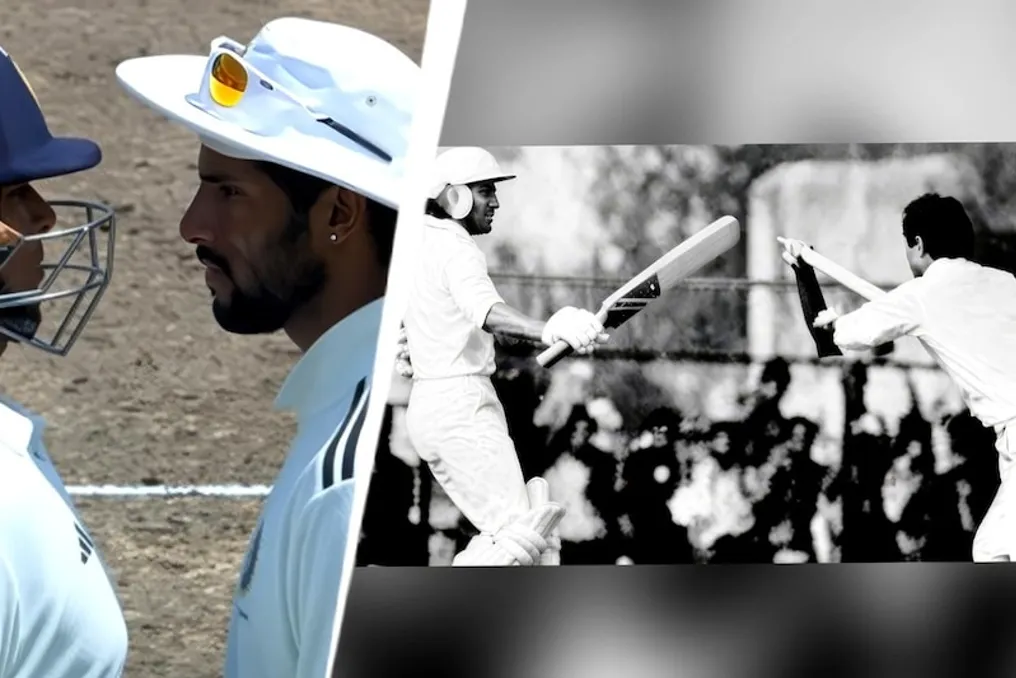
In the world of cricket, some matches remain unforgettable not because of the sporting moments, but due to sudden bursts of emotion that sweep over the field. The Tulip Cup demonstrated such a scene 35 years ago in Jamshedpur. In the 1991 final, anger reached a point where the stumps became the target. Now, in the 2026 final in Chennai, a similar moment occurred again: the tense atmosphere between 15-year-old Vaibhav Suryavanshi and South Region captain Tilak Verma attracted the attention of all spectators.

There is a gap of 35 years between these two events. On one hand, it was the most scandalous incident in the history of Indian domestic cricket; on the other, it was a brief moment of passion between two young and prominent players of the new generation. However, both cases share one question: how high can the temperature rise on the field when the Tulip Cup match ceases to be just a battle of bat and ball?

When the East Region started its innings in Chepauk, all eyes were fixed on Vaibhav Suryavanshi. He is only 15 years old, yet he played as if he had been performing on a big arena for many years. His opponent was Mohammed Siraj, a recognized fast bowler in Indian cricket. But Vaibhav paid no attention to his age; he focused on the ball. He aggressively attacked Siraj, hitting a four, a six, and another four in just one over at the start of the final, showing that he came not just to gain experience.

Later, another interesting scene unfolded on the field. South Region captain Tilak Verma approached Vaibhav. They were having a conversation. Cameras captured this moment, and it quickly became one of the most discussed events of the final. Some reports described it as a heated exchange of remarks, while others interpreted it as light teasing or a casual chat.

However, the real intrigue of this scene lay not so much in the words as in the difference in age and status of the participants. On one side—15-year-old Vaibhav, and on the other—Tilak Verma, who had already made a name for himself in Indian cricket. This picture reminded one of another story from the Tulip Cup, which happened 35 years ago.

The last day of the five-day final, held at the Keenan Stadium in Jamshedpur between the North and West Regions, turned into a dark day in the history of Indian domestic cricket. The West Region team, represented by Rashid Patel, went ahead to attack the stumps of the North Region batsman, Raman Lamba. Lamba himself tried to defend. Everyone present at the stadium was stunned by what was happening.

It was the fifth and final day of the match. The North Region's victory was predetermined based on the first innings. The North Region team, led by Kapil Dev, scored an impressive 729/9 runs and declared their innings. In response, the West Region team, led by Ravi Shastri, was bowled out for 561 runs. Thus, four days passed for these large scores. On the last day, the North Region began its second innings with remaining time. But what happened in the tenth over was not good.

The start of the North Region's second innings was made by Ajay Jadeja and Raman Lamba, who scored 180 runs in the first innings. Both played very well. The score reached 59/0 after 9.5 overs. Rashid Patel bowled around the wicket in anger, directing them into a dangerous zone for Lamba. At this moment, Lamba showed the handle of his bat, expressing his dissatisfaction.

Then Rashid lost control and threw the ball at Lamba almost halfway down the field. Lamba's head barely avoided being hit. Rashid did not stop. He turned, snatched the stumps, and ran after Lamba, trying to strike him while he ran towards the boundary line. At this time, Lamba was trying to defend himself. Eventually, the confrontation ended.

Spectators, seeing this scene on the field, became excited and started throwing stones. Vinod Kambli, who was fielding near the boundary, was injured. After this, all players were isolated in the dressing room. Inside, the winners were presented with the trophy. Ultimately, Rashid Patel was given a 13-month ban. Lamba also faced this and received a 10-month ban.

Raman Lamba's era often witnessed player anger on the field. Today, cricket is much more professional, but the thirst for rivalry remains the same. The only difference is that Vaibhav still has his entire career ahead of him. Lamba's story reminds us that in cricket, skill and aggression are not everything; self-control is also important. Vaibhav's challenge is not just about hitting sixes against bowlers or holding his ground among senior players. The real challenge is coping with growing status, increased attention, and field pressure.

Unfortunately, Raman Lamba's story ended tragically. In 1998, during a club cricket match in Bangladesh, while fielding on the short leg side, he...

_
Tilak Verma scores a hundred in the Duleep Cup, becoming the team's savior
Read more
www.aajtak.in

Tilak Verma scores a hundred in the Duleep Cup, becoming the team's savior

In the second semi-final of the 2026 Duleep Cup, South Zone captain Tilak Verma demonstrated outstanding performance with the bat. When his team found itself in a difficult situation against the North Zone, he stepped up as the savior.

Young captain Tilak Verma took responsibility when the team struggled and scored his eighth century in first-class cricket. He had already achieved seven such milestones, but this eighth hundred could prove to be special for him.

After the North Zone amassed 195 runs in the first innings, the South Zone's start was also extremely poor. Facing the powerful bowling of Gurneur Bharara, the South Zone lost five of its top batsmen for only 80 runs. It seemed the team would be eliminated with a low score. Gurneur brilliantly bowled spin, taking four crucial wickets while conceding 70 runs.

Despite being known for his aggressive T20 play, in this match, Tilak showed that he also possesses the patience inherent in Test cricket. Amidst the batting collapse, Tilak anchored his position at one end of the field. His composed innings demonstrated that he started his innings easily but waited for 154 balls to hit the first boundary.

At a critical moment, Tilak Verma received excellent support from all-rounder Shreyas Gopal. Together, they managed to neutralize the North Zone bowlers and build a valuable partnership of 175 runs for the sixth wicket. While Tilak preserved the wickets, Gopal accumulated runs off the boundary. Gopal scored 87 runs off 169 balls (at an average of 11), before being dismissed by Arshdeep Singh (2/59).

By the end of the day's play, the South Zone had scored 285 runs for the loss of nine wickets, gaining a significant advantage of 90 runs. Tilak remained on the field, undismissed, scoring 106 runs off 74 balls. He completed his century, scoring 106 runs, after reaching a hundred off 219 balls.

In his first-class career, Tilak, who began his journey in 2018, has played 36 innings in 24 matches. He has scored 1668* runs at an average of over 50. During this time, he has recorded 8 centuries and 5 half-centuries. His best score is 121 runs. Furthermore, he has registered 8 wickets in first-class cricket, indicating his versatility.

Popular