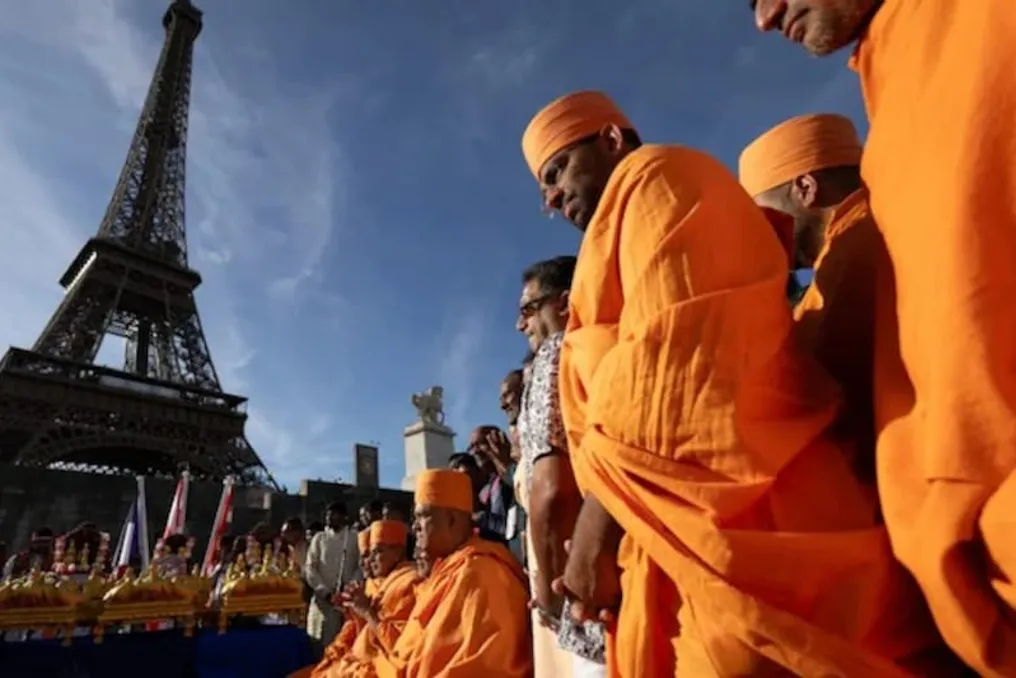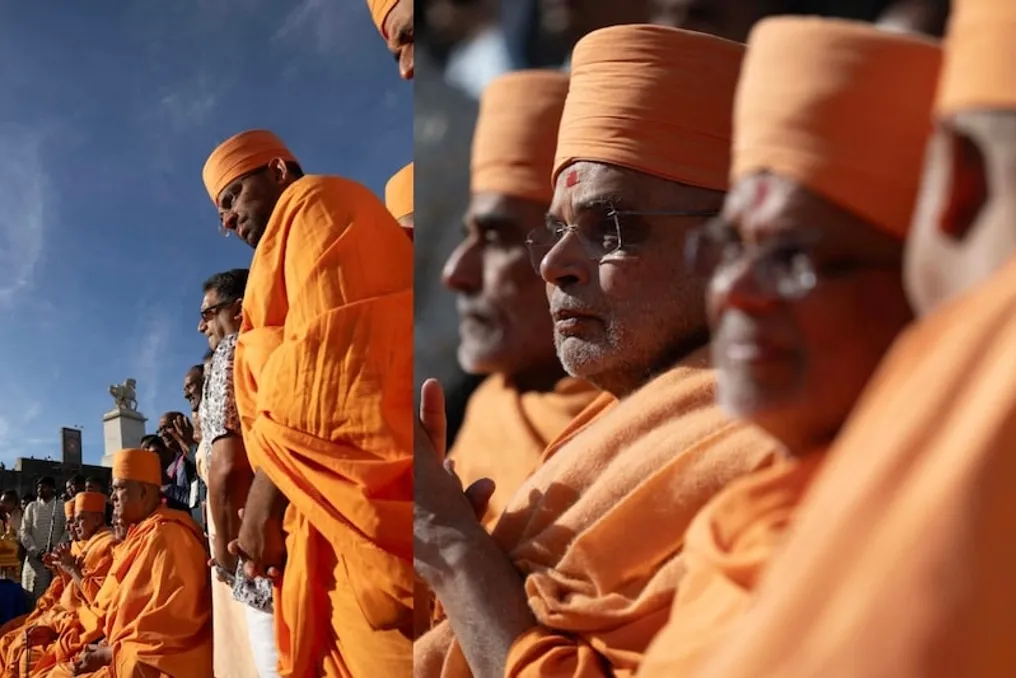
The Eiffel Tower in Paris has once again become a focus of attention, but this time the reason is not romantic sentiment, but protests. The tower suddenly became a subject of discussion after staff announced a strike. The cause was a private visit by representatives of one of the Hindu religious organizations. Allegations arose that during this visit, female employees were restricted from accessing certain areas and workplaces. This provoked a public discussion in France regarding the principles of gender equality, leading to the temporary closure of the Eiffel Tower to the general public. However, the tower is now open to visitors again.
The organization whose visit caused the conflict is called BAPS, which stands for Bochasanwasi Akshar Purushottam Swaminarayan Sanstha. It is a global spiritual structure associated with the Swaminarayan tradition. Originally founded in a temple in Gujarat, BAPS has spread to many countries, including India, the USA, the UK, Europe, West Asia, Africa, and Australia. Currently, BAPS is attracting attention in France because the organization completed the construction and opened a new large temple in Boussy-Saint-Georges, located about 30 kilometers from Paris. This temple is considered the largest Hindu structure in Europe built in traditional style.
The question of what exactly happened at the Eiffel Tower and why the debate on gender equality arose was covered in detail. On Monday, the tower had to be closed due to staff strikes. Employees stated that when about one hundred people from BAPS visited the tower, female staff were prohibited from working in some places. It was reported that some women were instructed to leave their workstations, and men were assigned to their places. Other women were told not to visit certain areas while the BAPS delegation was present.
Staff claimed that they received professional instructions that resulted in women being sidelined solely based on gender, replacing them with men, and effectively rejecting their existence based on their gender identity. The company managing the Eiffel Tower, Société d'Exploitation de la tour Eiffel (SETE), also acknowledged that the BAPS delegation requested a tour organized with minimal contact with women. SETE noted that it should not have accepted such conditions, as they contradict the principles and values of male and female equality in France.
What did BAPS state?
As the dispute escalated, BAPS was forced to issue clarifications. The organization stated that it views this situation very seriously. It was clarified that a large number of people participated in the delegation, so the tour was organized jointly with the Eiffel Tower team. The tour time was usually planned close to the tower's opening time to avoid inconveniencing other visitors.
BAPS also reported that, to its knowledge, no one was denied entry to the Eiffel Tower. The organization apologized to those who were affected or experienced discomfort due to the incident. Furthermore, BAPS emphasized its commitment to the principles of mutual respect, mutual help, and respect for all.
This incident went beyond the Eiffel Tower and turned into a political issue in France. The French Minister of Equality, Aurore Berger, stated that women cannot be required to 'disappear' or retreat. She categorically stressed that no religion is above the laws of France.
What is BAPS?
The full name of BAPS is Bochasanwasi Akshar Purushottam Swaminarayan Sanstha. It is a sect associated with the Swaminarayan tradition and is considered part of the Vaishnava tradition of Hinduism. BAPS is not just a religious structure, but an extensive spiritual and social organization spread across many countries worldwide. Within this organization, over 1300 temples and more than 5025 centers operate globally. In addition to holding religious events, programs are organized for youth and families, and work is carried out in the fields of education, culture, social assistance, and support for the needy. A distinctive feature of BAPS is its magnificent temples built from traditional stone.
The history of BAPS dates back to 1907, when Shastri Ji Maharaj founded the first BAPS temple in Bochasan, Gujarat. The name of the entire organization originated from the name of this temple. Over time, BAPS expanded beyond Gujarat, first spreading to other regions of India, and then to many countries around the world. Today, BAPS is present in India, North America, Europe, West Asia, Africa, and Australia.
Major and famous BAPS temples
Many BAPS temples are known worldwide for their grand architecture. Among them, the Akshardham temples stand out. The Akshardham Temple in Gandhinagar, Gujarat, is one of the large temples created by BAPS. It was inaugurated in 1992 with the participation of the chief saint of BAPS, Swami Maharaj.