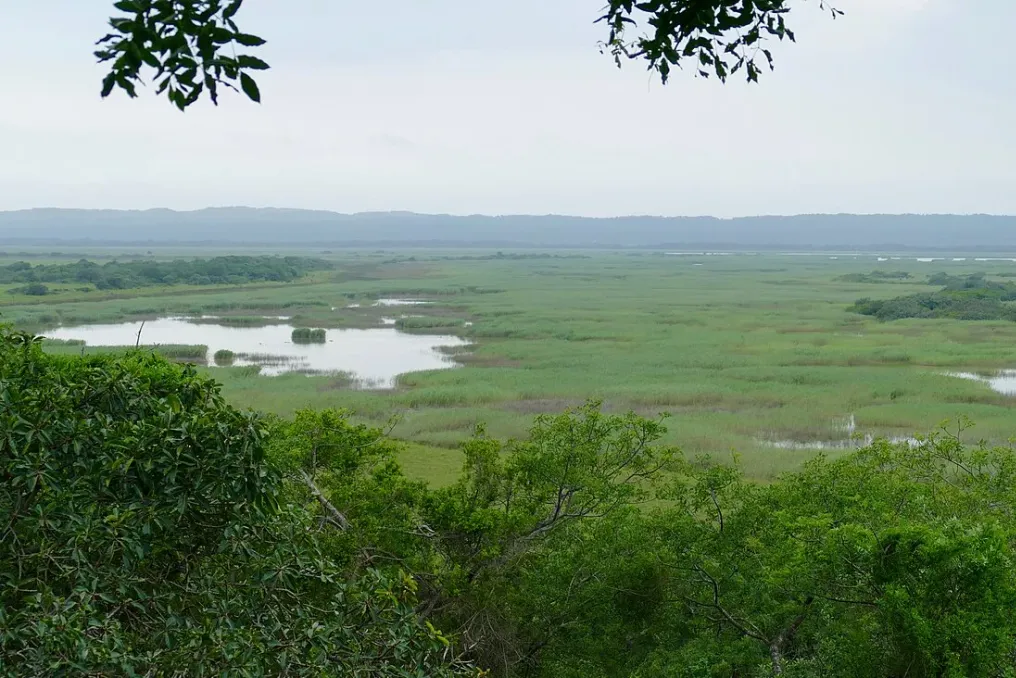
The wetlands of South Africa often go unnoticed. They lack the drama of mountain ranges or the immediate appeal of reserves, yet these marshy landscapes quietly perform one of the country's most vital ecological functions.
Including peatlands, seasonal pools, river floodplains, seepage areas, and swamps, wetlands accumulate water, support biodiversity, filter pollutants, and help regulate river runoff. They are also a crucial habitat for birds, amphibians, fish, insects, and plants.
Nevertheless, many of them are in danger. According to the latest National Biodiversity Assessment, approximately 86% of the over 2.6 million hectares of inland wetlands accounted for in the assessment are considered threatened. Of the 82 types of wetland ecosystems assessed, 60 are classified as threatened, including 15 critically endangered species.
Wetlands are defined by the presence of water, whether permanent or seasonal, and the ecological processes that develop around that water. Their significance extends far beyond their boundaries. Wetlands can slow down and retain water, which helps mitigate flooding, and then gradually release it into rivers and groundwater aquifers. Furthermore, they improve water quality by trapping sediments and pollutants.
This makes wetlands a critical part of South Africa's water supply infrastructure. Strategic water catchment areas, which include wetlands, rivers, and mountain catchments, cover only about 10% of the country's territory but provide more than half of its water resources.
The loss of wetlands means not just the loss of habitat; it is the weakening of a part of the natural system that facilitates water movement across the landscape.
There is no single culprit. Agriculture, urban expansion, mining, roads, and other infrastructure can directly alter or fragment wetlands. Drainage and land-use changes can change how water enters and exits these systems.
Pollution is also a problem. Fertilizers, sewage, industrial pollution, and sediments can degrade water quality in wetlands, affecting the plants and animals that depend on them. Invasive alien species create additional pressure, and water abstraction can reduce the amount of water reaching the wetlands in the first place.
The National Biodiversity Assessment identifies pollution, invasive species, and altered hydrological regimes as major threats to South Africa's aquatic ecosystems. Climate change adds another layer of complexity. Changes in rainfall patterns, drought, and rising temperatures can alter wetland hydrology, making already degraded systems even more vulnerable.
Some South African wetlands are particularly valuable because they contain peat—partially decomposed organic material that accumulates over long periods under saturated conditions. Peatlands are natural carbon sinks, but they depend on saturated conditions to maintain stability. When water levels drop for extended periods, peat can dry out, increasing its susceptibility to erosion and fire.
Unlike many other habitats, damaged peatlands cannot simply be restored within a few decades. SANBI notes that the formation of new peat can take thousands of years.
Although wetlands may seem quiet, they support an impressive diversity of life. They serve as breeding and feeding grounds for birds, habitats for aquatic plants and invertebrates, and important refuges for freshwater species. Since wetlands occur in such diverse landscapes as the Highveld and Drakensberg, the Western Cape, and KwaZulu-Natal, each type of wetland can support its own unique ecological community.
The current assessment shows a particularly high concentration of threatened wetlands in parts of the Free State, North West, Northern Cape, Western Cape, Limpopo, and KwaZulu-Natal.
However, protecting wetlands requires more than just drawing boundaries around them. The latest assessment demonstrates that inland wetlands are insufficiently protected: nearly 80% of wetland ecosystem types are classified as poorly protected or unprotected.
Therefore, conservation efforts must include improved land-use planning, protection of natural water flows, pollution control, management of invasive species, and restoration of degraded wetlands. Prevention is key, as restoring wetlands can be significantly more expensive than conserving those that are still functioning.
South African wetlands may not always be the landscapes we notice first. Perhaps that is why they require more attention. They work quietly in the background, accumulating water, supporting wildlife, and ensuring ecosystem function. The question is no longer just whether wetlands are disappearing, but whether we recognize their value quickly enough to stop their loss.