Water is the basis of life support, agriculture, and food production. When it becomes scarce, the consequences go far beyond simply lacking water from the tap and crop problems; it also creates serious pressure on human dignity, sanitation, and health.
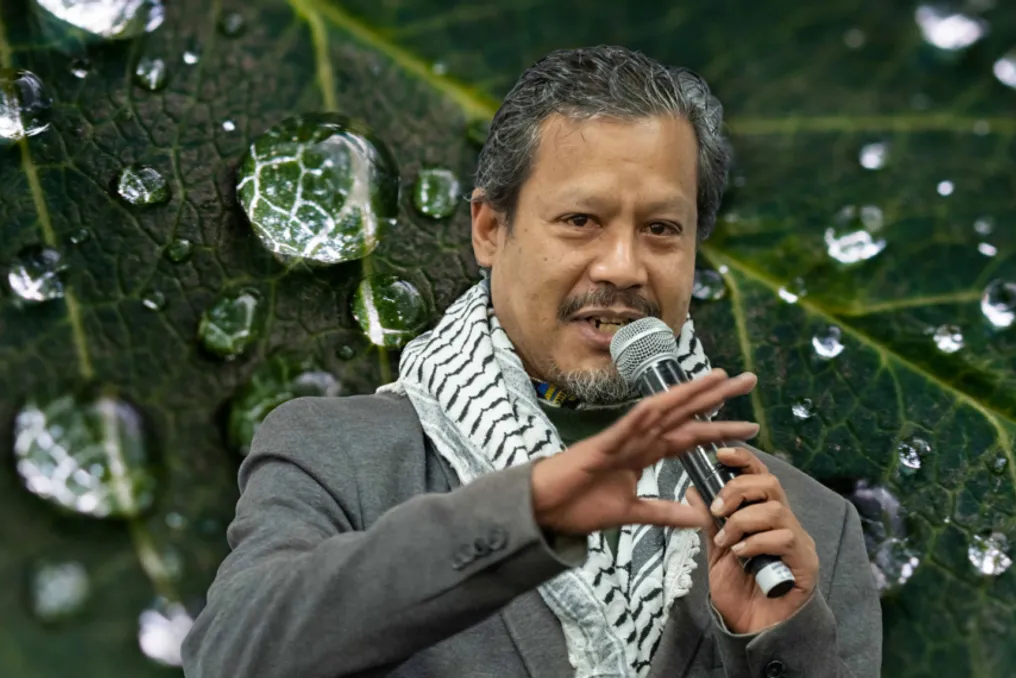
For Mzansi, the issue is not just about collecting more water, but also about protecting existing water resources and ensuring their continuous flow. Taurik Jenkins, High Commissioner of the Gorinhai Khoi Khoin Traditional Council and the organization Save Our Sacred Lands, shared with Food For Mzansi what history can teach us about water, power, and survival.
In the context of resource management, the question arises: what changes when water is granted the status of 'person' instead of being viewed solely as an economic utility? Taurik Jenkins emphasized that water is priceless, and our attitude towards it must be completely changed. Water is not just something we drink, use for washing, watering lawns, or consume for industrial and economic development.
We need to restore the 'personhood' of water. The relationship with rivers should be viewed as an interaction with a living being. It requires reviving deep respect and restoring the sacred value of water. Water is necessary not only for maintaining physical life; for Africans, it carries deep spiritual meaning. We must change our view of water, stopping seeing it as a utility and starting to revere it as a life-giving force that requires care and protection.
Considering how early colonial land policies used nature as a tool for dispossession raises the question of why modern healing must go beyond financial compensation. One of the main violations was the disruption of the connection to water through the use of land grants as a weapon and the seizure of indigenous lands for commercial agriculture along rivers. There was also the destruction of key local species, such as the blue beech, quagga, and cape lion, which separated the human body from both water and land.
When discussing the healing of intergenerational trauma, the focus cannot be solely on economics or access to land. It must also include access to water, rituals, language, and animals, as well as a full recognition of this symbiotic relationship.
The question arises of how municipal ordinances and expansions unintentionally undermine grassroots food security under the guise of modernization. We should avoid approaching indigenous communities with the assumption that they need to be taught how to care for the environment. These knowledge systems have always existed; they are heritage and living memory that needs to be revived and recognized.
Furthermore, vast tracts of municipal and provincial land are regularly sold to the private sector, even though they could be converted into agricultural green belts to ensure urban food security. Suburban and rural residents already grow food in backyards and use open spaces, but these efforts are sometimes penalized as violations rather than supported.
It is also necessary to protect informal food networks. A local small producer might supply fresh produce to a local spaza shop or an informal vendor, supporting a localized microeconomy. When these networks are displaced by large supermarkets, communities lose autonomy and become dependent on formal corporate systems. The central question is what kind of food and agricultural system we want to build: one that centers large commercial interests, or one that ensures fair, diverse, and sustainable local production?
The philosophy of Khoi and San challenges the modern trend of viewing human identity and the natural world as separate entities. The answer lies in symbiotic relationships that define the connection between humanity and the land. The soul of the Khoi and San is formed through this connection with water, land, animals, cosmos, ritual, and self. All these elements together create an embodied understanding of who we are. If any of these elements is disrupted, we cease to be whole. Even our definition of what it means to be human is inherently symbiotic.
If spatial planning in Mzansi began long before 1948, how do centuries-old disputes over rivers reflect contemporary economic disagreements across different types of land? By analyzing the first title deeds, how land was granted to early settlers, and how commercial agriculture transformed the landscape, one can see how destructive this process was for both the environment and society. Loss of access to water was fundamental. Indigenous communities were cut off from rivers, and it was along these banks that early forms of spatial control arose, which later developed into apartheid spatial planning. This system did not start simply in 1948; it was inherited and expanded over centuries. Today, two people may own the same amount of land on paper, but what they can achieve with it differs greatly. Five hectares in Constantia are not equivalent to five hectares in Cape Flats. Access to water, soil quality, environment, and population density determine opportunities.
