The strategic alliance between Puma Energy South Africa and Black Heritage Investments (BHI) is designed to fundamentally change the landscape of the South African fuel industry by addressing existing industry challenges and promoting increased local participation.
BHI's acquisition of a 30% stake in Puma Energy South Africa marks a significant milestone in the development of the South African fuel sector. This deal goes beyond a simple commercial agreement, representing an industrial partnership whose combined capabilities address structural pressures shaping the lower segment, including supply security issues, infrastructure limitations, changing consumer expectations, transformation requirements, and the emergence of low-carbon energy solutions.
Together, the companies have formed a commercially disciplined, locally rooted, and strategically scalable platform with the potential to reshape the national energy landscape.
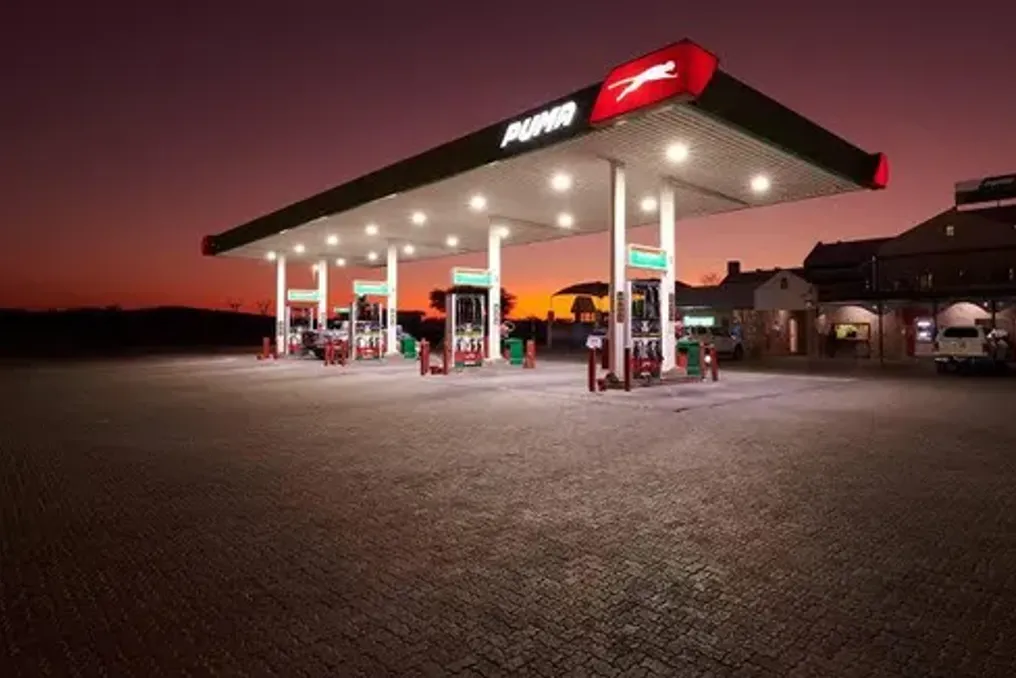
Puma Energy provides the operational architecture of a global lower-segment business. In South Africa, its operations cover retail, commercial fuel, aviation fuel, lubricants, and low-carbon energy solutions. Its presence includes 95 retail outlets, 99 convenience stores, operations in approximately 50 airports, three terminals, and about 5,000 cubic meters of warehousing capacity. This is not just a business at gas stations, but an integrated player involved in multiple demand centers driving the modern fuel economy. Its Broad-Based Black Economic Empowerment Level 1 status demonstrates that transformation is embedded in the ownership structure, management, skills development, supplier support, and socio-economic contribution.
Puma Energy's global strength lends financial and operational depth to the partnership. The company's results for 2025 showed increased momentum, higher volumes, profitability, cash flow, and equity. These metrics are crucial as fuel partnerships compete on working capital, supply reliability, logistics sustainability, procurement capabilities, and disciplined capital allocation. In a sector subject to currency volatility, price regulation, and infrastructure bottlenecks, Puma Energy's financial profile supports investment, risk management, and growth.
Black Heritage Investments' affiliation with Community Investment Holdings provides additional advantages. As a fully Black-owned investment company, it possesses local legitimacy, trust in transformation matters, and sector reach, including mining, energy, ICT, healthcare, consulting, real estate, infrastructure, and logistics. A recent connection to LNG infrastructure at Ngqura port demonstrates experience with long-term assets, regulated sectors, and the interplay between capital, policy, and execution.
Leadership further strengthens this partnership. Professor Anna Mokgokong brings social capital and policy awareness through her expertise in entrepreneurship, management, and institutional building in sectors where trust and regulatory compliance are critical. Alongside the leadership of Puma Energy South Africa under Amanda Lopez, the partnership is enhanced by the unique contribution of female leadership: joint decision-making, long-term institutional governance, stakeholder sensitivity, resilience, and the ability to combine commercial discipline with social impact. In a trust-dependent, execution-driven, and inclusive growth sector, these qualities lend both strategic credibility and developmental depth to the alliance.
The partners' competitive advantages complement each other rather than duplicate. Puma Energy contributes international procurement relationships, logistics knowledge, retail and aviation operational standards, customer segmentation capabilities, security systems, and diversified product lines. The company's global business spans retail, aviation fuel, bitumen, commercial fuel, renewable and low-carbon energy, lubricants, and LNG, supported by over 2,000 retail locations worldwide.
The partnership creates a promising growth platform through which Puma Energy, backed by the Trafigura balance sheet, can accelerate innovation, execute strategic acquisitions, and secure a place among the top three retail station groups in South Africa. BHI's 30% stake provides the alliance with a tangible anchor in terms of empowerment and investment, while Black Heritage Investments' energy portfolio aligns with Puma's diversification into LNG and LNG infrastructure, enabling nationwide deployment of EV charging stations and new rural services.
Puma Energy's 2025 results confirm this strength: volumes grew by 9%, EBITDA increased by 23% to $415 million, net profit reached $151 million, and operating cash flow rose to $317 million. Equity increased to $690 million, and net leverage improved to 1.2x. These figures show that Puma Energy is ready for disciplined expansion in an industry where competitive advantage is defined by supply security and logistics resilience.
This global base provides the partnership access to learning curves valued in emerging markets, where central commercial issues are energy access, logistical complexity, and affordability. BHI contributes deep understanding of the local market, transformation depth, investment reach, and infrastructure sector expertise. Together, these advantages create an offering that competitors may find difficult to replicate: a fuel business with global systems, local legitimacy, financial fortitude, and developmental relevance.
The necessity of such a partnership has become even more acute as South Africa's fuel security issue is linked to the fragility of the global oil market. The Strait of Hormuz remains one of the world's most critical energy chokepoints; any disruption affects prices, shipping, insurance, and refined product reliability.
South Africa is particularly vulnerable because domestic refining capacity has decreased, making the country dependent on imported refined products. Resilience, previously ensured by local refining, must now rely more heavily on strategic reserve storage, port capabilities, terminal infrastructure, storage discipline, and reliable logistics. In this context, the partnership is not just a growth platform; it is a strategic response to national vulnerability.
Scale alone is insufficient to ensure an advantage. The lower segment market is contested around reliability, convenience, efficiency, understanding customer needs, the ecological transition, and inclusive ownership. Retail fuel is evolving into a convenience, payment, and service ecosystem. Commercial, aviation, and industrial clients require reliable, compliant, and increasingly low-carbon energy solutions. The partnership is well-positioned across all these demand vectors.
Puma Energy's profitability and debt reduction support disciplined investment. BHI's portfolio in energy, infrastructure, and logistics adds expertise in long-term capital deployment, stakeholder management, and operational risk mitigation. Practically, this combination can support retail network expansion, deeper penetration into commercial fuel, aviation reliability, supply chain optimization, supplier development, and commercially viable new energy offerings.
The partnership also carries broader political and economic resonance. South Africa's transformation agenda is often weakened when empowerment is viewed as mere compliance rather than a competitive advantage. This deal suggests a more advanced model, integrating women's and youth-focused ownership, signaling a shift from transactional empowerment to structural inclusivity. Furthermore, the combined capabilities create a scalable ecosystem for future lower-segment expansion within a modernized, low-carbon retail network designed to transform the South African fuel and energy landscape.
If successful, the partnership could demonstrate that inclusive ownership and world-class competitiveness are mutually reinforcing conditions for industrial renewal. It could help shift the discourse from narrow metric compliance to substantive value creation, infrastructure development, skills development, and market expansion.
Ultimately, the alliance will be judged by execution: safer and more reliable supplies, stronger customer offerings, improved convenience retail performance, deeper commercial relationships, accelerated skills development, expanded black supplier participation, and credible low-carbon solutions.
Together, Puma Energy and BHI are creating a partnership capable of competing commercially while simultaneously helping to reimagine the South African fuel landscape. Therefore, this partnership should be viewed as a strategic alliance with the potential to forge a more inclusive, sustainable, customer-centric, and integrated energy future.