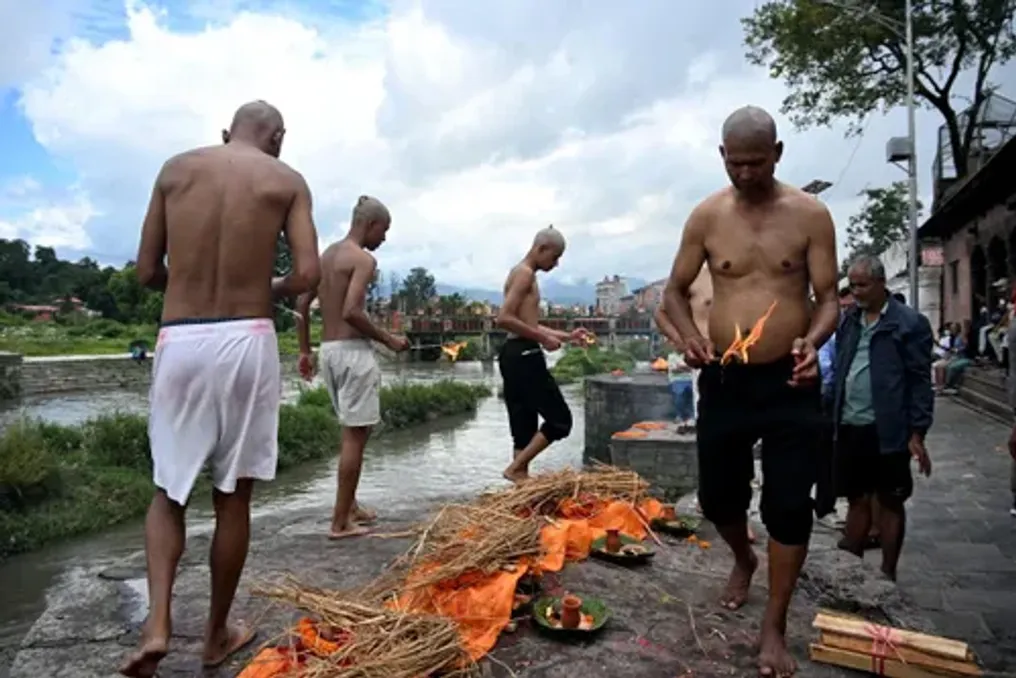
The article examines the topic of climate change through the lens of real catastrophes, emphasizing that climate change has ceased to be an abstract problem and has become an obvious threat.
Wake Up to the Truth
The author recalls how in 2019, during a trip to Durban, his car was flooded due to a sudden downpour that turned the road into a raging torrent. This experience made him realize that climate change is a real phenomenon. He also remembers the floods in Durban in 1987, when people from the Shalcross area died, and the catastrophic floods in KwaZulu-Natal in 2022, which led to hundreds of deaths, the disappearance of bridges, and the destruction of communities. Furthermore, a tornado passing through Tongaat is mentioned.
A recent disaster in Nepal on August 26th was another example: a landslide of ice, rocks, and mountain debris near the Nepal-China border caused flash floods that swept away villages and infrastructure in the Himalayan valleys. The death of hundreds of people has been confirmed, and thousands remain missing in Nepal and Tibet.
Scientists point to the melting of permafrost and the retreat of glaciers as destabilizing factors, as atmospheric warming increases humidity and causes heavy rainfall. Although no single event is caused exclusively by climate change, rising temperatures make such disasters more frequent and destructive.
The author argues that the events in the Himalayas are connected to what is happening in KwaZulu-Natal by an invisible thread—an unprecedented concentration of greenhouse gases released into the atmosphere. Despite differences in location and circumstances, the common question remains about what is being done to protect the planet.
For generations, humanity treated the Earth like an unlimited credit limit, extracting, burning, consuming, and discarding resources as if the bill would never come. Deforestation, the concreting of wetlands, and carbon emissions into the atmosphere occurred without considering the cost. However, the real problem runs deeper than simple negligence.
For decades, major fossil fuel companies possessed internal research confirming the destructive future of their products. Instead of changing course, they funded climate denial, lobbied against regulation, and promoted a false green image while earning record profits. The author calls this not ignorance, but greed—the deliberate shifting of costs onto the planet and its most vulnerable inhabitants.
When nature reacts to human interference through floods, fires, and heatwaves, it is called a natural disaster. However, nature is not taking revenge; it is simply following physical laws that have been arrogantly ignored by humans.
While some parts of the world suffer from floods, others experience extreme heat. For instance, the heatwave in Europe in June 2026 led to over 10,000 excess deaths in 27 countries. South Africa faces alternating floods, droughts, forest fires, and extreme heat. These issues affect not only ecology but also food security, access to water, housing stability, jobs, and survival.
The greatest injustice is that those least responsible for this crisis bear the heaviest consequences: poor families by the river, children in hot classrooms, elderly people without air conditioning, and Nepali families searching for loved ones in the mud. None of them created this emergency, yet they pay the highest price for collective silence.
The author emphasizes that solutions exist and are not science fiction. Solar and wind energy are now cheaper than coal in most markets, and large-scale batteries can solve the reliability problem. Early warning systems and satellite monitoring save lives during extreme weather events. The technological means are available, but there is a lack of political will and moral courage for their rapid implementation.
This requires governments to make difficult, unpopular decisions. It is necessary to stop the annual global subsidies for fossil fuels, amounting to about $7 trillion, and redirect these funds to decentralized renewable microgrids. Governments must also require climate stress tests for all major infrastructure projects and introduce mandatory carbon pricing that reflects the true social cost of emissions.
Corporations must be forced to account for environmental degradation in their balance sheets through transparent disclosure of climate risks. Profits should not remain untouchable if they are built on the foundation of future suffering. Citizens must also recognize that their consumption patterns, diets, transportation, and waste matter. It is impossible to demand large-scale changes while maintaining habits that perpetuate the crisis.
The author recalls that terrible day on Prospecton Road, the strangers' hands that helped push his floating car to safety, and the chilling realization that nature can easily overcome all man-made machines. He hopes that the memories of the 1987 floods, the 2022 destructions, the tragedy in Nepal, and the scorching European summer will serve as clear warnings, not just fleeting tragedies.
The planet has been remarkably patient, but patience should not be confused with infinite tolerance. Mountains are warming, glaciers are retreating, and the price of indifference rises daily. Humanity does not own this planet; it borrows it from its children and grandchildren. Silence in the face of this accumulating catastrophe is not a neutral stance, but an active choice in favor of the status quo—a decision to let the poor bear the burden while the rich isolate themselves in closed communities and air-conditioned spaces.