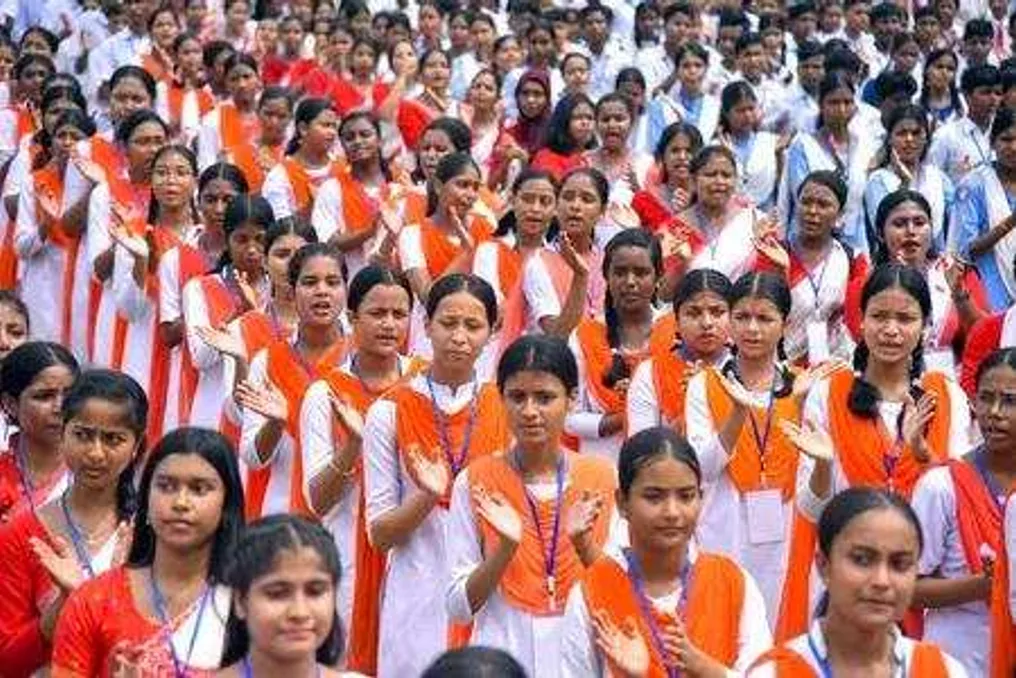
According to an Ipsos study, there is a contradiction among Indians: they believe in the potential of their educational institutions and degrees, yet they feel that higher chances for growth and prosperity can be achieved outside the country.
Ipsos methodology warns that the sample used for India is more urbanized, educated, and/or affluent than the general population, so the results should be viewed as reflecting the opinions of a more 'connected' segment of the country. Furthermore, the average across 31 countries was calculated as an unweighted mean of the results by country, without adjustment for the population size of each.
Robust belief in education, with caveats
A recent NITI Aayog report titled 'Reimagining Skilling for Viksit Bharat@2047' also points to the sustained appeal of higher education programs. It notes that vocational paths are often not perceived as reliable growth-oriented alternatives, and a degree becomes a safer choice amid limited counseling, social prejudice, and low trust in existing skills systems. The Ipsos study confirms this trend, despite having a more urbanized and connected sample in India.
According to the survey, 75% of respondents from India consider obtaining a college or university degree extremely important for life success. Additionally, 78% believe that a degree helps people advance in their careers, and 70% state that a degree in their country offers good value for money.
Optimism regarding higher education
India trusts its curriculum but worries about its connection to the labor market. The NITI Aayog report emphasizes that education and qualifications do not guarantee automatic alignment with the skills and career paths required by the labor market. The Ipsos study demonstrates a deep faith in formal education, but simultaneously, there is a growing awareness that labor market demands sometimes differ from what is taught in the classroom.
In contrast, the UK, USA, and Poland show lower figures at 52%, 56%, and 46% respectively. This survey suggests that the concepts of 'karma bhumi' (place of action) and 'janmabhoomi' (homeland) may turn out to be different.