Uganda prepares to host the World Sevens Rugby qualification tournament
Read more
CGTN
cgtn.com

Uganda prepares to host the World Sevens Rugby qualification tournament

Uganda is actively preparing for an important two-day rugby tournament that will determine one of the teams advancing to the 2027 World Sevens Series.

The qualification event is scheduled for September 26 and 27 and will bring together eight national teams, marking the first stage of the men's World Rugby Sevens qualification series for 2026/2027.

The President of the Uganda Rugby Union, Godwin Kayange, reported that preparations are underway in cooperation with the government, and organizers aim to hold a successful tournament.

Furthermore, Uganda itself intends to succeed on the field. Kayange noted that the host side is assembling a competitive squad capable of winning qualification and gaining promotion to the global series.

The home team has been placed in Group B alongside Zambia, Tunisia, and Senegal. Meanwhile, Group A features Zimbabwe, Nigeria, Ghana, and Morocco, promising intense competition for the single slot in the tournament.

The team that finishes first in the tournament will automatically qualify for the 2027 World Sevens Series.

Similar stories

Uganda and partners launch ten-year agreement to conserve tree-climbing lions in Ishasha
Read more
getaway.co.za

Uganda and partners launch ten-year agreement to conserve tree-climbing lions in Ishasha

Uganda has launched a ten-year partnership aimed at strengthening wildlife protection and restoring the dwindling lion population in the Ishasha sector. This new agreement establishes the Conservation Management Partnership (CMP) for the Ishasha sector, which is part of Queen Elizabeth National Park.

The partnership was signed between the Uganda Wildlife Authority (UWA) and the Wildlife Conservation Society (WCS). It will combine the technical expertise and experience of both organizations to maintain the long-term ecological health of the area.

The main objectives of this collaboration include improving animal protection measures, habitat restoration, tourism development, and reducing human-wildlife conflict.

Ishasha is part of the larger Virunga landscape, which is one of Africa's most biodiverse cross-border ecosystems. This extensive landscape connects Virunga National Park in the Democratic Republic of Congo with Queen Elizabeth National Park in Uganda, as well as the neighboring Maramagambo and Kalinzu forests.

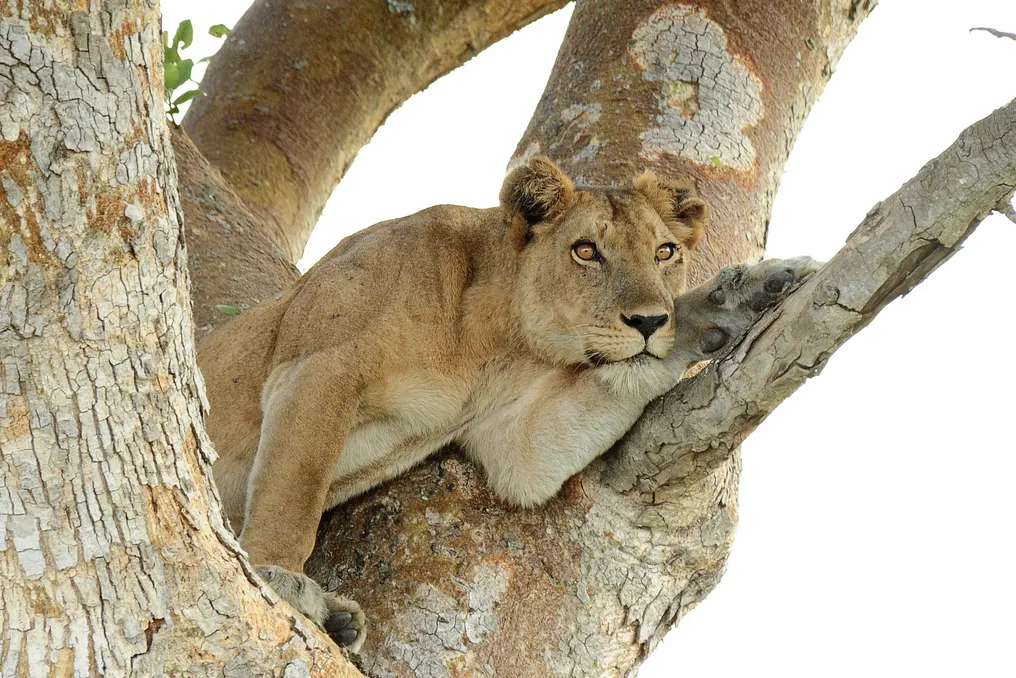
The area is particularly known for its lions that climb trees—an unusual behavior that has made Ishasha one of Uganda's unique natural attractions.

Despite its appeal, the lion population in this sector has significantly declined. In the 1970s, approximately 80 lions were recorded in Ishasha, whereas today only a small number remain. This situation raises serious concerns about the long-term demographic and genetic viability of the population. Therefore, restoring the lion population in Ishasha is a key priority within the new partnership.

If necessary, the scientifically based partnership may involve carefully planned lion translocations to bolster the existing population. Any such movements will be carried out after consultation with neighboring communities and in accordance with Ugandan national legislation, IUCN guidelines, and best international conservation practices.

The approach is designed to strengthen the population, ensuring that all interventions are based on scientific data and appropriate conservation planning.

The new co-management model is designed to provide greater financial and operational support for conservation activities in Ishasha while preserving sovereignty and ownership of the territory for the Government of Uganda. UWA will continue to fulfill its established mandate for protecting Ugandan natural areas.

The agreement also builds upon more than fifty years of cooperation between UWA and WCS. Both organizations emphasize that this partnership reflects a shared commitment to restoring the ecological integrity of Ishasha, protecting its wildlife, and strengthening tourism in the region. Working with local communities will also be an important part of the initiative, as the partnership aims to ensure that conservation efforts bring long-term benefits to residents living near the protected area.

Africa Food Systems Forum Opens in Kigali, Rwanda
Read more
cgtn.com

Africa Food Systems Forum Opens in Kigali, Rwanda

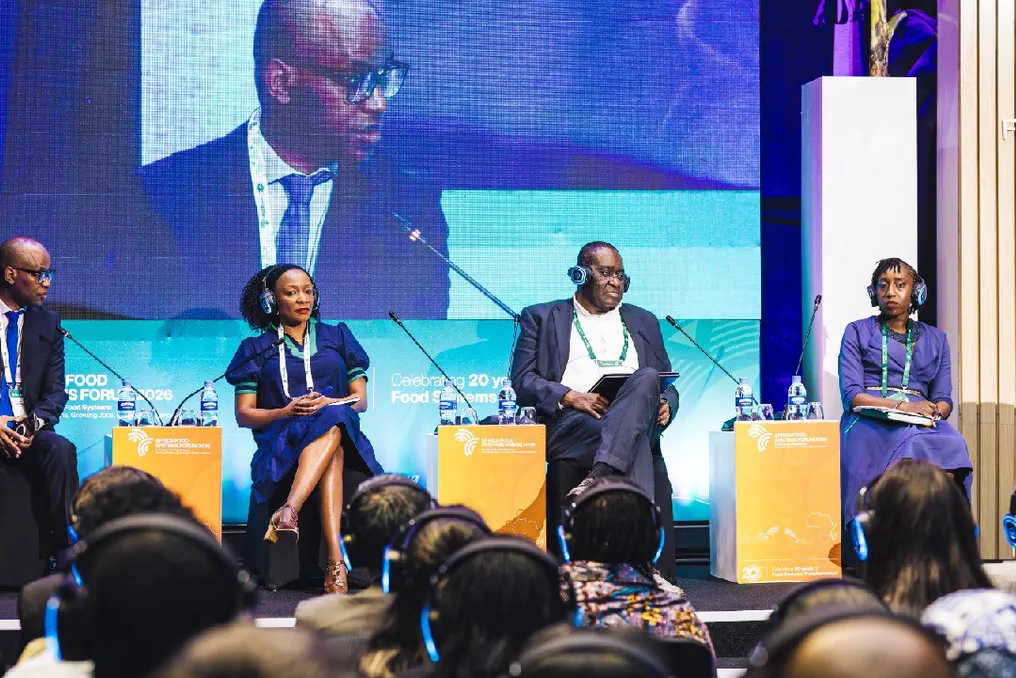
The Africa Food Systems Forum has launched in the capital of Rwanda, Kigali. The event gathered politicians, farmers, investors, researchers, and development partners to discuss methods for transforming the continent's agricultural and food sectors.

The forum primarily focuses on addressing critical issues such as financing, climate change resilience, technology adoption, post-harvest losses, and market access. Participants acknowledge Africa's vast agricultural potential, but limited investment and climatic shocks continue to hinder profitability and productivity.

Analyst Abi Agina emphasized that she is attending the forum to ensure the fulfillment of major commitments regarding the financing of the agricultural sector, which forms the basis of the continent's economies. She also noted that climate change and post-harvest loss issues are pressing topics at this forum.

Beyond production issues, delegates stressed the need to expand sales markets for African agribusiness. Entrepreneurs point out that regulatory barriers and trade restrictions complicate cross-border development and utilization of the continent's growing market.

Ghanaian Iddi Farid shared that his company, Kodu Technology, processes banana and plantain waste into affordable sanitary pads. He advocates for strengthening intra-African trade to provide businesses with better market access across the continent.

The role of artificial intelligence and other technologies, climate change mitigation measures, and increasing the participation of women and youth in agriculture were also discussed. Participants agree that the success of the forum will depend on turning discussions into real investments, strengthening partnerships, simplifying market access, and developing practical solutions for farmers and agribusinesses.

Angola prepares for niobium mining and joining the club of two producing countries
Read more
noticiasaominuto.com

Angola prepares for niobium mining and joining the club of two producing countries

The Minister of Natural Resources, Oil and Gas of Angola, Diamantino Azevedo, announced in Luanda that niobium mining will begin in 2026 in the Kilengeš municipality, Uíla province. This mineral is described as 'very important for the global economy.'

The Minister visited the Bonga and Chivira Carbonatite Complex in southern Angola last weekend, where niobium will be extracted. This rare metal is used to strengthen metal alloys and steel, and is also in demand by the aerospace, automotive, turbine industries, metallurgy, and civil construction.

Currently, only Brazil and Canada supply this mineral. Because of this, Angola will become the third country in the world and the first in Africa to supply the market.

The Minister emphasized that since nearly 90% of the world's known reserves are located in one country—Brazil—niobium is a critically important mineral for the world, and by entering into the production of this mineral, Angola will join this very exclusive club.

The government believes that the start of work in Kilengeš will positively affect Angola's development. Diamantino Azevedo recalled that Angola's potential was discovered several years ago by faculty members and students of the Faculty of Sciences.

He assured that this year Angola will join the limited circle of niobium producing countries, although he did not specify the exact dates of the start of mining.

The exploration permit was issued in 2020, and geological surveys were handed over to the Chinese company Sociedade NIOBONGA - Comércio Geral, which invested $136.6 million. According to official data, the exploration phase has already allowed for the extraction of 40,000 tons of niobium.

The Chinese company's concession covers an area of about 400 square kilometers in the Bonga and Chivila mountains for a period of 22 years, with the possibility of extension up to 40 years of continuous operation.

According to the Minister, the project's contribution to regional development can already be seen, as it has created about 1,000 direct and 200 indirect jobs, including many young residents of the area.

Furthermore, social projects have emerged from this concession, such as a school, housing for resettlement, and the construction of a reservoir to provide water for the project itself, which can also be used by the local population.

The Minister added that work is underway with the Ministry of Energy to ensure electricity supply from hydroelectric power plants, and this work, supported by the project investor, will also benefit the energy supply for local residents.

The implementation of the project required the relocation and compensation of 400 families, who were paid two million kwanzas (less than 1900 euros) each, according to local authorities cited by the Angolan news agency Angop.

Popular