Maldivian Projects: Maldives Transfers Major Infrastructure Tasks to China While Maintaining Ties with India
Read more
Aaj Tak
www.aajtak.in

Maldivian Projects: Maldives Transfers Major Infrastructure Tasks to China While Maintaining Ties with India

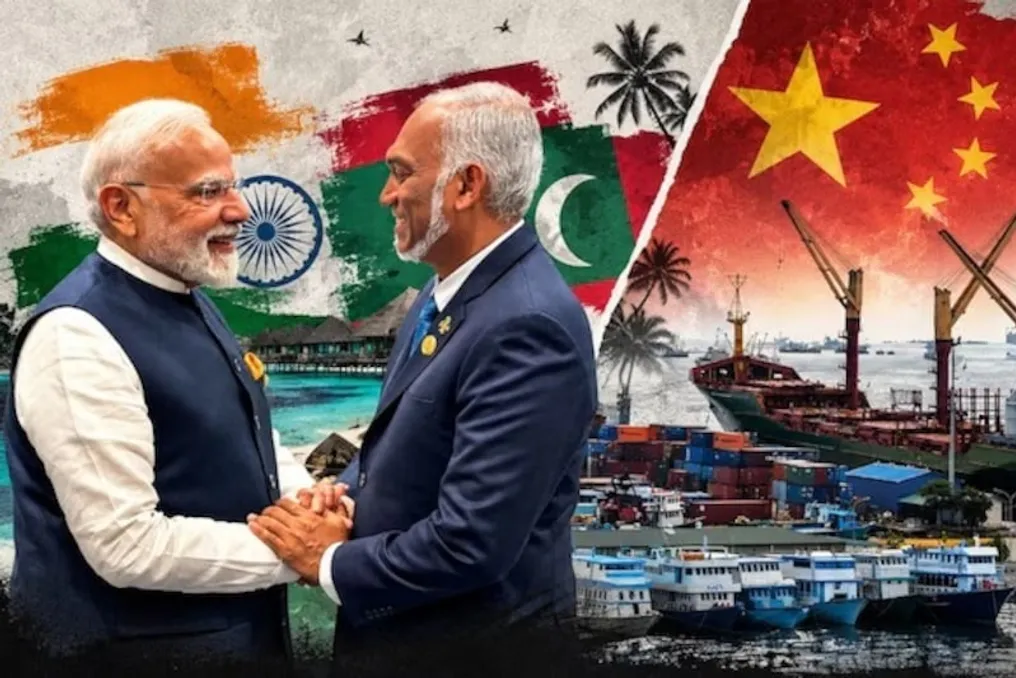
President of the Republic of Maldives, Mohamed Muizzu, previously presented the Thilamalé bridge in India as a symbol of long-standing relations between India and the Maldives, highly praising the contribution of the Indian government and Prime Minister Narendra Modi. However, discussions about China's role in the strategically important Maldivian infrastructure project have recently resurfaced.

In February 2026, Maldives Ports Limited (MPL) announced that the contract for the first phase of the Thilafushi port development project was awarded to China Harbour Engineering Company (CHEC). This project is also known as the project to alleviate the burden on local ports.

Thilafushi is an artificial island located west of the Maldivian capital, Malé. It was initially created in 1991 as a landfill site for the municipality's waste. Currently, a large commercial port is planned to be built there to reduce the load on the existing ports of Malé. In the first phase, the port area will increase from the current 5 hectares to 20 hectares. The project will include a 650-meter quay wall, a 125-meter roadside jetty, customs warehousing, and an X-ray inspection system. The goal of these automated services is to reduce the customs clearance process for cargo from five days to 48 hours.

According to Maldivian plans, the main operations of the commercial port will be moved from the Mafannu area in Malé to the Thilafushi area, which, according to Muizzu, should happen by November 2027.

It is important to note that Thilafushi is a key part of India's 'Greater Malé City Project' (GMCP). This six-kilometer project, which connects Malé with Velana, GulhiFalu, and Thilafushi, is being implemented with the support of a $400 million credit line and a $100 million grant from India. Afcons Infrastructure is carrying out the construction of this project. Thus, major infrastructure initiatives from both India and China are located in the same strategic zone, meaning this issue cannot be viewed solely as a commercial one.

Mohamed Muizzu came to power in 2023 through the 'India Out' campaign and was traditionally considered close to China. However, due to the financial needs of the Maldives and economic pressure, significant changes have occurred in his relationship with India, as India provided financial assistance to the Maldives. Nevertheless, the awarding of the Chinese contract for the Thilafushi port demonstrates that Malé is not abandoning ties with Beijing, despite strengthening relations with India. The Maldives seeks to maintain partnerships with both countries in the areas of investment, infrastructure, and economic needs. Consequently, although Muizzu's inclination towards India has increased, the current strategy of the Maldives appears to be an attempt to maintain a balance between India and China.
Similar stories

China pledges to provide Nepal with timely information on glacial lake and disaster risks
Read more
www.aajtak.in

China pledges to provide Nepal with timely information on glacial lake and disaster risks

China has assured Nepal of the continuous provision of information regarding glacial lake risks and meteorological data. This support is intended to help Nepal cope with natural disasters such as floods and landslides.

This initiative was revealed through the social media channels of the Chinese embassy in Kathmandu, which referenced the Ministry of Water Resources of China. The embassy stated that Nepal will regularly receive hydrological information concerning glacial lake risks and emergencies.

According to China, this information will serve as support for rescue and humanitarian operations in Nepal. It will include details on potential dangers in the Himalayas (glacial) and reports on water flow blockages. Timely receipt of such data will allow Nepal to prepare for possible disasters.

The Chinese embassy noted that following the Bhote Koshi flood, China is already providing Nepal with various meteorological information, including weather monitoring, forecasts, and early warnings. Furthermore, it shares information about the potential consequences of the flood.

China asserts that such information can significantly improve rescue and aid operations during disasters, especially considering that sudden changes in weather and water levels in mountainous regions can cause serious problems. The China Meteorological Administration reported that immediately after the disaster, a video conference was held with the Department of Water and Meteorological Sciences of Nepal, where weather conditions and potential threats were discussed.

A representative of the Chinese embassy also shared this information. According to the China Meteorological Administration, cooperation between Nepal and China in the field of weather will continue, and Nepal will receive necessary forecasts and warnings. Chinese officials emphasized that the goal of sharing meteorological information is to facilitate timely action during disasters, thereby improving the monitoring of threats related to floods, landslides, and the Himalayas.

Both Nepal and China are linked to the Himalayan region, so monitoring meteorological and hydrological phenomena is of great importance to both countries. Rising water levels or sudden glacial lake breaches in the Himalayas can create a risk of flooding in lower areas, making timely notification critically important for public safety.

China stated that it will continue to provide Nepal with vital information regarding meteorology and hydrology to support efforts in search and rescue and disaster relief in Nepal.

In Nepal, more than 1295 people have died due to severe floods and landslides. According to the Nepal Police, 1293 bodies were found across eight different districts, and two people died in two Kathmandu hospitals on Friday. Approximately 5000 people are still missing. Security forces have evacuated 13093 people from affected areas. During the search and rescue operation, two employees trapped in a tunnel for nine days were rescued alive. Humanitarian aid was also sent to Nepal from India.

In the sixth and seventh relief flights from India to Kathmandu, 21.5 tons of humanitarian aid, including medical equipment and forensic kits, were delivered. This aid is being used in rescue and disaster relief operations in Nepal. Among the missing are also about 600 children, including approximately 280 in Ruswa and 300-350 in Nawakot. Additionally, 22 teachers and school staff members are missing in two districts. Statistics show that 22 schools were affected by the floods, 12 of which were completely destroyed. On the other hand, the Nepalese government announced a package of assistance for affected traders, announcing measures such as debt restructuring, subsidized lending, and tax breaks.

Experts warn of risk of glacial lake outburst in Nepal; attention focused on connection to Indian river basin
Read more
www.aajtak.in

Experts warn of risk of glacial lake outburst in Nepal; attention focused on connection to Indian river basin

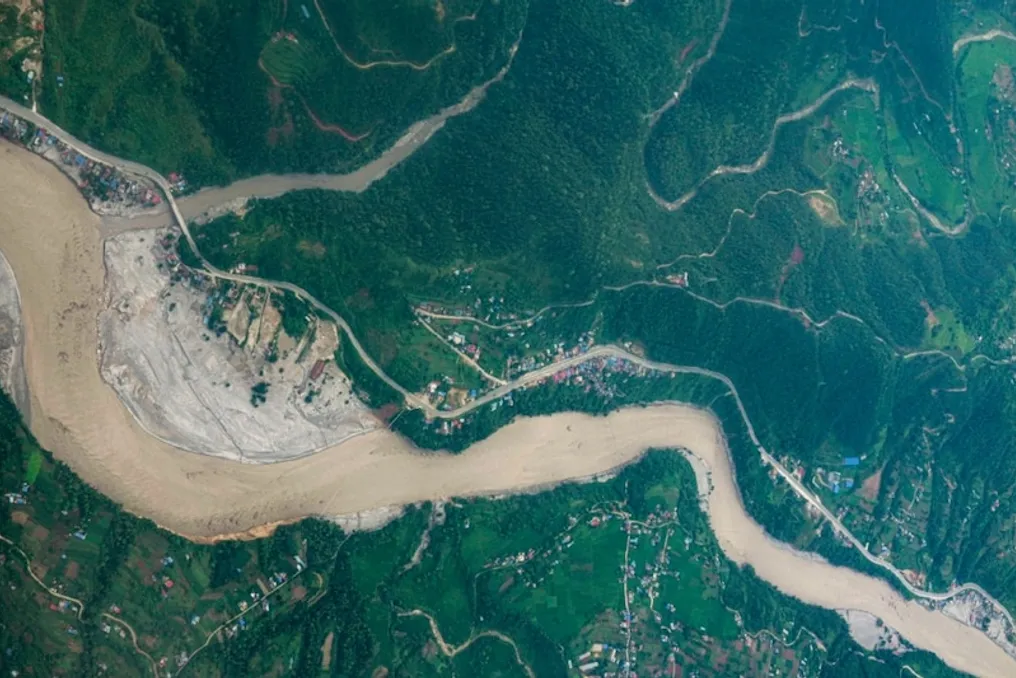
Following devastating floods in the Bhote Koshi River in Nepal, a new serious risk has emerged due to the formation of a large barrier lake on the border of Nepal and China. This lake is located at the confluence of the Chochhen Hola and Purepu Tsangpo rivers. Scientists and Chinese officials are remaining vigilant because the weakening of the natural dam holding back the water could lead to a sudden discharge of a large volume of water downstream.

China's Ministry of Water Resources has declared the next 72 hours critical and intensified monitoring in the region. Although this area does not directly border India, its river system is connected to India. According to current estimates, the confluence of the lake and rivers is located approximately 120–140 kilometers north of the Indian border, and also about 18 kilometers upstream from the Rasuwagharhi-Ghorong border crossing between Nepal and China.

The main concern is precisely this hydrological connection: the water flowing out of this area passes through Nepal and eventually enters the Gandak River, which then flows into Bihar. According to data published by China, the water level in the barrier lake is rising rapidly. Hydrogeological calculations show that the lake has already accumulated about 2 million cubic meters of water, with another 3 million cubic meters potentially accumulating behind the natural dam.

If the water pressure increases and the natural dam breaks, the situation could be classified as a Glacial Lake Outburst Flood (GLOF). In such a case, the water will not rise gradually but will rush down at tremendous speed, carrying stones, earth, trees, and debris. Chinese authorities have begun real-time flood modeling over the next 72 hours to understand the trajectory and speed of water spread in case of damage or dam breach. The warning was issued by China's Ministry of Water Resources and scientific circles around 3:30 AM on August 27.

The key question is whether there will simply be an overflow or a complete dam breach. These two scenarios carry different levels of threat: a slow release would give downstream residents more time to prepare, whereas a sudden breach would result in the arrival of a powerful wave in a very short time.

To understand the full picture, it is necessary to examine the river route. The waters of the Chochhen Hola and Purepu Tsangpo further integrate into Nepal's river system. The water connected to the Bhote Koshi flows towards the Trisuli River, which then flows into the Narayani or Gandak. It is this river that exits Nepal into Indian territory. Thus, although the lake is located near the border of China and Nepal, its water flow is connected to the river basin affecting Bihar and Uttar Pradesh. Therefore, people in the lower reaches should remain vigilant in case of a sharp rise in water levels in the upper basin.

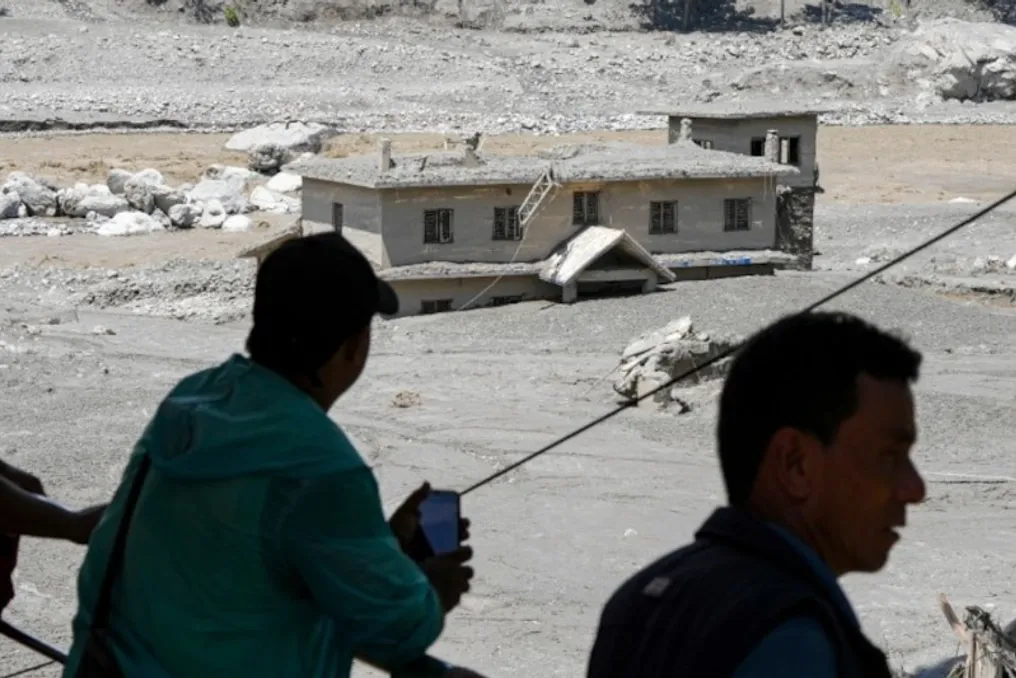
This warning comes against the backdrop of recent destruction in Nepal caused by floods in the Bhote Koshi River. In areas such as Rasuwa, Nuwakot, and Dhading, homes, roads, and bridges have been damaged. Debris carried by the river has affected many settlements, and many people are still considered missing. Continuous monitoring of the river flow and upper catchments is underway after the floods, making China's fresh warning even more significant.

Over the next three days, the most important aspects will be the rise in water level in the barrier lake, the stability of the natural dam, and the volume and speed of water release in case of failure. This is why China is conducting continuous flood modeling. While this does not automatically predict a major flood in India, given the recent disasters in Nepal and the lake's connection to the Gandak river system, heightened preparedness is crucial in the coastal areas of Bihar and Uttar Pradesh. The next 72 hours will determine whether the lake remains stable or if its water suddenly rushes down.

Popular