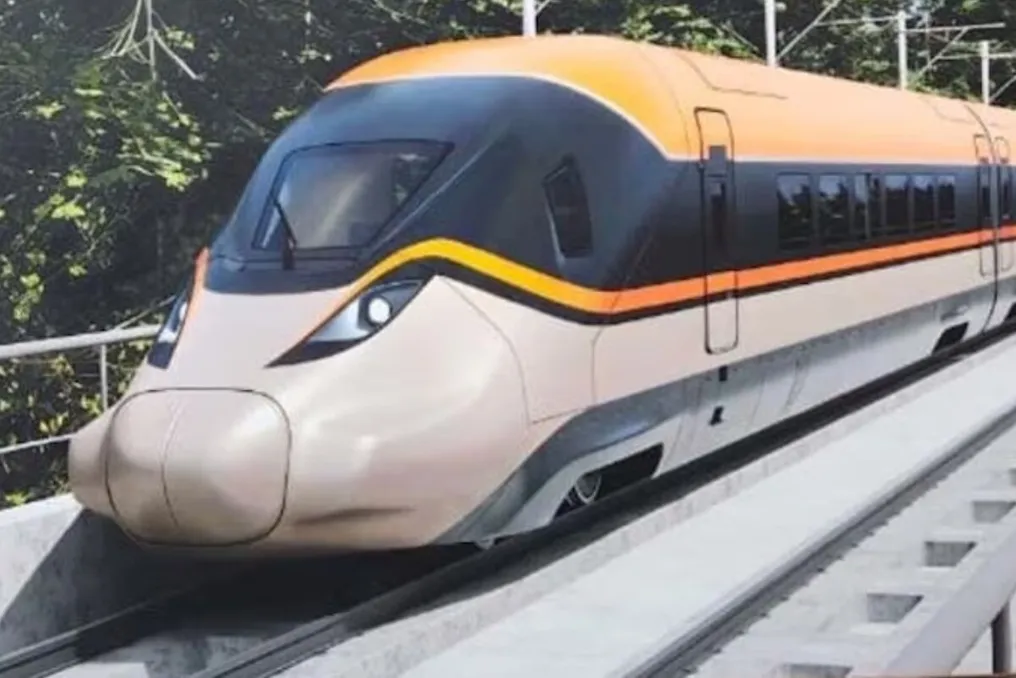
Transport Minister reports progress on India's first high-speed railway construction: Vadodara to Mumbai journey will take 1.5 hours
Read more
Aaj Tak
www.aajtak.in

Transport Minister reports progress on India's first high-speed railway construction: Vadodara to Mumbai journey will take 1.5 hours

Preparations for the launch of the country's first high-speed railway are actively continuing, including station construction and track laying. The Ministry of Railways and Transport Minister Ashwini Vaishnaw regularly publish updates on the India's First Bullet Train project. Recently, the minister provided important information about the high-speed train in Gujarat, clarifying that passengers will be able to travel from Vadodara to Mumbai in just one and a half hours.

During the 'Namo For Viksit Bharat' event held in Vadodara on Tuesday, Union Minister of Transport Ashwini Vaishnaw presented a significant update regarding the high-speed train. He stated that the construction of India's first high-speed railway, built in the country, is ready and was fully completed 'literally the day before yesterday,' and is ready for trials. The Indian Bullet Train is expected to begin track trials in May 2027.

Ashwini Vaishnaw also noted that after the commencement of trial runs in 2027, which may take place in May or June, and subsequent two-to-four-month trials, the inauguration ceremony of the high-speed train will be conducted by Prime Minister Narendra Modi himself.

According to the minister, when the high-speed trains start running, the journey from Vadodara to Mumbai will take only one and a half hours. It is worth noting that the distance between Vadodara Junction and Mumbai Central is approximately 391–392 km by rail line. Currently, the fastest train on this route is the Vande Bharat Vadodara–Mumbai Central, which takes approximately 4 hours and 44 minutes.

The Bullet Train project started in 2017, and after a decade, the first high-speed railway is expected to start operations around August 15 of next year. The initial phase is planned for the Mumbai–Ahmedabad route. The speed of the high-speed train can reach from 280 to 350 kilometers per hour.

Preparations for the high-speed train launch are proceeding very quickly, as evidenced by the constant photos and videos distributed by the railways. These materials demonstrate both the track construction and the electrification process, and also show videos and photographs of railway stations located along the Mumbai–Ahmedabad high-speed corridor. The high-speed train is planned to stop at 12 key stations on this route, including Mumbai (BKC), Thane, Virar, Boisar, Vapi, Bilimora, Surat, Bharuch, Vadodara, Anand, Ahmedabad, and Sabarmati.
Similar stories

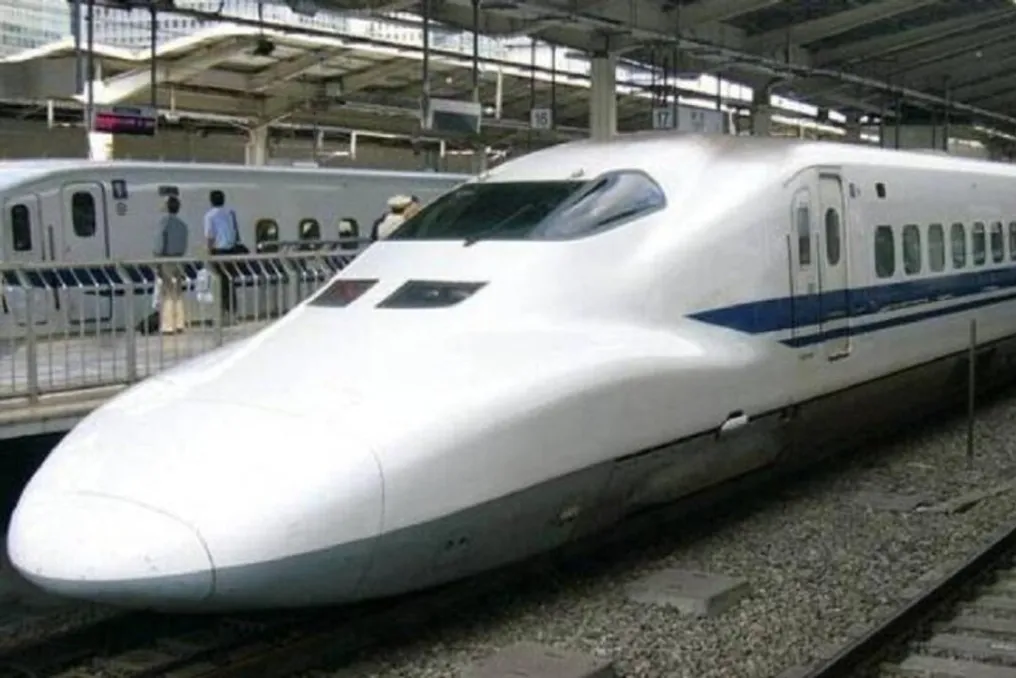
New high-speed train from Delhi to Patna planned, taking about 4.5 hours
Read more
www.aajtak.in

New high-speed train from Delhi to Patna planned, taking about 4.5 hours

Following the Mumbai-Ahmedabad project, work has begun on a high-speed rail link between Delhi and Patna. The Indian government has developed plans to create high-speed train corridors in the states of Bihar and Uttar Pradesh. Transport Minister Ashwini Vaishnaw provided the latest updates on this matter.

The minister stated that a high-speed train is planned for the route Delhi—Kanpur—Lucknow—Patna. According to him, the journey from Delhi to Patna by high-speed train could take only 4.5 hours. Previously, it took 12 hours to travel from Delhi to Patna.

The PIB news agency had previously reported that after the Delhi-Patna route becomes operational, the travel time could be 4 hours and 41 minutes, later revised to around 4.5 hours.

According to preliminary estimates, the high-speed train service on this route would allow reaching Agra in 58 minutes, Kanpur in 1 hour and 50 minutes, Lucknow in 2 hours and 12 minutes, Prayagraj in 3 hours, Varanasi in 3 hours and 33 minutes, and Patna in approximately 4.5 hours.

The government document indicates there are seven proposed corridors covering a total distance of about 4000 kilometers. These include the Delhi-Varanasi and Varanasi-Patna-Siliguri corridors.

In contrast, the Mumbai-Ahmedabad corridor, spanning 508 kilometers, is an existing project. It includes 12 planned stations, a design speed of 350 km/h, and an operational speed of 320 km/h.

Currently, the final route, project cost, and launch timeline for the high-speed train between Delhi and Patna have not been announced. A report by Financial Express, citing the minister, noted that this should be considered only a proposal.

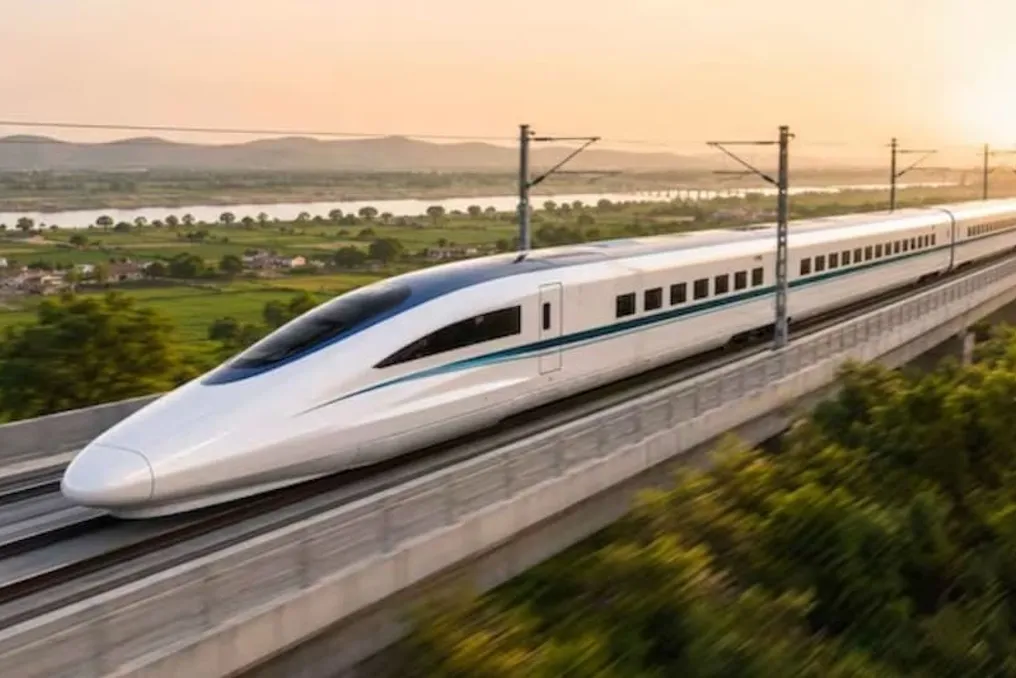
Transport Minister announces plans for new high-speed rail corridor connecting Delhi with six cities
Read more
www.aajtak.in

Transport Minister announces plans for new high-speed rail corridor connecting Delhi with six cities

Railways Minister Ashwini Vaishnaw provided an update on the proposed high-speed rail scheme, which is intended to connect Delhi, as well as the states of Uttar Pradesh and Bihar.

Speaking during the inauguration of new electrified broad-gauge lines on the Nepalganj Road-Nanapara-Bahraich section, the minister noted that following the completion of the Mumbai-Ahmedabad corridor, the next project will be a high-speed corridor linking Delhi with the cities of Agra, Kanpur, Lucknow, Varanasi, and Patna.

This project will be the first high-speed railway line connecting the capital Delhi with Uttar Pradesh and Bihar. After the project is implemented, the journey from Delhi to Patna will take only a few hours. It is planned that the distance between Delhi and Patna, which is about 1170 kilometers, will be covered in just 4.5 hours, whereas currently, by train, it takes approximately 12 hours.

The main advantage of the proposed corridor is the significant reduction in travel time. It is projected that the journey of about 1170 km from Delhi to Patna will take approximately 4.5 hours, allowing for savings of about seven and a half hours compared to current rail routes. Similarly, the trip from Delhi to Lucknow is estimated to take about 2 hours and 12 minutes. The launch of this high-speed railway will significantly accelerate movement between many major cities in Uttar Pradesh and Delhi.

The proposed route starts in Delhi and passes through several major cities in Uttar Pradesh, ending at the capital of Bihar—Patna. Key cities included are Agra, Kanpur, Lucknow, Prayagraj, and Varanasi. According to calculations, the train will reach the following time metrics:

  • Delhi – Agra (approx. 200 km): approximately 58 minutes
  • Delhi – Kanpur (approx. 455 km): approximately 1 hour 50 minutes
  • Delhi – Lucknow (approx. 495 km): approximately 2 hours 12 minutes
  • Delhi – Prayagraj (approx. 750 km): approximately 3 hours
  • Delhi – Varanasi (approx. 945 km): approximately 3 hours 33 minutes
  • Delhi – Patna (approx. 1170 km): approximately 4.5 hours

This railway corridor is considered the next major phase in expanding the country's high-speed rail network after the Mumbai-Ahmedabad corridor. The Mumbai-Ahmedabad corridor is about 508 kilometers long and is preparing for operation at a maximum speed of 320 kilometers per hour, with a design speed of up to 350 kilometers per hour. The first services on this corridor are expected to begin in August 2027, possibly starting on the Surat-Vapi section. In this initial phase, a journey with four stops may take about 1 hour and 58 minutes, while the entire route from Mumbai to Ahmedabad with 12 stations is estimated to take approximately 2 hours and 17 minutes.

Railway connectivity between Delhi, Uttar Pradesh, and Bihar is traditionally very busy, especially during festivals like Diwali and Chhath, when there is a large number of passengers and severe overcrowding on trains. The high-speed corridor could become an additional, faster option for travel in this direction in the future. If the project is implemented and completed on time, it will have a positive impact not only on passengers but also on economic activity, tourism, business, and investment in cities such as Agra, Prayagraj, and Varanasi, due to improved transport accessibility.

Currently, Indian Railways offers various fast and premium services, such as Jan Shatabdi, Vande Bharat, and Duronto. The high-speed corridor project is designed to operate at speeds up to 320 kilometers per hour, while the Vande Bharat's design speed is around 180 kilometers per hour. This significant difference in speed will help substantially reduce travel time on long routes, such as between Delhi and Patna.

Although the proposal for a 4.5-hour journey from Delhi to Patna represents a potentially huge change for passengers, it must be understood that this service is not immediately available. Numerous stages related to the planning and approval of this corridor remain. Nevertheless, when this project is realized, it will completely change the perception of long-distance rail travel between Delhi, Uttar Pradesh, and Bihar. Currently, attention is focused on when the railways will provide the next official report on this corridor.

Popular