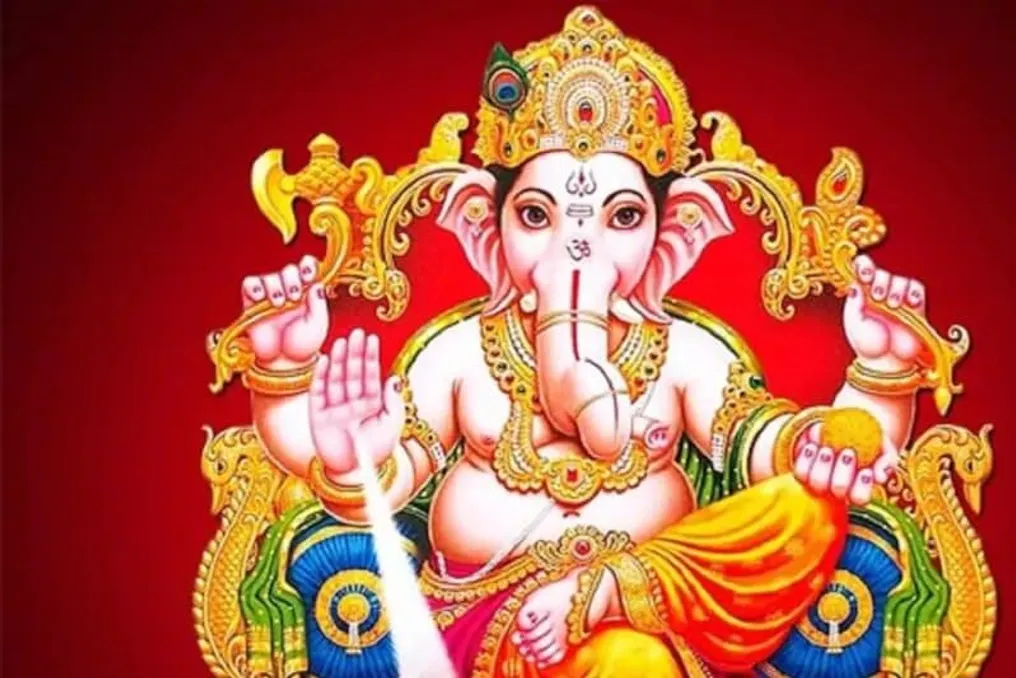
At the beginning of any endeavor, it is customary to remember Shri Ganesha as the remover of obstacles. During worship, modak is often offered to him, which is sometimes mistakenly identified as laddu. However, a true modak is a steamed sweet made from rice flour with a filling of palm sugar and coconut, not a laddu made from chickpea or lentil flour.
But Ganapati loves more than just modak; he also consumes the fruits of the camphor tree (kainta) and figs (jambun). This is mentioned in one of his well-known mantras, which is frequently recited during worship. Upon careful examination of this short mantra, it is found that two specific fruits—kaita and jambun—are clearly named, along with a description of Ganapati's form and size.
The mantra states: 'Gajananam bhutganadi sevitam, kapitthajambufalacharubakshanam | Umasutam shokvinashakarakam, namami vighneshwaraapadpankajam' (Gajananam bhutganadi sevitam, kapitthajambufalacharubakshanam | Umasutam shokvinashakarakam, namami vighneshwaraapadpankajam). Its simple meaning is: I bow to the feet of Vigneshwara, the god who destroys sorrow, the son of Uma, who favors the fruits of kaita and jambu, served by spirits and other ganas, possessing a large head.
A question arises as to why such fruits as kaita and jambun are mentioned in this prayer, and whether this relates only to offerings to the deity or if there is an implication for health benefits. To understand this, it is important to know a famous story associated with Ganapati: it is believed that he was the one who wrote the 'Mahabharata.' He recorded everything Rishi Vedvyas said, continuously, without speaking a word or moving from his place. This story points to prolonged sitting in a meditative posture.
This is where an interesting aspect of the shloka appears: instead of sweets like modak or laddu, it explicitly mentions kaita and jambu. Kaita translates to camphor fruit, and jambu translates to fig. Both these fruits have been present in India since ancient times and are mentioned in Ayurvedic tradition. Thus, the shloka describes not only the appearance of Ganapati but also points to two specific fruits from nature that he favors.
Kaita is a fruit that is very hard on the outside but has soft flesh inside. In Indian cuisine, various dishes are prepared from it, ranging from chutneys and lemonades to many other delicacies. Kaita also holds special significance in traditional medicine. It contains fiber and numerous nutrients. Traditionally, it was used to solve digestive problems. Therefore, mentioning kaita as Ganapati's favorite fruit connects it to a message of balanced nutrition.
The second fruit in Ganapati's shloka is jambu, or fig. This fruit, which appears during the hot and rainy seasons, has long been part of the Indian diet. Figs contain fiber and various natural plant compounds. In traditional Indian medicine, the fruits and seeds of figs were long used, especially in traditional treatments related to blood sugar levels or diabetes. This is why figs are often discussed in connection with diabetes. However, figs or their seeds should not be considered a substitute for diabetes medication; they should be viewed as part of a balanced diet.
It is worth noting another point: when it comes to offering to Ganapati, modak and laddu are primarily remembered. But in this famous meditative mantra, kaita and jambu are named instead of modak. This makes the shloka even more interesting. It is believed that Ganapati's form also contains many symbols: the large head symbolizes intellect, the large ears symbolize the ability to listen, and the small eyes symbolize concentration. Similarly, the presence of kaita and jambu in his diet can be seen as a connection to nature and balanced nutrition.