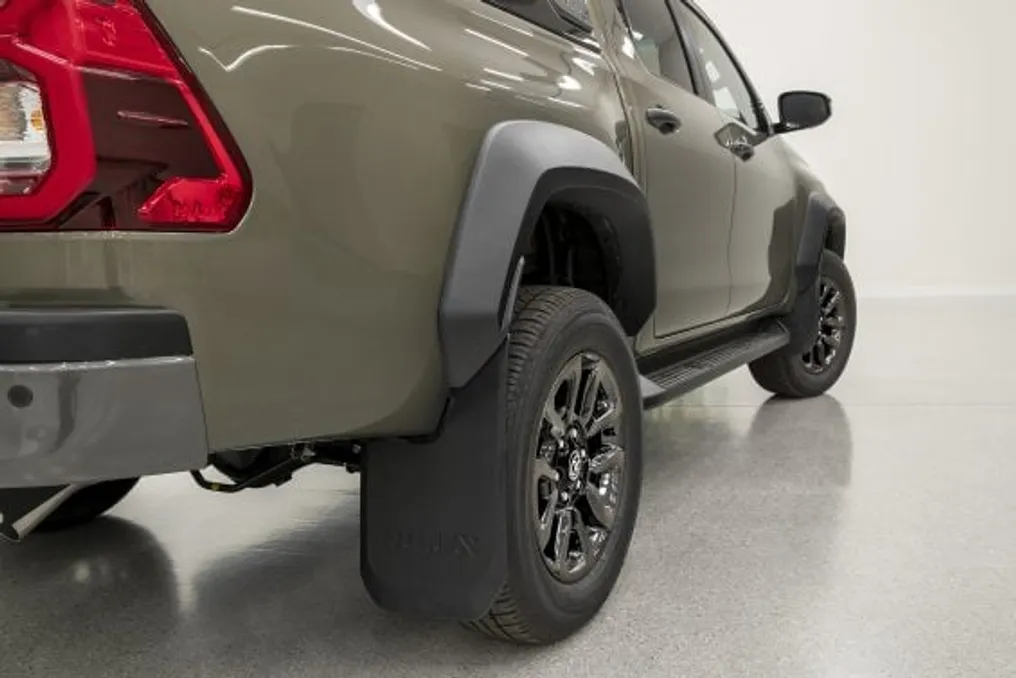
Removing the fenders from the pickup does indeed reduce aerodynamic drag, but this gain is insignificant compared to a much more serious problem—ground clearance. This conclusion was reached through a simulation conducted by the American consulting company Premier Aerodynamics, using an eighth-generation Toyota Hilux traveling at 100 km/h, and a video of this study was published on YouTube.
The company used the OpenFOAM program, which is open-source software for Computational Fluid Dynamics (CFD), to measure the impact of the rubber deflectors installed behind the wheels. With the fenders in place, the truck's drag coefficient increases from 0.37 to 0.38. According to the lead analyst, removing these parts could save about $70 USD per year on fuel, equivalent to 358 Brazilian reais, based on predominantly road use and prices in the United States.
However, the diagnosis itself proved more significant than the financial benefit. These deflectors worsen aerodynamics by disrupting airflow in the upper part of the body, but they also exacerbate an existing issue: the raised suspension causes large turbulence vortices around the wheels. The front of the Hilux effectively keeps air pressed against the body, and it is behind the front wheels that this flow separates due to free travel.
The analysis indicates that more effective changes would be covering the cargo bed, preferably with a fastback-style cover featuring a sloping line, or lowering the suspension height. The study also criticizes two stylistic elements of the eighth generation: the protruding wheel arches and A-pillars, which serve no practical function and increase air resistance.
Nevertheless, the pickup performed better than its appearance suggested. The body line between the rear wheel arch and the cargo bed cover rises and functions as a diffuser, and the airflow over the cargo bed is well controlled. In a previous analysis, the same consulting company concluded that the second-generation Ram Dakota was also more aerodynamic than it appeared.
For those considering removing these parts, it should be remembered: the fenders are designed to prevent water, dirt, and gravel from splashing onto the body itself and onto vehicles following behind. Resolution 888/2021 from Contran establishes requirements for anti-splash systems for pickups and protective devices for wheels on cars, pickups, and station wagons, with phased implementation deadlines.