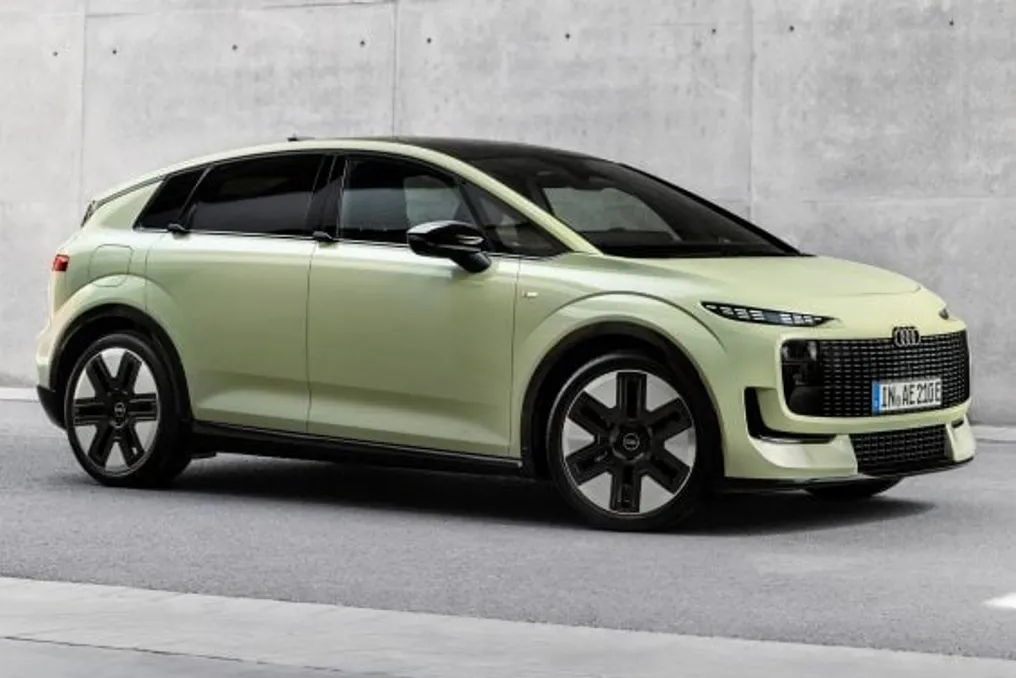
Audi has announced the return of the A2 model as its entry-level electric option. This compact hatchback was presented in Paris this Monday (7) and features rear-wheel drive, utilizes the Volkswagen Group's MEB+ platform (the same one used in the Volkswagen ID.3), has a drag coefficient of 0.24, and offers a range of up to 646 km under the WLTP cycle.
Reservations for the vehicle will begin on September 10th, with a starting price of 38,200 euros in Germany, which is equivalent to approximately R$ 226 thousand. The first deliveries are expected in December.
A strong point of the new A2 is its energy consumption: in the version equipped with the efficiency package and 190 hp, the A2 e-tron consumes only 12.8 kWh/100 km, which is the lowest index recorded by a series Audi model, according to the manufacturer's statement. To achieve this efficiency, Audi implemented several optimizations, such as closing almost the entire floor, keeping the front air intake closed at highway speeds, and installing slack reducers in the wheel arches, which reduces the space between the tire and the fender.
Other engineering details include electric door handles that have their own power reserve, ensuring the doors can be opened even in case of electrical failure.
The history of the A2 is notable: originally launched in 1999 and manufactured in Neckarsulm until 2005, it was the first premium compact to feature a body made entirely of aluminum, using the Audi Space Frame structure, and derived from the Volkswagen Group's 'three-liter car' project. In 2001, the 1.2 TDI version, with 61 hp, weighing 855 kg and an aerodynamic coefficient of 0.25, became the first four-door automobile certified with over 33.3 km/l. Despite being expensive to produce and having a controversial design, the A2 accumulated 176,377 units, falling short of expectations, but gained icon status years later.
The current model offers four power levels, ranging from 170 hp and 35.7 kgfm to 326 hp and 55.6 kgfm, and can be equipped with batteries of 52, 61, or 84 kWh. The two smaller options use lithium iron phosphate (LFP) cells fixed directly to the chassis. The 84 kWh battery is built with nickel-manganese-cobalt (NMC) and supports charging up to 183 kW, allowing it to go from 10% to 80% in just 29 minutes. The permanent magnet synchronous motors use silicon carbide semiconductors and low-friction bearing casings.
The battery also serves as an auxiliary power source: the V2L system allows external equipment to be powered through a socket in the trunk, and V2H enables the car to be used as a residential battery in Germany, Austria, and Switzerland.
With dimensions of 4.32 meters in length and 2.77 meters wheelbase, the hatchback offers a trunk capacity between 396 and 1,336 liters, in addition to a 13-liter front compartment in the most powerful configurations. The interior features a Softwrap-coated dashboard, a soft fabric surface, and the optional sunroof has 1.6 m² of glass. Audi also claims to be the first premium brand to include the Fidlock magnetic system as standard, which secures cup holders and bags with a simple click. Depending on the configuration, the vehicle incorporates more than 300 components made from recycled material, 100 of which come from post-consumer raw materials.
The A2 e-tron is being produced in Ingolstadt, on the same body line as the A3, and was developed in a timeframe 21 months shorter than its similar predecessors, utilizing about 250 robots used in other models.