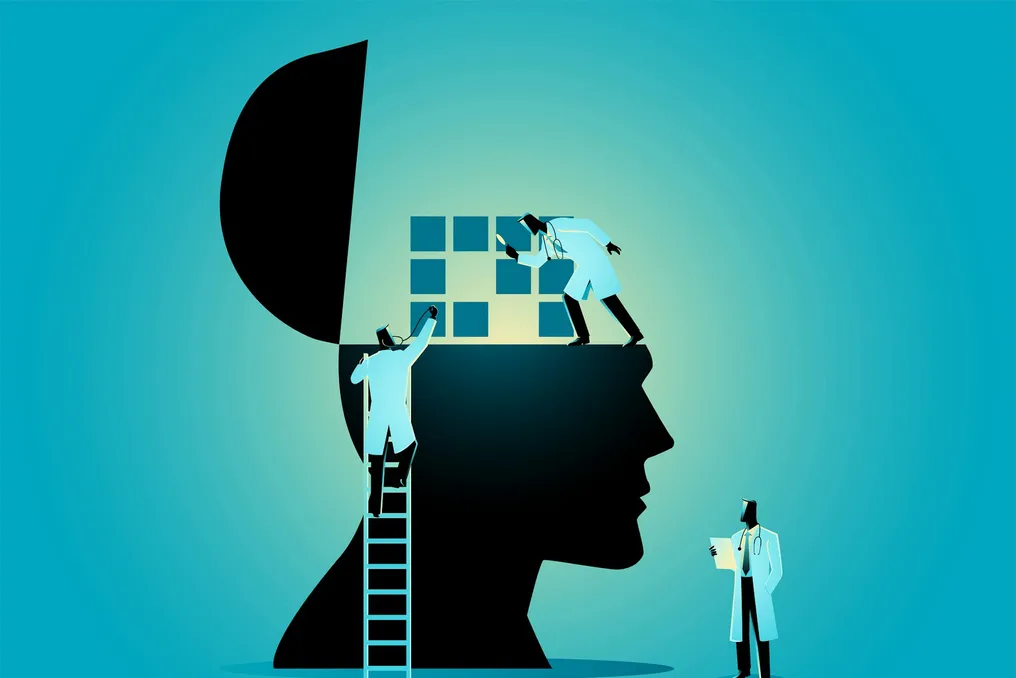
The 'Bible' of clinical psychiatry, known as the DSM (Diagnostic and Statistical Manual of Mental Disorders), is a global reference used by professionals to diagnose patients and by scientists to guide research. Despite its vast influence, the DSM has historically not included biological aspects in its diagnoses.
This exclusion occurred largely because biological knowledge about mental disorders was considered too nascent to be included in such a widely used manual. The most recent version, DSM-5, released in 2013, has been criticized by clinicians and researchers, especially regarding the risk that the absence of objective biological metrics could lead to the medicalization of human suffering and diminish the validity of psychiatric diagnoses.
In response to these criticisms, the American Psychiatric Association (APA) announced its intention to release a new edition of the DSM in the coming years, with a central focus on modernization through the inclusion of biology. A member of the DSM's strategic committee, who served from May 2024 to August 2026, specifically contributed to the subcommittee responsible for integrating neurobiology into the manual.
Due to the gradual evolution of scientific understanding of the biology of mental disorders, collaborators decided to adopt a more detailed methodology to incorporate neurobiology into the diagnosis of psychiatric conditions. Biological factors are defined as potential mechanisms in the development of a disease but have not yet been consolidated into something quantifiable in a laboratory setting; these can be physiological, genetic, or biochemical.
In contrast, biomarkers, or biological markers, are characteristics that can be objectively measured and used to assess a biological process, including an individual's response to a specific treatment. Such biomarkers can be obtained through blood tests, imaging scans, and other procedures that reveal elements related to a particular pathology.
Biomarkers are widely applied in general medicine, such as using glycated hemoglobin levels to monitor diabetes, cholesterol levels to assess cardiovascular risk, and computed tomography scans to measure tumors.
Currently, there is no scientifically proven biomarker for any psychiatric condition, except for some proteins used in the diagnosis of Alzheimer's disease. The main reason for this disparity between psychiatry and other areas of medicine is that knowledge about the biological basis of mental disorders is significantly outdated compared to other illnesses.
The underlying biological modifications in mental illnesses are subtle, and current technologies face difficulties in detecting them easily. It is essential to recognize that severe mental illnesses are essentially brain disorders that possess prominent psychological and social components. Family history of mental health problems and trauma are cited as the main risk factors for these severe disorders. These strong environmental influences complicate the precise separation between the impact of biological factors and psychosocial considerations in mental illness.
Additionally, researchers tend to conceptualize psychiatric disorders not as isolated entities, but as behavioral syndromes—a set of overlapping signs and symptoms. Examples include anxiety and mood disorders, whose signs and symptoms frequently overlap, leading patients to meet the criteria for both simultaneously. The same occurs with schizophrenia and bipolar disorder with psychosis.
Classifying each of these disorders as separate conditions in the DSM represents an oversimplification, given that they group together due to shared genetic and environmental factors. Furthermore, conditions such as major depressive disorder and schizophrenia likely have various subgroups that, although superficial, differ in their mechanisms and developmental pathways. Therefore, seeking a single biomarker capable of reflecting multiple processes simultaneously is not a realistic goal.
Syndromes have been part of medical vocabulary for a long time; diseases like tuberculosis, cancer, and diabetes were recognized as collections of symptoms before scientific and technological advances allowed for the identification of the causative biological mechanisms. However, in the field of mental health, researchers have not yet reached this stage.
The Nobel laureate psychiatrist and neurobiologist, Eric Kandel, expressed the view that 'the last frontier of biological sciences... is understanding the biological basis of consciousness and the mental processes through which we perceive, act, learn, and remember.' He argued that solving this 'ultimate challenge' requires uniting cell biology with psychology to explain human behavior and consciousness from a purely biological perspective.
Despite ongoing investigations, notable progress has been made in the neurobiology of mental health since the publication of the fifth edition of the DSM. Three advancements deserve special mention. The first relates to biomarkers for Alzheimer's disease. Previously, diagnosis depended on clinical history, medical examination, and post-mortem evidence of two abnormal proteins, amyloid and tau. In March 2025, the Food and Drug Administration (FDA), the US regulatory agency, approved a blood test to detect specific forms of these proteins, aiding in the confirmation of Alzheimer's diagnosis. This is the first case of a biomarker for a disease affecting both the brain and behavior.
The second area of interest involves immunological factors. The immune system has been linked to various medical conditions, including mood disorders, such as depression. For example, C-reactive protein (CRP), produced by the liver in response to infections and injuries, shows elevated levels in about 30% of depressed patients. This suggests that CRP may function as a biomarker to identify a subtype of patients who may respond better to certain treatments compared to those with lower CRP levels.
The third group involves genetic risk factors. Certain genes are associated with an increased risk of developing a mental disorder, distinct from disease genes that cause the disorder directly. Researchers have identified multiple risk genes linked to various mental disorders, and the impact of each genetic variant on development is cumulative. Aggregating these individual genetic variants into a polygenic risk score could provide a more comprehensive assessment of disease risk.
Although genetic biomarkers are not yet ready for clinical application, the combination of genetic and psychosocial risk factors can drive psychiatry toward the era of precision medicine. In 2013, psychiatrist Henry Nasrallah, then editor-in-chief of the journal Current Psychiatry, conducted an online survey with colleagues, where 65% predicted that DSM-6 would include laboratory tests for psychiatric diagnosis, and he himself believed in this possibility.
Thirteen years later, researchers are effectively working to integrate biology into the DSM, an incremental advance. Although the DSM is not perfect, it provides standardized language and an essential conceptual framework for mental health professionals to support patients and their families throughout the long journey of mental illness.
As science unravels the inherent complexity of mental disorders, the integration of neuroscience into the DSM, as research progresses, will offer professionals a more scientific and comprehensive view of mental health. In the future, patients may present results from genetic tests, brain imaging, and blood analyses that their healthcare teams will use to provide more accurate diagnoses and highly individualized treatments, realizing the future goal of psychiatry.