US Imposes New Sanctions on Iranian Aviation Industry Targeting 27 Airlines
Read more
Aaj Tak
www.aajtak.in

US Imposes New Sanctions on Iranian Aviation Industry Targeting 27 Airlines

The US has intensified pressure on Iran's aviation sector by announcing 36 new restrictions through the US Department of the Treasury. These measures affect 27 Iranian airlines, as well as foreign companies that provide Iranian carriers with aircraft, cargo, or other services.

The goal of these sanctions is to prevent Iranian airlines from receiving international support. Companies operating in Turkey, the United Arab Emirates, Malaysia, and Kazakhstan that provide Iranian airlines with aircraft and other resources have come under scrutiny.

American officials have strongly urged banks and financial institutions to closely monitor networks associated with Iran's aviation business. This could complicate Iranian airlines' ability to send funds, purchase necessary equipment, and receive foreign services.

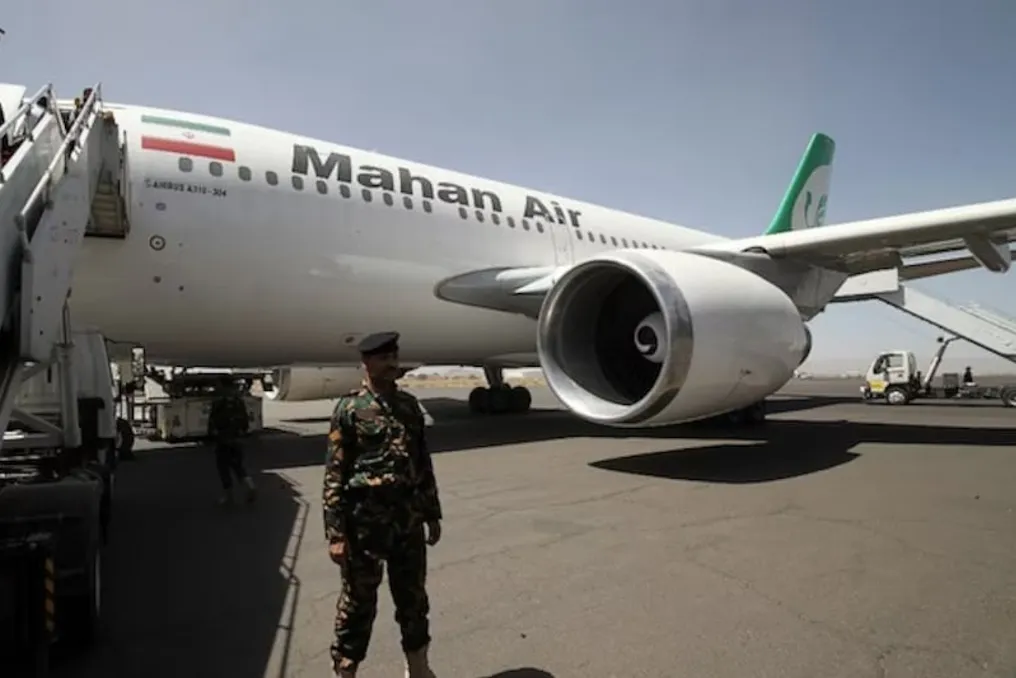
Furthermore, the US has increased pressure on Mahan Air, which was already under restrictions. The American side claims that Mahan Air provided support to Iran's Revolutionary Guards. Sanctions were imposed on some companies from Turkey and Malaysia based on allegations of assisting Mahan Air in acquiring aircraft and conducting international flights.

According to US officials, some companies helped Mahan Air obtain at least three Boeing 777 aircraft that had previously been retired in other countries and subsequently transferred for use by Iranian airlines.

Multinational companies are also targeted

The new actions are not limited only to Iranian airlines. The US has clearly stated that it can take action against foreign companies assisting Iranian airlines. Companies supplying aircraft, transporting cargo, or providing ticketing and sales-related services may also fall under US restrictions. This makes cooperation with Iranian airlines risky for such companies.

The Secretary of the US Treasury, Scott Bassent, warned that those providing economic assistance to Iran will face serious consequences. He cautioned companies from other countries that cooperating with Iranian airlines could lead to exclusion from the global financial system.

Indeed, Iran's aviation sector has long suffered from US bans, which has already complicated the acquisition of new aircraft and spare parts. The new restrictions may exacerbate this problem.

The US has also suspended a number of permits that allowed certain foreign airlines to operate American aircraft in Iran. Additionally, some benefits for specific flights and aviation services have been revoked. Experts believe this could affect Iran's international air travel, including key routes through Dubai, Doha, and Istanbul, creating difficulties for Iranian businesses and travelers.

These steps are part of President Donald Trump's campaign to increase economic pressure on Iran. The US aims to weaken major sources of Iranian income, now focusing more on the aviation sector alongside the oil business. US authorities state that the goal of these restrictions is to close channels for foreign capital and goods entering Iran, and that further actions may be directed against other enterprises and companies connected to Iran.
Similar stories

SpaceX rival raises billions of dollars to compete in the space launch market
Read more
olhardigital.com.br

SpaceX rival raises billions of dollars to compete in the space launch market

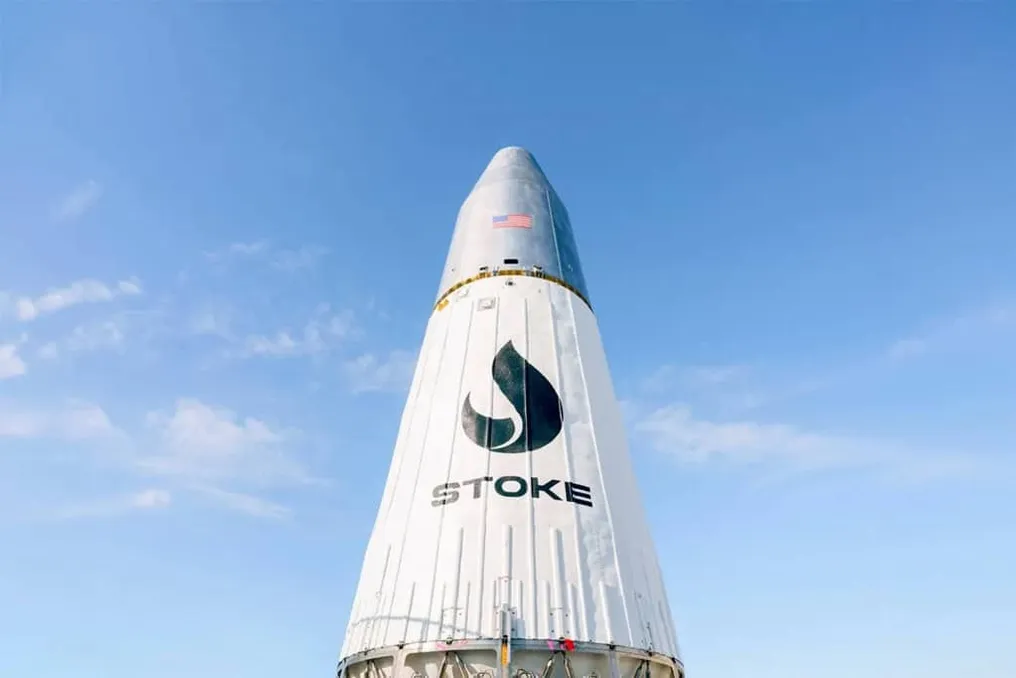
Stoke Space secured an investment of over US$1 billion (approximately R$5.1 billion) in its Series E funding round. This capital aims to boost the development of fully reusable rockets and compete with SpaceX in the low-cost launch sector. The company confirmed the initial closing of this round, which was led by Point72 Ventures and Spark Capital.

The raised funds will be allocated to expanding production capacity, increasing flight cadence, and financing the creation of a new generation of rockets. With this new investment, Stoke Space now totals US$2.3 billion (about R$11.7 billion) raised to date.

Thermal Protection Strategy

Andy Lapsa, CEO of Stoke Space, told TechCrunch that this round is crucial for scalability, allowing for infrastructure construction, increased production and flight frequency, as well as financing the second-generation vehicle.

Among the participating investors were General Innovation, Glade Brook Capital, US Innovative Technology, Washington Harbour Partners, Woven Capital, and Y Combinator. A crucial technical challenge is protecting the rocket's second stage during atmospheric re-entry, where it experiences extreme temperatures. While SpaceX faces difficulties in defining ideal materials and configurations for this protection, Stoke opts for an active cooling solution.

The company plans to circulate super-cooled liquid hydrogen through the vehicle's thermal protection system. According to Lapsa, this technology has already been extensively tested on land and will be implemented in the first flight. He added that it is possible to circulate excess coolant, adopting a cautious approach in initial flights.

Rocket Schedule and Capacity

Stoke's first rocket, named Nova Pathfinder, is scheduled for its inaugural flight in early 2027. This estimate was established after conducting various structural and operational tests of the first stage at the company's facilities in Moses Lake, United States. The subsequent phase will involve individual engine and stage ground tests before integrating them onto the launch platform.

Lapsa explained that the ground system and the rocket were tested separately, and the next step is to combine them. Stoke already has launch contracts for the Pathfinder, which can carry up to three metric tons to low Earth orbit, which Lapsa considers the largest debut vehicle from an American rocket company.

Despite the planning, the company itself acknowledges the inherent risks, given that few rockets complete their first flights strictly on schedule and with total success; merely reaching orbit would be a milestone for the startup. Lapsa assured that Stoke has several Pathfinder vehicles in production and is confident in putting them on the market and into orbit, regardless of this funding round.

Additionally, Stoke presented the Nova Block 2, a larger rocket that has been under development for years. Based on Pathfinder technologies, the Block 2 will have the capacity to carry 15 metric tons to low Earth orbit, slightly surpassing the capacity of the Falcon 9. The intention is to put this new rocket into operation in 2029, coinciding with the period Elon Musk predicted for the retirement of the Falcon 9.

For Lapsa, a potential discontinuation of the Falcon 9 would increase the disparity between supply and demand for launches. He stated that regardless of the Falcon 9's retirement, the space industry and economy grow at the same pace as launches, especially those aimed at third-party customers. The relevance of this scenario is accentuated by the advancement of Starship, allowing companies and governments to compete for space with their own SpaceX projects. Stoke, however, has not disclosed plans to operate its own space assets.

Competitive Expansion in Europe

Stoke is not the only one seeking capital to challenge SpaceX. The Exploration Company (TEC), a European company, announced a Series C round of US$450 million (about R$2.3 billion), making it the largest Series C ever achieved by a European space company. TEC operates in Germany, France, Luxembourg, Spain, and Italy and will use the new funds to create a European alternative to the services offered by SpaceX.

This fundraising occurred at a time of growing demand for orbital launches and the perception that space infrastructure cannot solely depend on SpaceX. TEC is led by Hélène Huby, a French citizen with two decades of experience at Airbus and ArianeGroup. Her goal is to transform the company into a European provider of reusable vehicles capable of carrying heavy payloads.

The company already has 10 contracted Nyx missions, totaling over US$2 billion (about R$10.2 billion) in commitments. Clients include entities such as the European Space Agency (ESA) and NASA. TEC's core project is Nyx, a reusable capsule similar to SpaceX's Dragon, which will transport cargo and, eventually, people. The objective is for Nyx to dock with the International Space Station (ISS) and return safely to Earth by November 2028.

The resources will also initially finance the Storm engine program, which will serve as the basis for future launches. Huby acknowledges that Europe needs to progress significantly to compete in the large launcher segment, citing Isar Aerospace, which recently launched its Spectrum rocket from Norway, but emphasizing that TEC aims for a much larger vehicle.

For Huby, expanding space infrastructure is vital due to projected growth in orbital applications. She predicted that in the next five to ten years, half of broadband communications could come from space, and data centers might be in orbit, requiring giant rockets and high launch frequency. To achieve this pace, TEC focuses on reusability, planning to use full-flow combustion cycles in its engines, a technology employed by SpaceX and Stoke.

TEC's expansion received endorsement from European authorities, including French President Emmanuel Macron and European Commission President Ursula von der Leyen. The announcement was made shortly before the International Space Summit in Paris, France, an event where the company signaled possible new disclosures about its project.

Dacia Spring 2027 leaves China, will be produced in Slovenia and replaces the electric Kwid
Read more
autopapo.com.br

Dacia Spring 2027 leaves China, will be produced in Slovenia and replaces the electric Kwid

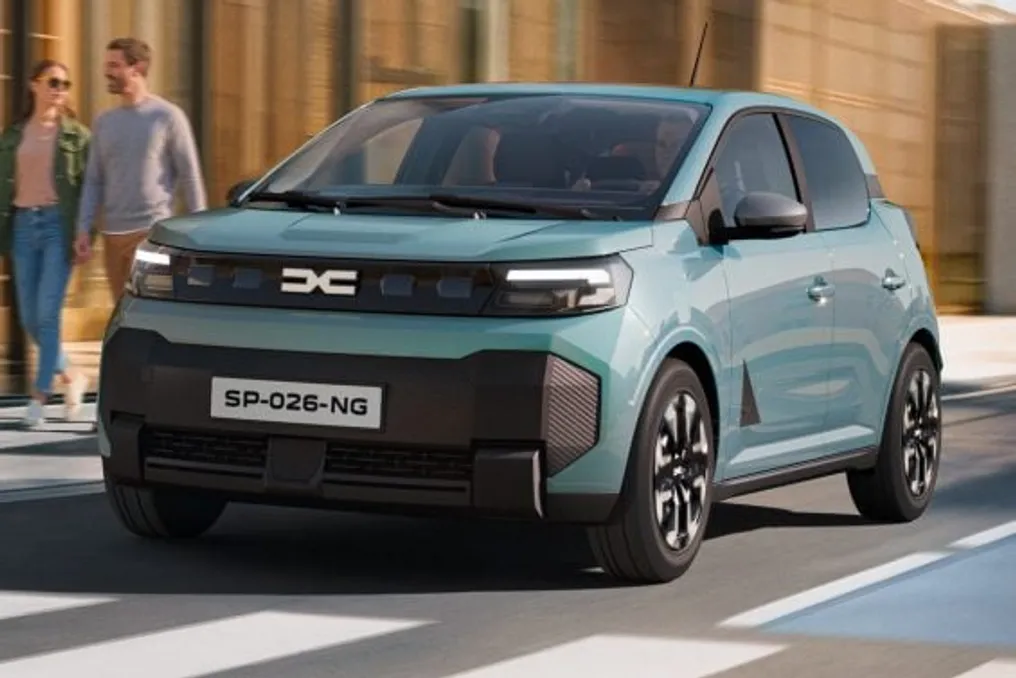
Dacia revealed on Tuesday, the 8th, the second generation of the Dacia Spring, its entry-level electric vehicle. This model will leave China and will start being manufactured in Slovenia. The starting prices are €17,900 (approximately R$ 107 thousand), potentially reaching €19,500 (R$ 116 thousand) in the most complete version. The manufacturer assures that no configuration will exceed €20 thousand (about R$ 119 thousand) in Europe, before any tax incentives are applied.

The relocation of production is the central point of this project, as the Spring shares the factory and the RG-EV Small platform with the new Renault Twingo E-Tech. This change allows the vehicle to avoid tariffs imposed by the European Union on electric cars imported from China, reintegrating it into incentive lists in countries like France. The first units should be delivered in early 2027, although the version produced in China will remain available for sale as a more affordable alternative until that date.

This base alteration also marks the end of a phase in the Brazilian market. While available in Brazil, the Renault Kwid E-Tech was essentially a rebranded Dacia Spring, coming from the same Chinese plant. Due to insufficient sales and lack of local scale, this hatchback was discontinued in May. In this scenario, Renault's entry-level electric bet in the country has shifted to the Geely EX2, resulting from the collaboration with the Chinese company. In contrast, the Spring has evolved, showing significant growth and improvements.

In terms of dimensions, the current Spring measures 3.85 meters in length and 1.74 meters in width, making it 15 cm longer and 18 cm wider than its predecessor. The design has been updated with a more vertical front, more prominent wheel arches, and plastic protection on the bumpers. The rear tilt windows, a feature maintained due to cost restrictions, remain on the model.

The cargo space is generous, offering 337 liters in the trunk, a capacity that can increase to 1,283 liters with the seats folded down, setting a record in the category, according to Dacia. Additionally, there is an optional 18-liter compartment located under the hood, intended for storing the charging cable.

The propulsion system is unique, featuring an electric motor that generates 80 hp and 17.8 kgfm of torque. This allows the Spring to reach 100 km/h in 12.1 seconds and achieve a top speed of 130 km/h. The battery, made of lithium iron phosphate (LFP) and with 27.5 usable kWh, guarantees a range of up to 250 km in the WLTP cycle.

The standard onboard charger has a capacity of 6.6 kW, and recharging from 15% to 80% takes nine hours using a standard socket. There is an optional package that increases the power to 11 kW, reducing this time to 1 hour and 55 minutes, and adds the possibility of 50 kW fast DC charging, completing the same segment in just 28 minutes. This optional package also includes the V2L system.

The 7-inch digital dashboard is supplied as standard equipment. The Expression version does not have a central screen and uses the Media Control system, which mirrors multimedia content onto the driver's phone. The Journey version incorporates a 10.1-inch Media Nav Live center, in addition to offering wireless connectivity with Apple CarPlay and Android Auto, a rearview camera, and keyless access.

Popular