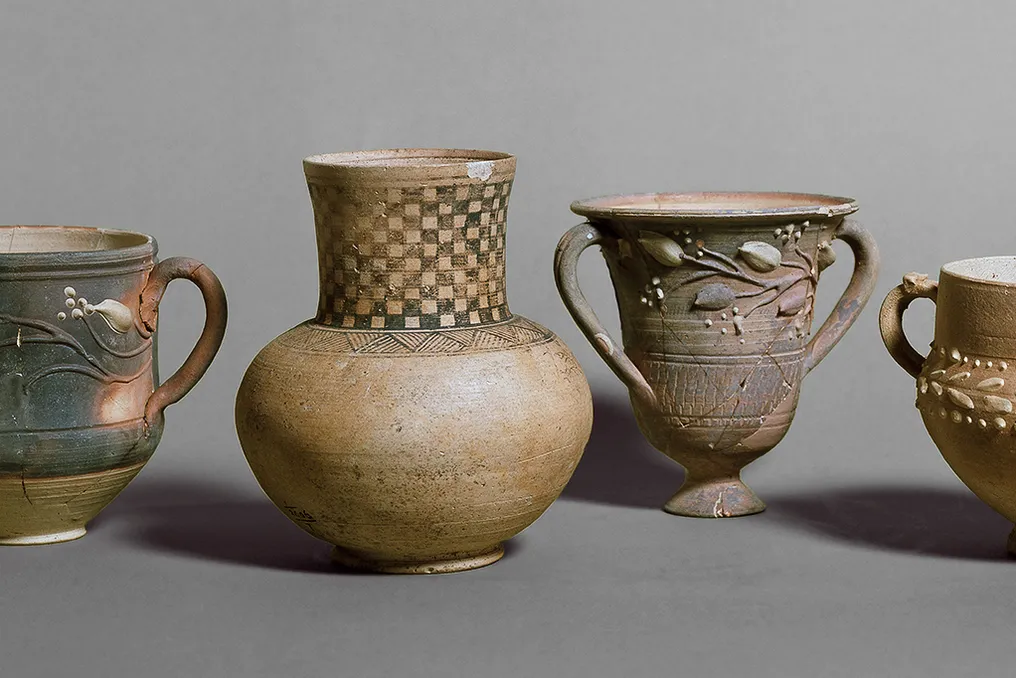
A new approach exists that allows for determining the authenticity of ceramic items by analyzing the Earth's magnetic field. Such finds, for example, on Marajo Island, where ceramics dating back up to 1600 years are discovered over centuries, often lack clear signs of authorship or signature.
Methods for dating artifacts exist, including radiocarbon dating, which is applicable to organic materials, but it is only effective for very ancient objects older than 50 thousand years, whereas most human artifacts are more recent.
A new method for assessing the age of ceramics was developed and presented in the journal Proceedings of the National Academy of Sciences. It is based on an unusual property of the ceramic composition—the orientation of magnetic particles.
Ceramics are made from clay, which contains fine ferromagnetic minerals. During firing, these minerals align according to the direction of the Earth's north magnetic pole, acting as microscopic compasses. This signal is preserved after cooling and is called Thermoremanent Magnetization (TRM).
Since the position of the Earth's magnetic pole constantly changes due to the movement of molten iron and copper in the planet's core, the TRM of an old item points in a slightly different direction than ceramics made today.
Furthermore, over time, ceramics are exposed to the geomagnetic field in another direction. Over centuries, some clay minerals acquire a second, weaker signal called Viscous Remanent Magnetization (VRM). Although this phenomenon has been studied for over a century, its signal has traditionally been ignored as noise interfering with the understanding of TRM.
As part of the new study, 45 ceramic samples were analyzed: 19 ancient excavated fragments and items, 6 modern clay vessels fired in traditional kilns, 16 impressions of clay seals fired in modern kilns, and 4 souvenir vessels.
Upon repeated heating, the samples gradually lose their signals. Researchers sequentially heated these samples to determine at what temperature the VRM signals disappear, leaving only the TRM. They found that any sample older than a thousand years requires heating to at least 112 ºC to erase the VRM, i.e., the most recent magnetic trace. Newer samples may have VRMs that are erased at lower temperatures. Currently, this method is used not for precise dating, but for determining whether an artifact is old or modern.
The team has already applied its new method to three 'questionable authenticity' artifacts confiscated by the Israel Antiquities Authority and determined that all of them were indeed fired in antiquity. This demonstrates another application of the method: detecting and identifying authentic artifacts that were illegally exported and sold.
Yoav Vaknin, a co-author of the study, noted the difficulty of proving the authenticity of smuggled artifacts because scientific analysis methods are publicly available. He stated in an interview with Haaretz: 'There is a problem in the field of authentication: on one hand, scientists publish their findings, and on the other, counterfeiters act secretly. Therefore, it is difficult for us to stay ahead of counterfeiters, as they can read our articles and find ways to bypass our methods.'
In his statement, Vaknin expressed hope that the new method will be useful to museum curators who wish to display only authentic artifacts; archaeologists and historians studying the societies that created them; as well as law enforcement agencies in their efforts to eradicate illegal trade in antiquities related to archaeological site looting and counterfeiting.