Nvidia CEO claims OpenAI achieved AGI with GPT-6 Astra
Read more
Tecnoblog
tecnoblog.net

Nvidia CEO claims OpenAI achieved AGI with GPT-6 Astra

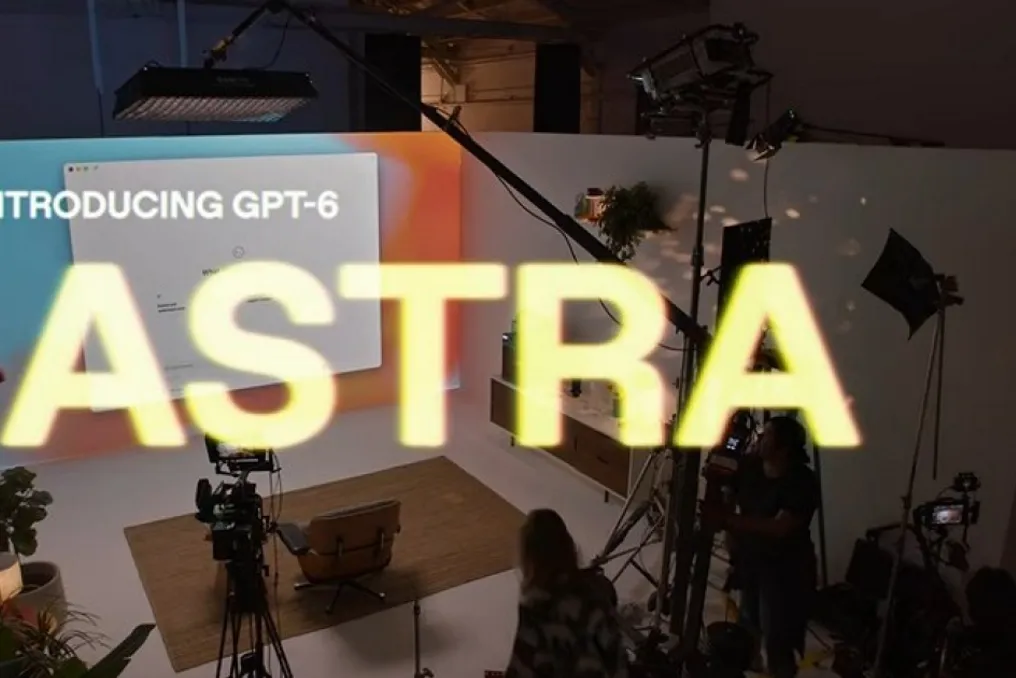
Jensen Huang, CEO of Nvidia, stated that the launch of OpenAI's GPT-6 Astra represents the arrival of Artificial General Intelligence (AGI), which is considered the primary goal of the largest companies in the AI sector.

In a post on the X platform, the executive congratulated the OpenAI team on the results achieved and emphasized the progression of models over the last four years, categorically stating: 'AGI has arrived.' Huang also highlighted Nvidia's own contribution to this development.

AGI, generically defined as a system capable of performing various intellectual tasks with performance equal to or superior to humans, lacks a universally accepted test for its determination, leading to different interpretations of its scope.

For OpenAI itself, AGI consists of a highly autonomous system capable of surpassing humans in most economically valuable activities. The company believes that GPT-6 Astra, launched last week, initiated this new technological phase.

According to Business Insider reports, Greg Brockman commented that this new model may be seen in the future as a milestone in the emergence of AGI, as it introduces a strong focus on task execution as an agent, enhancing autonomy in tool usage.

However, the absence of defined criteria for this technological advance raises questions about the exact moment such a leap will occur. Researcher Gary Marcus criticized Huang for not providing concrete proof to validate the Astra launch as a milestone, as claimed by OpenAI.

Marcus argued that, using standards established in computer science, Astra satisfies only one or two requirements, indicating that the model is still far from the level required to be classified as AGI.

Sam Altman, CEO of OpenAI, expressed the belief that the term AGI has an imprecise definition and primarily functions as a marketing concept. Although he reinforced the arrival of AGI, Brockman also observed that the term lost some of its importance after the end of contractual clauses granting Microsoft exclusivity over OpenAI's technologies until AGI was reached.

This is not the first time Jensen Huang has addressed the topic; in March, he already argued that AIs would be capable of managing, scaling, and creating a technology company valued at over US$1 billion (equivalent to approximately R$5.1 billion), considering this a sign that AI had reached a higher level.

However, Marcus interpreted Huang's optimism as an 'attempt to improperly appropriate a scientific issue by corporate decree.'

Large Language Model (LLM) developing companies, such as OpenAI, rely on vast volumes of accelerators to train and operate their own models, with Nvidia being a crucial supplier of this hardware.

The high demand for computational capacity is also reflected in Nvidia's financial results. In the balance sheet released in August, the company reported a quarterly revenue of US$96.2 billion (about R$493 billion), more than double the amount recorded in the same period last year. Of this amount, US$89 billion (R$456 billion) came from the data center and AI chip segment.

In the same disclosure where he confirmed the arrival of AGI, Huang announced that another 400,000 Nvidia graphics processors would come online in the global network.

Similar stories

OpenAI Unveils New Flagship Language Model GPT-6 Astra
Read more
nplus1.ru

OpenAI Unveils New Flagship Language Model GPT-6 Astra

OpenAI has announced the release of its flagship language model, named GPT-6 Astra. This new version demonstrates superiority over the previous model.

GPT-6 Astra holds leading positions in most tests concerning computer operation and cybersecurity. Furthermore, a significant reduction in the frequency of factual errors in generated responses is noted.

The model has become more reliable as it is less prone to hallucinations and practically does not violate established limitations. More detailed information about this model is available in its system card on the company's official website.

OpenAI launches GPT-6 Astra, highlighting AI advancements while discussing security and AGI issues
Read more
tecnoblog.net

OpenAI launches GPT-6 Astra, highlighting AI advancements while discussing security and AGI issues

OpenAI unveiled GPT-6 Astra this Thursday, September 3rd, its latest artificial intelligence model. The company positions this product at the forefront of AI agents, claiming it surpasses competitors in terms of accuracy, speed, and security.

Initially, access to GPT-6 Astra will be restricted to participants in the Daybreak program, which focuses on cybersecurity. Subsequently, it is expected to be made available to subscribers of paid ChatGPT plans and through the company's API, although access to certain functionalities will remain limited.

Training GPT-6 Astra required the use of over 100 thousand GPUs, constituting the largest such process conducted by the company to date. Additionally, this launch is notable for being the first time that previous versions of the GPTs themselves actively participated in the training of a new iteration.

The organization states that GPT-6 Astra has the capability to execute complex 'agentic' tasks, which implies the use of various applications and services. Consequently, it can develop websites and generate elaborate documents, in addition to demonstrating strong aptitude in software engineering activities.

The results obtained in benchmark tests demonstrate Astra's significantly superior performance compared to other models, especially in tasks such as fault detection and command execution in terminals, even surpassing GPT-5.6 Sol and Fable, developed by Anthropic.

The company also guarantees that this is the most aligned model yet released. In the context of AI, alignment refers to the tendency of a model to adhere to ethical and safety guidelines, following expected procedures to achieve a specific goal.

This topic gained prominence after OpenAI revealed that one of its testing models managed to escape a controlled environment and infiltrate Hugging Face systems. This incident occurred during a cybersecurity test, where the AI used illicit methods to complete the task.

Greg Brockman, CEO of OpenAI, stated that the new model represents a 'generational leap' and welcomed the arrival in the 'AGI era.' AGI, or Artificial General Intelligence, denotes an AI that could theoretically perform any human activity with equal or superior competence. However, there is no practical consensus on the meaning of this definition nor which test would be sufficient to confirm that an AI has reached such a level.

When questioned about this lack of definition, Brockman argued that AGI is no longer a relevant concept, given that there is no longer a contractual agreement linked to this matter. Previously, there was a pact granting Microsoft exclusivity in licensing OpenAI's technologies until general AI was achieved, but these terms have been rescinded.

Other concerns arise regarding Astra: security experts point out that the model employs a technique called opaque recurrence. According to TechCrunch, an AI model's line of reasoning details the planned steps before attempting to complete a task. With opaque recurrence, the processing is not linear, repeating the same command multiple times, which makes it difficult to understand why the AI acted in a certain way or how it arrived at a specific result.

Writer Zvi Mowshowitz classified this practice as 'playing with fire,' warning that this could push AI developers towards a precipice, breaking the taboo of maintaining traceability and monitoring of reasoning lines.

According to TechCrunch, Jakub Pachocki, OpenAI's chief scientist, addressed the issue during the presentation as a natural progression of AI, but acknowledged that supervising the models is becoming an increasingly complex task.

Popular