How Bone Conduction Headphones Work and Their Features
Read more
Tecnoblog
tecnoblog.net

How Bone Conduction Headphones Work and Their Features

Bone conduction headphones have become popular due to their open design, which does not obstruct the ear canal. This format has appealed to runners and cyclists because it provides lasting comfort and allows the user to hear ambient sounds while exercising outdoors.

Unlike traditional devices that project sound through the air, this technology converts audio into vibrations that are transmitted directly through the facial bones to the inner ear. This mechanism bypasses the eardrum, keeping hearing completely unobstructed.

A bone conduction headphone is an audio device that sends sound through vibrations in the facial bones, directing it to the cochlea in the inner ear. By bypassing the ear canal and the eardrum, it allows for clear listening to music or making calls without blocking external noises.

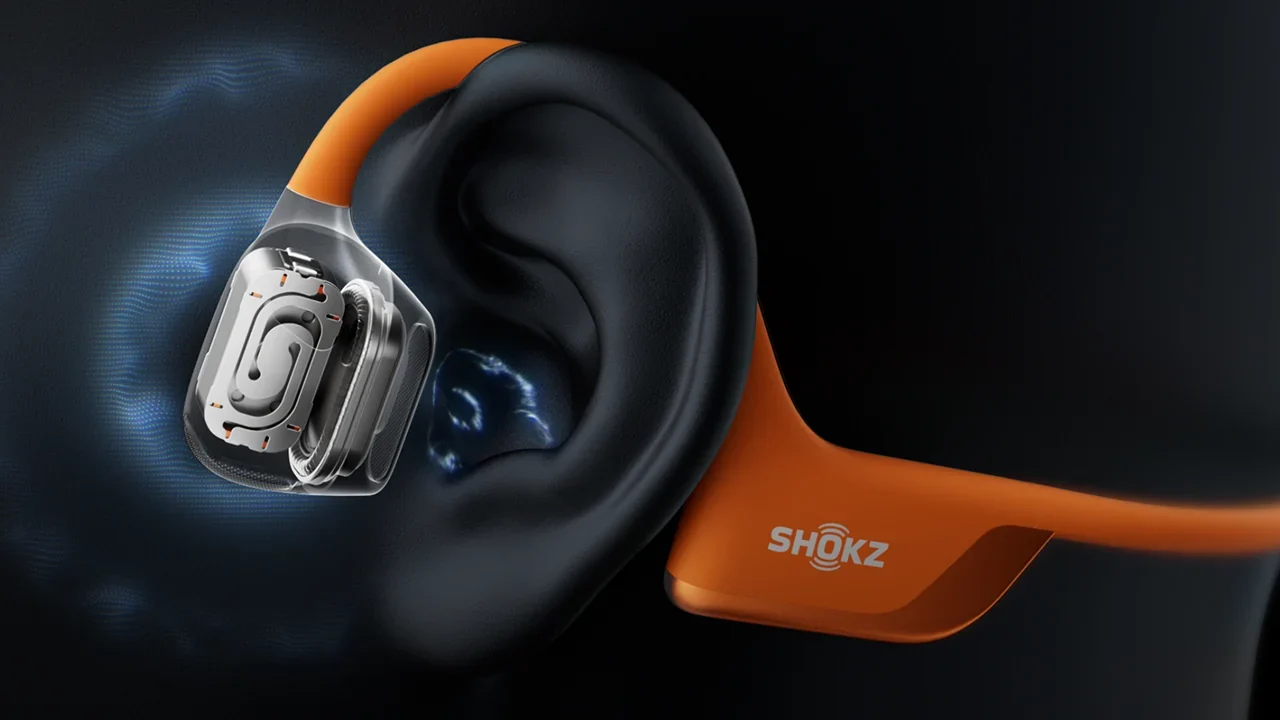
These headphones transform sound signals into mechanical vibrations. Small components, called transducers, which rest on the face, replace conventional speakers that work by pushing air.

These vibrations travel through the tissues and bones of the temporal region, such as the zygomatic arch. The sound does not pass through the eardrum or the ear canal, freeing the ear to capture the surrounding environment.

When the vibrations reach the cochlea, located in the inner ear, they are translated by sensory cells into nerve impulses. It is at this point that the brain interprets these signals, transforming them into the music or conversation the user is listening to.

Due to its direct contact operation, it is possible for the transducers to vibrate slightly at high volumes, which may cause a small amount of audible audio leakage perceptible to people very close by.

Bone conduction headphones are not inherently harmful, presenting risks similar to common models. The real danger arises from prolonged use at very high volumes, which can damage the hair cells, resulting in tinnitus and induced hearing loss.

To protect hearing, it is essential to adopt preventive measures, as acoustic energy continues to affect the cochlea. It is recommended to follow the 60/60 rule: keep the volume at 60% of maximum capacity for no more than 60 consecutive minutes.

The protection level of bone conduction headphones depends on the model's IP certification, which ranges from sweat resistance to full immersion. Specific running models, such as the Shockz OpenRun, offer intermediate sealing against rain and splashes but are not suitable for submersion.

Models intended for water, such as Shokz OpenSwin Pro and H20 Audio Tri 2 Pro, have IPX8 or IP68 ratings. This advanced protection ensures continuous sealing underwater, allowing safe use during swimming.

Bone conduction headphones combine comfort and greater safety in outdoor environments by keeping the ear canal clear. These are the main benefits of this accessory technology.

However, despite the advantages, bone conduction technology requires the listener to give up the sound quality and isolation provided by traditional models. These constitute other limitations of the model.

Similar stories

Scientific explanation of why recorded voice sounds different from naturally spoken voice
Read more
olhardigital.com.br

Scientific explanation of why recorded voice sounds different from naturally spoken voice

The perception that a recorded voice sounds like that of a stranger occurs because an individual rarely hears their own voice in the exact way it is emitted. When speaking, the auditory system receives the sound through two channels simultaneously: one via air, similar to any external noise, and another through vibrations transmitted by the skull bones, which resonate along with the vocal cords.

This second mechanism, known as bone conduction, intensifies low frequencies, giving the voice a more robust tone. The recording, however, captures only the sound propagating through the air, resulting in audio that sounds higher pitched and less familiar.

It is important to note that this version captured by audio constitutes the real voice—the one that friends, family, and colleagues hear daily. Bone conduction is a phenomenon exclusive to the act of speaking and does not manifest outside the body. The world is already accustomed to this 'strange' version, but the individual may not be used to hearing it.

The human ear processes sounds through two distinct pathways. The most common is airborne conduction, where sound waves travel through the air, enter the ear canal, vibrate the eardrum, and the brain interprets this signal. This is the method by which we perceive any external sound, including the speech of other people.

The second pathway is bone conduction. During speech, the vocal cords vibrate, and this vibration spreads through the bones of the skull and jaw until it reaches the cochlea, a structure in the inner ear responsible for converting vibration into an electrical impulse sent to the brain. This path does not involve the eardrum.

Bones are more efficient at transmitting low frequencies than high frequencies. Consequently, the combination of both paths—air and bone—makes one's own voice sound deeper and fuller to the person producing it. However, a cell phone microphone only records airborne conduction, generating a sound that is higher pitched and, for many people, thinner than imagined.

The discomfort when listening to one's own recorded voice is also linked to how the brain establishes sonic identity. It associates a fixed voice with itself, based precisely on the version reinforced by bone conduction. When this pattern undergoes any change, even a minimal one, the sound is interpreted as belonging to another person.

This phenomenon is popularly called the 'recorded voice effect' and affects virtually everyone, not being restricted to those who have insecurities about their own speech. The initial reaction of strangeness is natural because the brain is processing novel information about what seemed definitive: one's own vocal identity.

Fortunately, this discomfort tends to decrease with repeated exposure. The more someone listens to their recorded voice—whether in WhatsApp messages, videos, or calls—the more the brain integrates this version into their sonic self-image. Professionals such as voice actors, presenters, and singers, who listen to their recordings continuously, often report less discomfort over time due to this gradual familiarization.

Next time an audio clip causes a feeling of apprehension, one should remember that the 'strange' voice from the recorder is exactly the one heard in calls, meetings, and daily conversations. The only difference is that this time, the listener is the individual themselves.

Popular