Despite the apparent distance between South Africa and the Arctic, the qualities required for success in both regions—resilience, the ability to remain calm under pressure, and the skill to lead in unpredictable conditions—are strikingly similar. In South Africa, from the Limpopo mines to the shipping lanes off the Cape of Good Hope, competence has always been valued above tradition.
The discussion about who is entitled to hold certain positions is gradually changing in many demanding industries such as mining, shipping, engineering, and advanced technologies. This is not because standards are becoming easier, but because more women are entering professions previously considered inaccessible to them and are successfully proving their worth in real working environments.
In countries like South Africa, the discussion about female representation in leadership and technical roles is increasingly linked to broader issues of skills development, opportunities, and the future of the labor market. Simultaneously, success stories of women in extreme professional fields are becoming more visible worldwide—they serve as examples not just of representation, but of competence, resilience, and leadership under pressure.
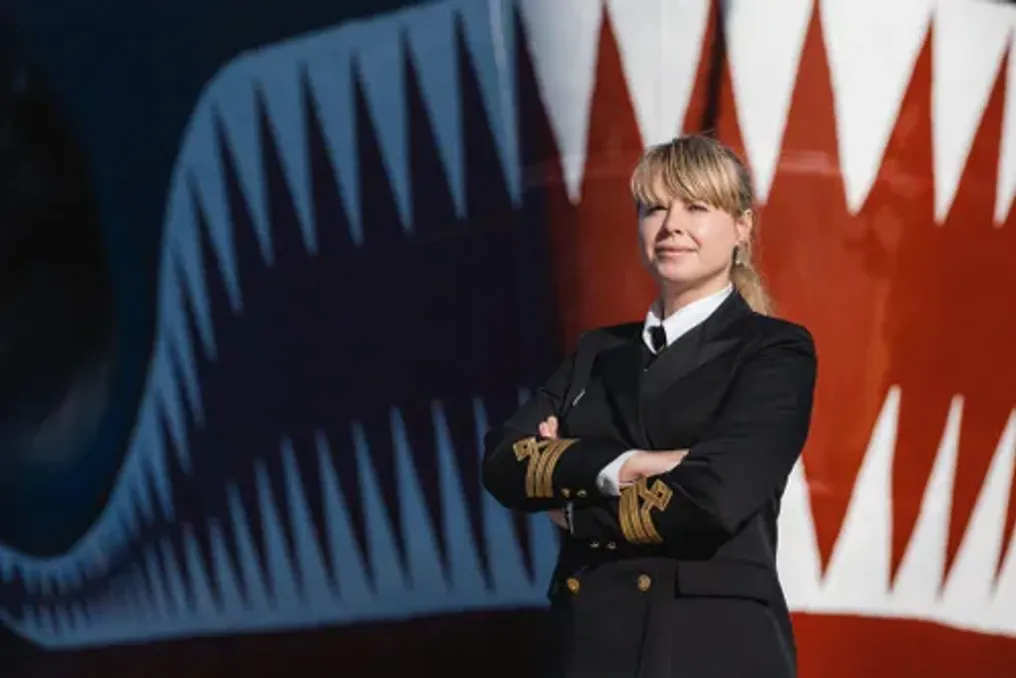
One such striking example is Marina Starovoytova, the world's first female captain of an icebreaker. Her career is defined not by the title itself, but by what it took to earn it. She faces constant uncertainty and constantly changing conditions. The weather can change abruptly, her crews can be isolated from the mainland for months, and even routine operations can turn into high-pressure situations requiring quick decisions and complex coordination.
For Starovoytova, respect is earned through actions, not titles. She notes: 'If you are a professional and can do your job well, you will earn respect. When I worked side-by-side with sailors on the open deck at temperatures below -30°C, I proved that I was equal to my shipmates through hard work.'
Her experience also challenges perceptions of what leadership looks like in extreme conditions. Industries associated with harsh environments are often portrayed as strictly hierarchical, yet Starovoytova argues that effective leadership depends on flexibility and the ability to accurately assess the situation.
Captain Marina Starovoytova says: 'I believe a captain must possess a full spectrum of approaches. When quick decisions are needed, one must be straightforward. But in daily operations, I prefer collaboration because every crew member's experience is valuable. The goal is always the same: the safety of the crew and the vessel.'
For the younger generation, such stories make highly specialized professions more accessible and visible. Careers in engineering, navigation, or advanced technologies are sometimes perceived as unattainable opportunities, especially by students who do not see many people in these complex professions around them.
This is one reason for the growing interest in international educational initiatives such as 'Icebreaker of Knowledge'. This program, supported by Rosatom, provides students from different countries with the opportunity to participate in a scientific expedition on an icebreaker and learn more about professions related to technology, research, and navigation.
For a schoolgirl from South Africa, Isabella Aylin Nell, who participated in last year's expedition, this experience was more than just an adventure. She emphasized: 'I used to think that a career in science or technology was just a dream. After this expedition, I know it can be something more—it can be something you truly create.'
Such experiences are significant. They help bridge the gap between abstract discussions about future careers and real examples of people working in these environments. Furthermore, they demonstrate that leadership and expertise in technical fields are no longer limited by traditional views on gender and origin. Isabella shares this view.
She added: 'I don't think I ever felt that a career in technology wasn't for me, not my area of expertise, but I definitely saw how other girls felt. This expedition taught me that I am right without doubting myself, and that I should encourage others to see things the way I do.'
Schoolchildren from South Africa can follow Isabella's example this year and go to the Arctic to explore the fascinating world of nuclear technology and natural sciences. On May 5th, the international selection process for the 'Icebreaker of Knowledge' scientific and educational expedition began, involving 23 countries, including South Africa, Namibia, Rwanda, and others. Winners will participate in the Arctic expedition on the nuclear icebreaker 50 Let Pobedy, which will take place in August. Some participants will become the first representatives of their countries to reach the North Pole and experience the Arctic's natural environment, much like the heroines of today.
South Africa needs people capable of working under pressure, leading during periods of uncertainty, and making decisions when the margin for error is minimal. These qualities are not dependent on gender. More importantly, they have no ceiling. From engineering and energy to maritime professions and global scientific projects—role models are making these career paths more accessible, not lowering the bar, but showing that it is achievable.