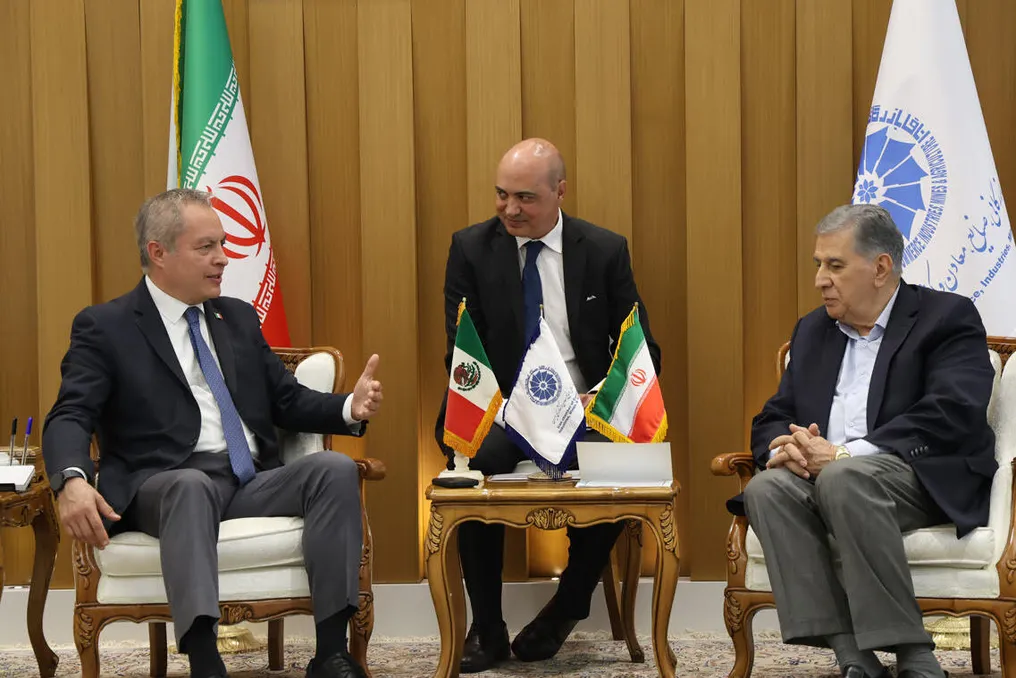
Head of ICCIMA and Mexican Ambassador to Tehran Discuss Expansion of Trade Ties and Joint Cooperation
Read more
Tehran Times
www.tehrantimes.com

Head of ICCIMA and Mexican Ambassador to Tehran Discuss Expansion of Trade Ties and Joint Cooperation

A meeting took place in Tehran between the head of the Iranian Chamber of Commerce, Industry, Mining and Agriculture (ICCIMA) and the Mexican Ambassador to Tehran. During the negotiations, the parties emphasized the importance of exchanging trade delegations for better acquaintance of economic actors with each other's opportunities. The need to create a joint committee for more effective coordination in developing trade and investment relations was also discussed.

Samad Hassanzadeh, President of ICCIMA, noted that the current level of exchanges and trade between the two countries is insignificant, despite the significant production and investment potential of both nations. He stated that relations must develop upwards through bilateral interaction.

Hassanzadeh mentioned the special circumstances of Iran arising from recent unjust aggressions. He stressed that Iran is a peaceful country and has always sought to develop economic ties with various states in accordance with available possibilities. Therefore, he proposed forming a joint committee with Mexico to strengthen trade relations, noting the Chamber's readiness to implement this idea.

The President of ICCIMA focused on the exchange of economic information by both parties within this committee, adding that through it, benefits could be gained from other countries that have ties with Mexico or Iran.

He spoke about Iran's activities in areas such as new agricultural technologies, industry, artificial intelligence, and others, and reported that the Chamber is ready to host a trade delegation from Mexico in these fields, provided the appropriate conditions are met. Furthermore, he touched upon technical and engineering services, the possibility of implementing large contracting projects, and the significant capabilities of Iranian companies in the field of medical equipment, noting the potential for joint cooperation in these sectors.

Hassanzadeh listed a wide range of goods that Iran can export, including petrochemical products, minerals, mining products, agricultural products, new agrotechnologies, confectionery and chocolate, carpets, chemical fertilizers, industrial equipment, technical and engineering services, as well as tourism and medical tourism. He also noted the availability of opportunities for joint investment, which is welcomed by the Iranian side.

He expressed hope for the early cessation of global conflicts, the advent of peace, security, and tranquility, as well as the resolution of transport and money transfer issues. Only under such stability, in his opinion, can Iran strengthen ties with other countries, including Mexico, as he believes that no country can develop alone.

Furthermore, Guillermo Puente Ordórika, the Mexican Ambassador to Tehran, expressed satisfaction with future cooperation between Iran and Mexico. He stated that both countries possess good potential for strengthening ties and acknowledged that past contacts were limited due to the current situation.

The Ambassador mentioned that he visited Iran during the COVID-19 pandemic, and that sanctions against Iran following this event hindered the development of cooperation. Nevertheless, he positively assessed the proposal to create a joint committee, believing that this approach would positively influence the expansion of relations. He also noted that the new Mexican government has developed an economic program for cooperation with all countries in the world, taking into account all factors for trade development.

Guillermo Puente Ordórika emphasized that the Mexican government's international trade program covers various sectors and includes attracting foreign investment. Therefore, the creation of a joint committee could be the first step towards expanding the partnership.

The Ambassador deemed it necessary to establish a link between ICCIMA and private Mexican companies based on the created structure and supported the idea of exchanging trade delegations. He noted that he is familiar with Iran's potential in the medical tourism sector, which could be a good area for cooperation. In turn, he pointed to Mexico's high potential in the automotive sector, auto parts manufacturing, and heavy industry, where Iran could find points of convergence.

The Ambassador proposed a phased plan: first, create a joint committee, then exchange trade delegations, and only after both sides have studied each other's opportunities and resources can they move on to the next steps.

}))
Similar stories

Official Spokesperson of Iran's TPO Reports on Developing Rial-Based Trade Mechanisms with Neighbors
Read more
www.tehrantimes.com

Official Spokesperson of Iran's TPO Reports on Developing Rial-Based Trade Mechanisms with Neighbors

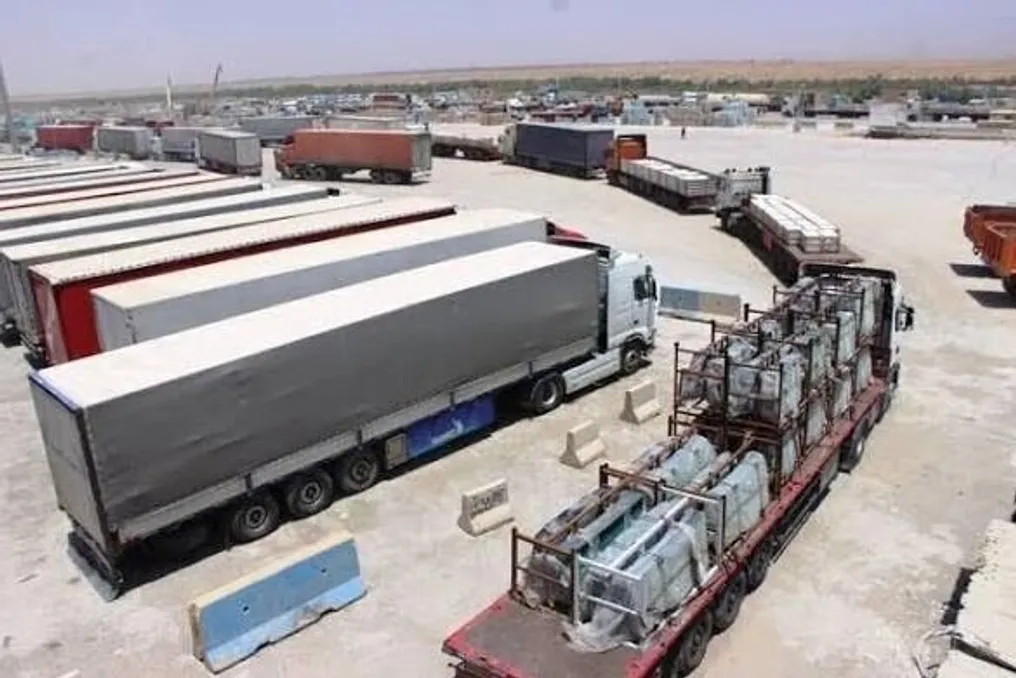
In Tehran, the Deputy for Commercial Services of the Iranian Organization for the Promotion of Trade (TPO) announced the country's plans to expand trade ties with neighboring states. Initiatives have been proposed to create a trade mechanism based on the rial to facilitate the exchange of goods with countries such as Iraq and Afghanistan. This issue is currently being reviewed in conjunction with the banking system and exchange offices.

Mohammad Sadegh Ghannadzadeh stated in an exclusive interview with IRNA that a significant portion of Iranian exports goes to countries like Iraq and Afghanistan, and sometimes traders from these countries receive rials to purchase goods from Iran. Therefore, the idea was put forward to establish a clear procedure for such exchanges with neighboring states.

He added that while exports should ultimately bring in foreign currency, mechanisms are being developed involving the banking system and exchange points to solve existing problems and simplify trade with neighbors. Corresponding proposals have also been submitted to the Central Bank. The final procedure has not yet been implemented by the Central Bank and is still under review.

Ghannadzadeh noted the government's plans to develop trade with neighboring and friendly countries, explaining that individual programs have been developed for different states, taking into account their capabilities and conditions. These programs cover trade, transport, financial and banking systems, payment methods, and alternative ways of doing business.

These programs are being implemented across countries through working groups, joint committees, joint commissions, and the exchange of trade delegations to eliminate obstacles to the development of trade relations. The Deputy for Commercial Services of the Iranian TPO mentioned that negotiations were recently held with Pakistan, and necessary actions and negotiations will subsequently take place with Iraq, Turkey, Afghanistan, and other target countries.

Assessing the state of Iran's foreign trade after the recent war, Ghannadzadeh stated that the decline in trade following the conflict was natural and largely inevitable due to increased risks in the international arena, especially in maritime logistics and transport. Since a large part of the country's trade is conducted via sea routes, tensions and reduced movement of the transport fleet affected part of the trade turnover.

To manage these conditions, particularly regarding imports, the government has focused on ensuring the supply of vital goods, essential raw materials, and production materials. Thus, the decline in trade mainly affected commodity groups that do not seriously damage the economy.

He emphasized that despite the overall decrease in the volume and value of imports and exports, efforts have been made to reduce the reduction in trade of vital goods and raw materials for production, thereby preventing serious pressure on meeting basic needs and maintaining production capacity.

Beyond immediate trade settlement mechanisms, Iran is conducting a broader strategic restructuring of its commercial relations with neighboring states. The government recognizes that traditional banking system channels and trade routes, which have long depended on dollar transactions, are no longer sufficient or reliable in the context of the changing geopolitical landscape. In response, Tehran is developing special trade packages for each country that go far beyond simple currency regulation. These comprehensive plans cover transport corridors, simplification of customs procedures, partnerships in joint production, and barter exchanges where appropriate.

Regarding Pakistan, recent negotiations focused on restoring land border crossings and optimizing customs procedures to reduce transit time. With Iraq, the focus is on formalizing the rial payment system, which already functions informally through exchange houses. Turkey remains a priority for expanding road freight routes and industrial cooperation, while Afghanistan offers opportunities for food and construction material exports through simplified trade protocols.

It is critically important that the government is also exploring alternative trade mechanisms, such as countertrade, exchange of raw materials, and direct investment exchanges with resource-rich neighbors. These approaches aim to reduce dependence on hard currency while deepening economic integration in the region. By addressing each trading partner individually—through joint commissions, delegation exchanges, and industry working groups—Iran seeks to build resilient commercial ties capable of withstanding external pressure and supply chain disruptions, ensuring stable trade with neighbors as a pillar of the national economy.

Popular