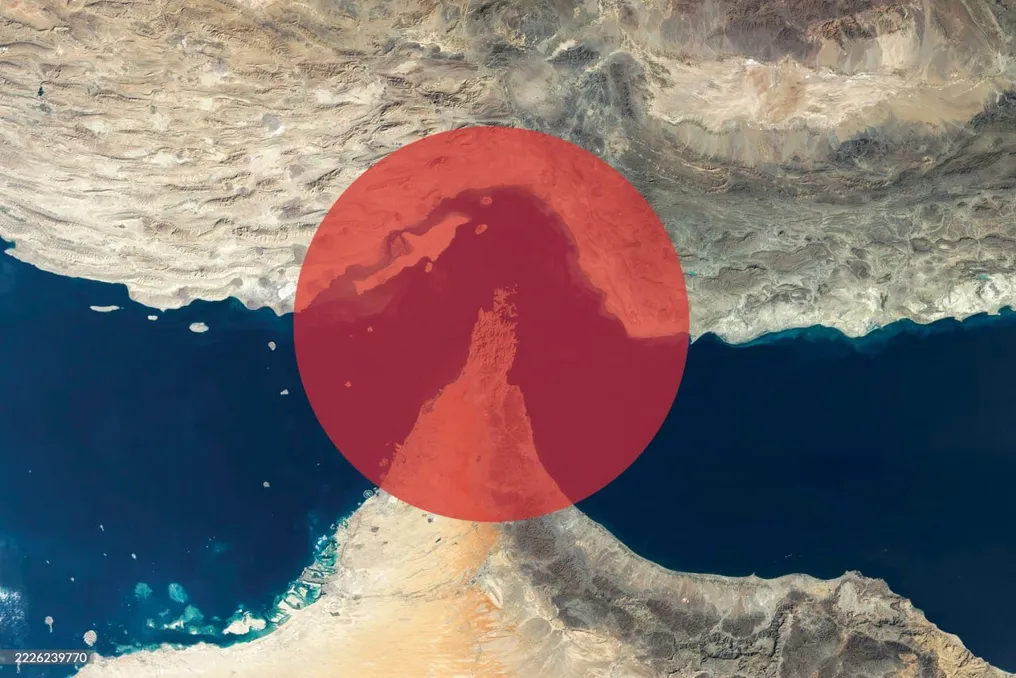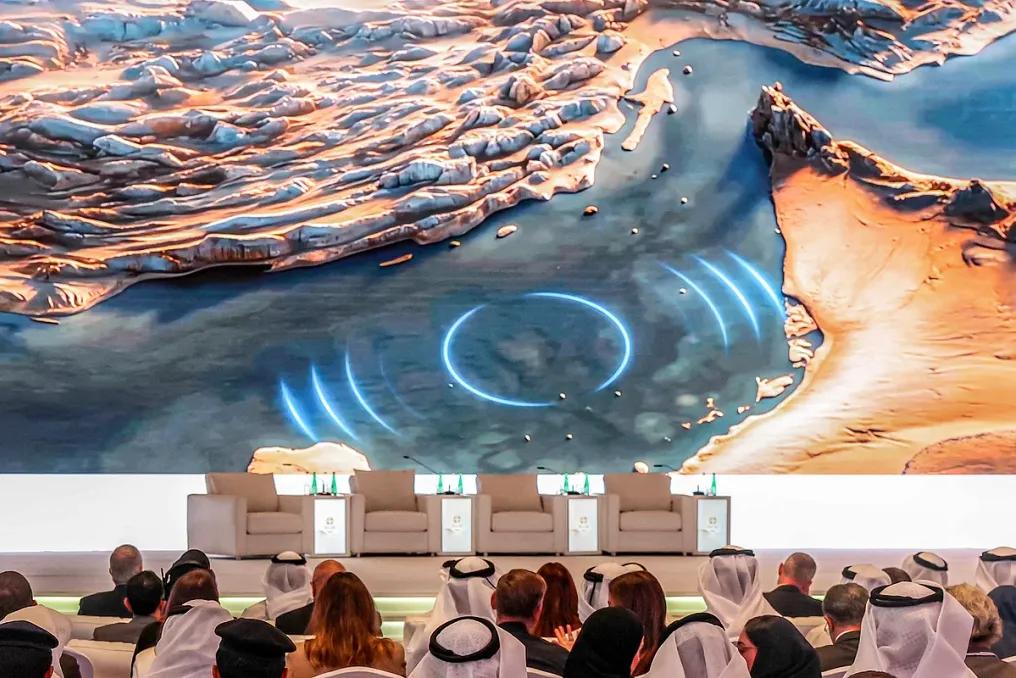
Experts participating in the forum in Abu Dhabi on Tuesday warned that the Strait of Hormuz does not need to be physically closed to become a global trade choke point. Through rising insurance costs and selective threats to shipping, Iran is capable of exerting pressure without declaring a full-scale blockade.
This warning came amid commercial traffic through the waterway remaining significantly below normal levels, while the cost of insuring against military risks has sharply increased, complicating the transit economy for ship operators.
Maritime Security Expert Allison Minor noted that Iran has demonstrated the ability to effectively manage shipping without physically closing the strait, using commercial risks to selectively influence which vessels can pass. According to her, Iran is attempting to formalize its active control over the right of transit.
Minor compared Iran's actions to the Houthi tactics during the Red Sea campaign, where attacks and threats were used to increase commercial shipping risks. Instead of blocking every vessel, selective impact allows the actor to determine which ships can pass and which cannot, which is a more flexible form of pressure.
This raises broader concerns, as adopting such a system could turn maritime access into a lever in disputes between states. Minor emphasized: 'If we accept the idea that Iran can control vessel movement, if we formalize it, they can suddenly use it as leverage in various areas.'
The panel discussion at the Hili Forum titled 'World of Chokepoints and Blockades?' focused on how countries can reduce their vulnerability to disruptions affecting sea routes, energy supply, and wider trade networks. Minor advised governments to help businesses transition from traditional 'just-in-time' supply chains to a 'just-in-case' approach, where resilience and alternative sources carry greater weight alongside economic efficiency.
She added that the private sector naturally prioritizes profitability, so governments must help companies offset the additional costs associated with building resilience. One potential solution she named was state insurance for military risks to mitigate the commercial risks faced by shipping companies. Minor recalled that the US used such insurance during previous maritime conflicts, but recent attempts to provide similar services have not offered sufficient coverage.
Minor proposed that Gulf countries consider collaborating to create insurance mechanisms capable of restoring confidence among ship operators, even while threats persist.
Dr. Mary Papachinopoulou, founder and managing director of MARDIPLO Maritime Corporate Diplomacy, stated that the urgency of the situation is evident from incidents already affecting shipping. She recounted how a ship owner contacted her on Tuesday morning after a vessel carrying cargo loaded in Fujairah was hit by a projectile while exiting the strait. This incident showed that the consequences extend beyond the vessel itself, affecting cargo, crew, environmental risks, and higher economic costs.
Papaschinopoulou called for the creation of a new maritime security architecture that functions both before and during crises. At the preventive level, she suggested strengthening cooperation between the state and industry, including a common operational picture of maritime security for commercial transport. This could involve alerts, joint situational analysis, and liaison officers connecting ports, terminals, ship owners, and other industry participants.
However, according to Papachinopoulou, such a system cannot be developed solely by governments, as shipping companies and governments have different priorities and different risk perceptions. She also noted that 'maritime diplomacy' could play a role during crises by creating rapid communication channels between governments and industry stakeholders. An effective system, in her view, must include both kinetic and non-kinetic responses, as well as preventive planning and crisis response mechanisms.
Dr. Jens Hillebrand Paul, a geo-economics expert, stated that chokepoints should not be viewed merely as narrow physical passages on a map. He noted that physical geography is neither a necessary nor a sufficient condition for something to become an economic choke point. Instead, a choke point arises when economically vital activities are concentrated in a specific location, and there is a dependency that is difficult or expensive to replace.
He cited semiconductor manufacturing, payment systems, cloud infrastructure, and artificial intelligence as examples of non-physical choke points. Paul also pointed out that the degree of 'chokepointness' is important, as a failure does not have to completely stop the flow of goods or services to impose significant economic costs. While risk management can reduce or shift exposure, it cannot eliminate dependencies entirely.
The panel also discussed how Gulf countries can diversify their vulnerability to maritime and energy disruptions. Dr. Li-Chen Sim, an energy and geo-economics expert, reported that Gulf countries are already adapting to changing conditions by investing outside the region and assuming some of the risks traditionally borne by clients. These countries are expanding their investments in renewable energy in Asia, Africa, Europe, and other markets, while adjusting energy and shipping trade strategies.
She added that some energy producers in the Gulf are offering alternative loading schemes outside conflict zones, exploring state insurance, and establishing their own fleets. Owning vessels can reduce the risks faced by Asian clients who would otherwise have to charter or operate their own ships for energy transport. Sim also pointed to the rapid growth of renewable energy in Asian markets as countries seek to reduce their dependence on volatile hydrocarbon imports.
Panelists stressed that diversification must go beyond individual trade routes. Minor stated that countries need to diversify their suppliers, ensuring that alternative suppliers do not all depend on the same choke point. She also argued that infrastructure connecting various markets, including railways and pipelines, requires long-term regional cooperation. Such cooperation must cover not only physical infrastructure but also harmonization of customs rules, regulatory coordination, elimination of non-tariff barriers, and broader use of digital systems. She also noted that economic interdependence can strengthen resilience and, in some cases, prevent future conflicts by giving countries more incentives to maintain trade links.
Dr. Inna Rudolf, an Iran expert, said that Tehran has found a way to compensate for its traditional weaknesses by turning choke point levers into bargaining tools. She suggested that Iran's goal is unlikely to be the permanent closure of the strait, which would also harm its own economic interests. Instead, she believes Tehran aims to keep adversaries unaware of whether the waterway will remain open and whether selective restrictions can be imposed on certain vessels depending on the political or economic relations of those countries with Iran.
Rudolf also mentioned that Iran can use non-state actors to demonstrate its capacity to disrupt shipping while maintaining a degree of plausible deniability. She warned that these groups could eventually become 'saboteurs' of diplomatic efforts if they feel their interests are ignored during negotiations. Rudolf predicts that Iran will continue to develop asymmetric capabilities, restructure its network of regional partners, and seek alternative export routes.
The broader takeaway, in her opinion, is that governments should not focus solely on reopening the strait by military means but should work to reduce the strategic value of threats against it. This will require transnational and cross-sectoral coordination, as well as finding ways to include Iran in a broader regional security architecture.
Panelists concluded that countries must prepare for disruptions rather than just reacting to them. Papachinopoulou's final recommendation was not to 'panic.' She called for collective maritime security based on innovative tools, closer public-private cooperation, and stronger regional engagement.
Paul advised governments to identify their dependencies, including reliance on international legal norms and corporations. Sim strongly urged companies and governments to map their supply chains and ensure that supposedly diversified suppliers do not share the same choke point. Rudolf demanded deeper scenario planning, including a better understanding of adversaries, their networks, and the internal motives driving them. Minor concluded that proactive diversification can reduce the value of future attempts to militarize chokepoints. The discussion highlighted a shift in how countries should think about economic security, where resilience increasingly requires governments, businesses, and regional partners to be prepared for disruptions in maritime, physical, financial, technological, and digital networks.