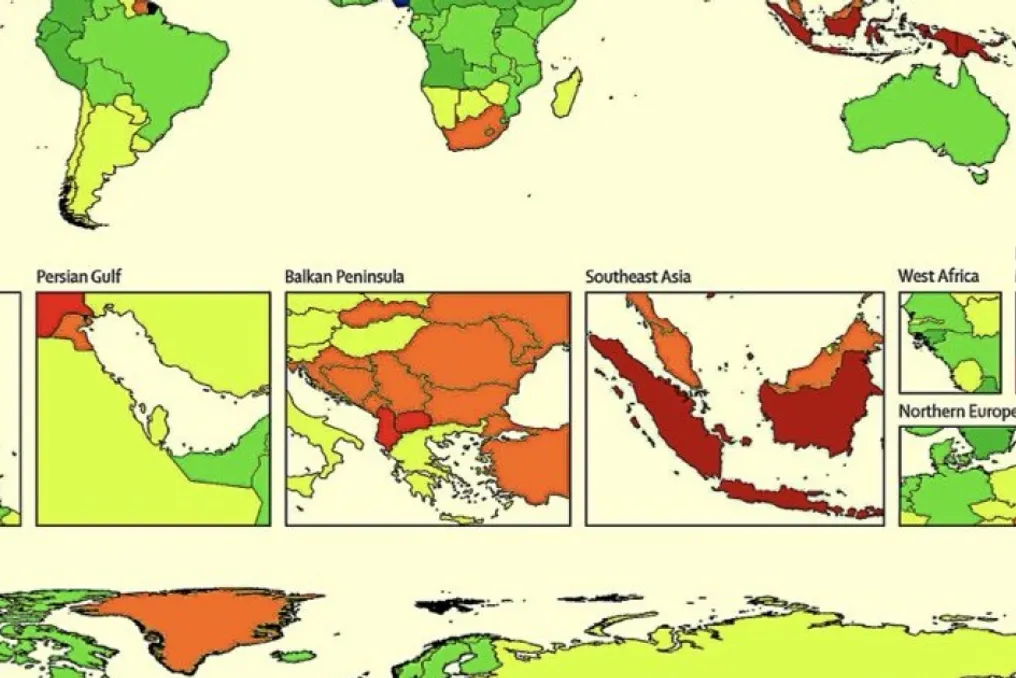
According to a study published on Tuesday in The Lancet, passive smoking leads to the death of millions of non-smoking people around the world.
In 2023, over 2.7 billion people, including children, were exposed to secondhand smoke, contributing to nearly 1.7 million deaths. The study emphasized that tobacco remains one of the main causes of diseases globally, noting that many non-smokers exposed to secondhand smoke were included in the overall estimate of 8 million people who died from smoking-related illnesses in 2023.
The work notes that exposure to secondhand smoke is a widely recognized global health risk because there is no safe level of inhalation.
The study conducted on Tuesday aimed to assess the prevalence of secondhand smoke exposure and quantify the disease burden across 204 countries and territories from 1990 to 2023 by analyzing data from the US National Institutes of Health PubMed database and conducting population surveys.
It was found that among approximately 2.7 billion people exposed to secondhand smoke in 2023, there were 767 million children aged 0 to 14.
This exposure is estimated to have caused 1.66 million premature deaths, as well as premature disability and illnesses, including ischemic heart disease—a condition caused by insufficient oxygen supply to the heart muscle.
Furthermore, it was estimated that in 2023, secondhand smoke exposure in children triggered 5.2 million respiratory infections.
The study explains that people near smokers are exposed to both 'sidestream' smoke from burning tobacco products and smoke exhaled by the active smoker. It is pointed out that the sidestream component, which dominates the air breathed by non-smokers, is unfiltered and contains higher concentrations of toxic and carcinogenic compounds per unit than what the smoker inhales themselves.
Despite a significant decrease in global smoking prevalence since 1990, the absolute number of exposed people has remained stable due to population growth and increased exposure in Africa and the Middle East.
It was also observed that women suffer disproportionately from passive smoking, especially in regions with low rates of female smoking. Moreover, it is noted that despite this significant burden, secondhand smoke exposure is rarely recognized as a primary health risk factor for women.
In conclusion, the study strongly urges governments to implement stricter tobacco control in public places and homes to better protect children and women from secondhand smoke.