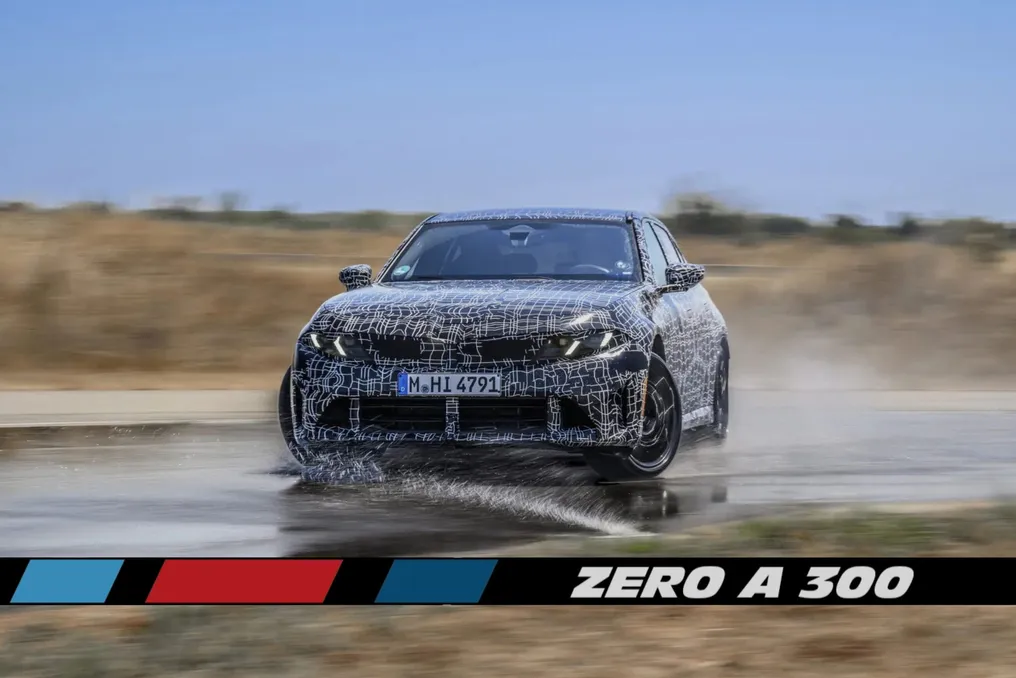
The used vehicle market has shown a sharp drop in prices, surpassing the reduction recorded by the Fipe index this year. Simultaneously, the automotive sector saw the launch of the new BMW M350 xDrive, focused on drifting capabilities, and updates to models such as the VW Tera 2027.
Regarding used cars, there has been a significant increase in listings with values below the Fipe table. Data from the first half of 2026, provided by Auto Avaliar, indicates that negotiated prices for cars up to three years old fell by 9.3%, while Fipe registered only a 2.4% decrease. Specific models suffered drops exceeding 20%, such as the Toyota Corolla 2025 (21.2%), Volkswagen T-Cross 2025 (20.9%), and Honda HR-V 2025 (20%).
This depreciation is attributed to the entry of Chinese brands into the new car market with competitive pricing. In response, local manufacturers have been offering bonuses and discounts, which pressures new car prices downwards and consequently affects the value of pre-owned vehicles. This creates a disconnect between the price practiced in stores and the Fipe reference, which has a natural lag of 30 to 45 days.
Examples of large reductions include the Mitsubishi Outlander PHEV with a discount of R$ 55,000 and the Fiat Fastback Hybrid with a discount of R$ 38,500. For the retailer, this dynamic is complex, as a car bought at a certain price can become too expensive if new car prices fall rapidly. Furthermore, financing simulations can mask the real cost, as seen in a Jeep Compass Sport, where the final amount with interest was significantly higher than the advertised price.
Despite these fluctuations, the used market remains robust, with 7.9 million light vehicles traded between January and July, reflecting the difficulty in accessing credit for new cars. This scenario was expected since the end of 2021, with forecasts for market normalization.
BMW launches new M350 xDrive focused on drifting maneuvers
BMW introduced the new BMW M350 xDrive, which will succeed the M340i in the 3 Series line, incorporating the 'Drift Moment' function. This feature allows the engine to send all power to the rear wheels, even in an all-wheel-drive car, by disabling stability control and using specific multi-disc clutch management, simulating a rear-wheel-drive 3 Series.
The M350 will enter production in 2026, but Drift Moment will only be available from 2027, potentially released via remote update. The vehicle will retain the traditional BMW engine, a 3.0-liter inline six-cylinder turbocharged engine assisted by a 48-volt mild hybrid system, delivering 443 hp and 59.1 kgfm, with an estimated 0-100 km/h time of 4.1 seconds.
Additionally, BMW has filed a patent in Germany for a method that uses adaptive suspension or active roll control systems to aid in initiating slides. This system aims to momentarily reduce the load on the rear axle, causing a small, controlled vertical 'jerk' in the wheels, facilitating the loss of grip. Unlike Drift Moment, which alters force distribution, this system acts directly on the suspension.
Volkswagen Tera 2027 receives engine and transmission update
Traditional manufacturers are also strengthening their models to compete with Chinese brands. Volkswagen has prepared the 2027 lineup of the Tera, which will receive the 200 TSI engine and an eight-speed automatic transmission in the Comfort and High versions, replacing the 170 TSI unit with a six-speed transmission.
Although both 170 TSI and 200 TSI are 1.0-liter three-cylinder turbo flex engines, the most relevant advancement is the torque, which increases from 16.8 to 20.4 kgfm, representing a gain of over 20%. This improvement is expected to be noticeable during acceleration. This update also helps maintain the distinction of the Tera compared to the T-Cross, given the emergence of new powertrains in the intermediate model.
Volkswagen announced that prices will not undergo major adjustments upon its October launch. The arrival of Cadillac in the Brazilian market this month was also announced, beginning the pre-sale of the electric models Lyriq and Vist.