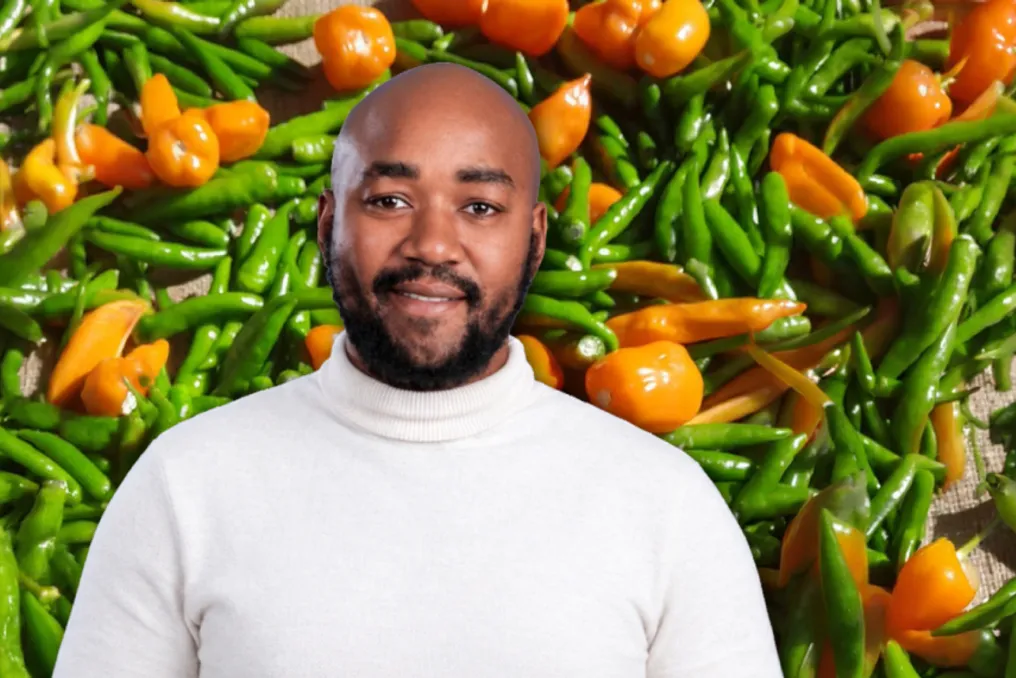
Tlhoks Vegis founder, Letlogonolo Leservane, shared his experience and raised questions about support for high-yield crops and the local agro-processing sector in South Africa. He recounted how a small backyard plot turned into a national brand of hot sauces, available in over 83 points of sale, all achieved without state financial support or inherited land.
In 2016, Leservane began growing chilies in his backyard in Kuruman while unemployed, not with the intention of making a statement about the agricultural sector, but rather for survival. Nine years later, that backyard became a family agribusiness. The company grows, processes, and bottles chilies as Sambok Hot Sauce, which is now sold in more than 83 stores across South Africa.
This success was achieved in spite of the existing system, not because of it. Leservane emphasizes that this is not just a personal success story, but a critique of those who should have facilitated this process but failed to do so. He argues that chili is not a complex crop requiring less land than maize and yields more per hectare than most vegetables.
Furthermore, chili has real export demand, and its profit multiplies after being processed into hot sauce, chili oil, or spice blends. Raw chili sells for pennies, whereas bottled and branded chili sells for rand. This Tlhoks Vegis business model has been proven in practice. Nevertheless, chili is often viewed as a secondary product.
New farmers are often advised to plant maize or vegetables without the possibility of further processing, ignoring the fact that a small chili plantation with proper processing can generate more income than a much larger plantation of staple crops. The advice given to new farmers is based on what is easy to finance, not on what truly generates income.
Leservane learned through his own experience, self-funding equipment and packaging from business revenues. Every stage, from farm to bottle to store shelf, happened due to his family's perseverance, not the presence of a supportive system. He poses a question that South Africa must answer: if a chili business managed to go from a backyard in Kuruman to 83 stores almost without institutional help, what is happening to the thousands of farmers who never reach that stage?
He notes that chili is a test of how real conversations about food security and inclusive growth are, as this crop rewards processing over raw sales, suits small plots, and fits perfectly into the strategy of land reform and youth farming since it does not require large areas to be viable.
To develop agri-entrepreneurship in South Africa, there needs to be support for access to land suitable for high-yield crops like chili, affordable equipment for small agro-processors, direct sales channels to retail for farmers willing to supply in bulk, and agricultural consultancy that views chili as a serious commodity, not a side project.