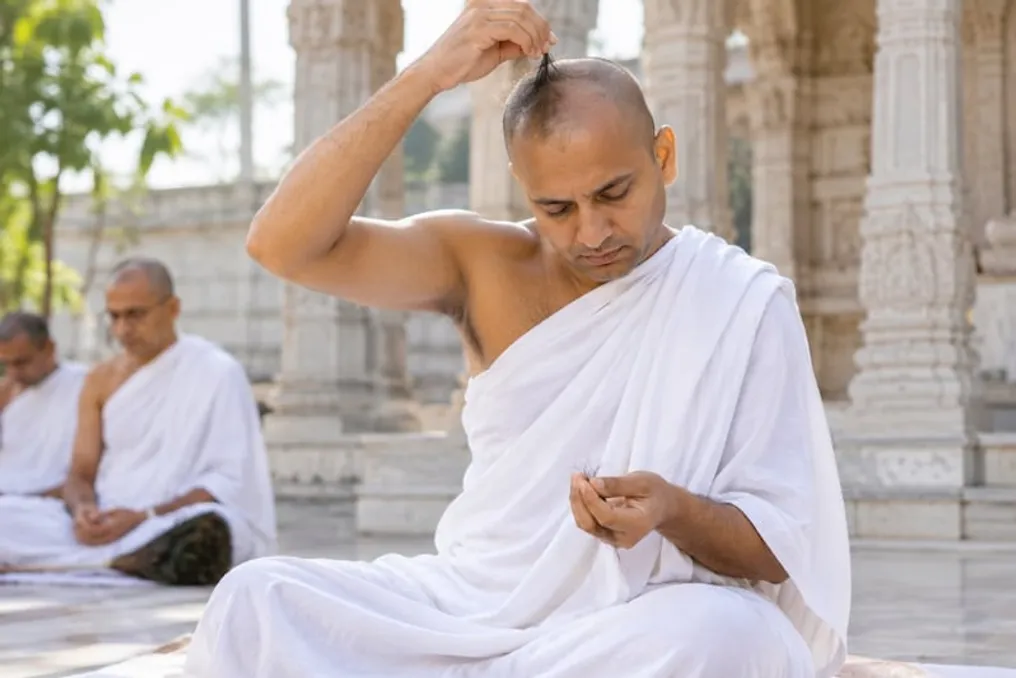
Since the beginning of Paryushan Parva 2026, a festival has begun in Jainism, during which followers of this religion focus on very strict forms of asceticism. In Jainism, a monk's life is considered a path of renunciation, asceticism, and self-control. A person following this path gradually distances themselves from worldly pleasures and comforts. Many aspects of the lifestyle of Jain monks and nuns surprise ordinary people, and one such aspect is Keshalochana, during which a monk pulls out hair from his head and face with his hands. Although this sounds extremely difficult, it is actually considered a crucial part of spiritual practice.
What is Keshalochana?
Literally, Keshalochana means pulling out hair. In the tradition of Jains, this process holds special significance when a person leaves worldly life and takes the vow to become a monk or nun. The monk removes hair from his head and face with his hands. This act is viewed not merely as hair removal, but as a symbol of distancing oneself from attachment and material desire.
Why are hairs not cut with scissors or a razor?
The most distinctive feature of Keshalochana is that no scissors, razors, or any other tools are used to cut the hair. According to Jain beliefs, this is based on the concept of non-violence and renunciation. There is also a belief that using tools can harm microscopic living beings inhabiting the skin. Furthermore, since hair is considered part of bodily beauty, its manual removal serves as a way to reduce attachment to one's appearance and body.
Why perform this practice despite the pain?
Keshalochana is not an easy procedure, and pain from uprooting hair is natural. However, Jain monks endure this pain to complete their practice. In Jain tradition, this is also seen as a test of patience and resilience. The goal is to understand how a monk can maintain peace of mind while remaining above physical states such as joy, sorrow, comfort, and discomfort.
What is the significance of this during initiation?
When a person decides to become a Jain monk, they make the decision to distance themselves from their former worldly life. Keshalochana, performed during initiation, is considered a symbol of these changes. It conveys a message of giving up attachment to appearance, body, and comforts. Thus, greater importance is placed on self-control and spiritual practice than on external beauty.
How is Keshalochana performed?
During Keshalochana, the monk or nun sits in a religious setting and pulls out hair with their hands. In some traditions, senior monks also assist in this process. Mantras and religious texts are recited during the procedure. After the process is completed, the monk continues their path of asceticism and self-control.
How often is Keshalochana performed in a year?
According to Jain tradition, Keshalochana is performed once or twice a year. Externally, Keshalochana may appear to be a difficult and painful procedure, but in Jain practice, its meaning is much deeper. It reminds the person that the goal of monastic life is not comfort and beauty, but renunciation, self-control, non-violence, and self-discipline. This is why Keshalochana is considered an important tradition associated with the asceticism and renunciation of Jain monks and nuns.