China's service trade is increasingly moving beyond obvious examples, such as food delivery drones, and is penetrating the daily lives of people around the world, including the use of artificial intelligence in classrooms.
In July 2025, a drone landed on the roof of a pickup station in Shenzhen Park, delivering fried chicken and cold cola. Alejandro Perez, a journalist for the Spanish publication La Vanguardia, used the station's touchscreen to place an order made via a mobile application. The delivery took only 20 minutes, and the process required no courier, motorcycle, or cash.
After observing three such deliveries within half an hour, Perez noted: 'It felt like I was living in 2040. And that's just a normal day in Shenzhen.' Similar scenes have become a popular genre on social media. In December 2024, British vloggers Rianne and Ben published a video about their stay at a hotel in Chengdu, where the lighting and curtains responded to voice commands, and a robot delivered food to the room.
For foreign guests, this represents a new tourist attraction, but in China's trade statistics, it is merely the visible edge of a much broader service economy. According to data from the Ministry of Commerce, in the first seven months of 2026, the total volume of China's service trade reached 4.45 trillion yuan (approximately $656 billion), an 8.3% increase compared to the previous year. Service exports grew by 17.1% to 1.77 trillion yuan, outpacing the 3.2% growth in imports.
The structure of exports is also changing: the export of knowledge-intensive services increased by 12.2%, amounting to 948.3 billion yuan, which exceeds half of the total service export volume. Zhang Wei, a researcher at the China Outsourcing Institute, emphasized that the share of knowledge-intensive services exceeding half indicates a shift towards higher value-added trade based on knowledge and technology.
A significant part of this growth is now being realized outside of China. Although tourism and transportation are the most familiar aspects of service trade, the majority of China's export growth is concentrated in knowledge-based sectors—such as AI models, computing power, and smart education—which foreign users apply in their work and daily lives.
Chinese large language models are among the most sought-after globally. According to the global AI model aggregation platform OpenRouter, Chinese models registered 79.41 trillion token calls in one week in early May, the highest figure among all countries. On the open-source platform Hugging Face, China has become the largest source of model downloads. An engineer from Singapore fine-tuned a popular Southeast Asian language model using Alibaba's open-source Qwen model, and companies from Southeast Asia and the Middle East are now using Chinese models for content generation and translation.
The computing power underpinning these models is itself becoming an export commodity. In Shantou, a coastal city in Guangdong province, a pilot program provides AI inference services to Southeast Asian enterprises through dedicated cross-border data transmission channels. Daily token requests there rose from 100 million at the end of April to 10 billion over the course of the month.
Chinese services are also penetrating foreign educational institutions. In March, iFlytek signed a strategic agreement with the Sinar Mas group from Indonesia to support the digital transformation of the country's education system, which serves over 50 million students but lacks about 1.3 million teachers. In a pilot school in Jakarta, teachers are already using AI-based interactive whiteboards that turn complex lessons into animated illustrations.
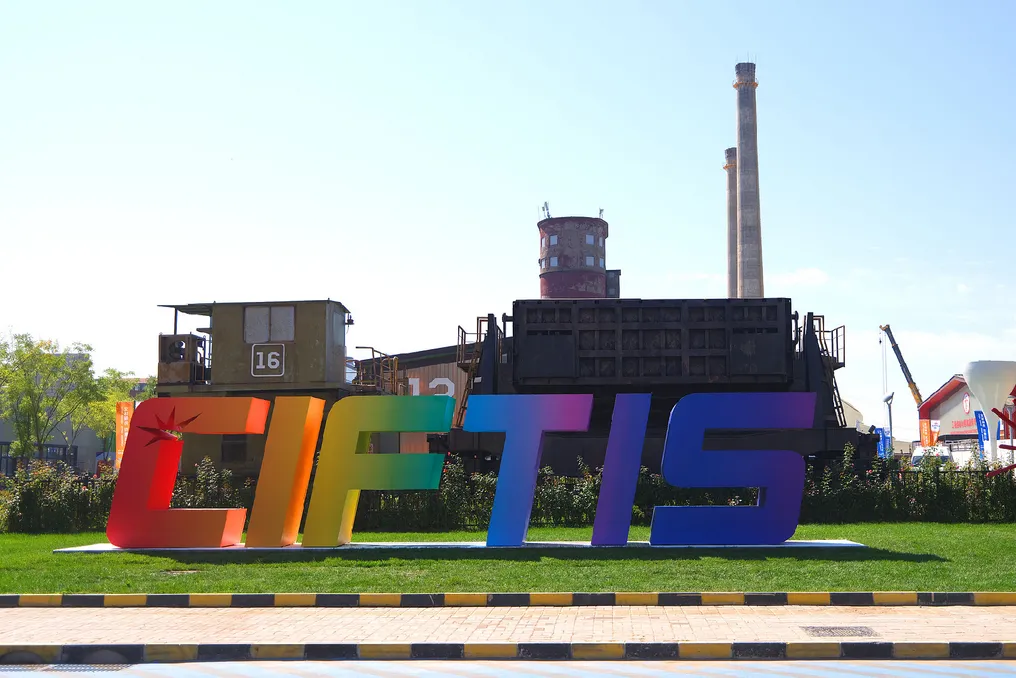
These trends—digital accessibility at home and the expansion of knowledge-intensive service exports abroad—converge in Beijing. The China International Fair for Trade in Services 2026 (CIFTIS) will take place from September 9 to 13 in Beijing, where 90 countries and regions, as well as international organizations, will present their exhibits and events. Over 1800 enterprises will participate in the fair, including 456 companies from the Fortune 500 list or industry leaders. Nearly 100 forums and conferences, along with more than 100 matchmaking and promotion events, and the release of new research reports on service trade are planned.
The United Nations Conference on Trade and Development (UNCTAD) and the World Intellectual Property Organization (WIPO) will jointly hold a Summit on Global Trade in Services with the Ministry of Commerce of China and the municipal government of Beijing, marking WIPO's first participation of this kind. Norway, this year's guest of honor, will present a national pavilion showcasing its signature industries and innovations. The fair will also feature special zones for overseas expansion services, where professional institutions in finance, law, accounting, and intellectual property will conduct over 40 tours for companies aiming to enter the global market.
Fintech, digital medicine, and smart education are among the key focuses of the fair, corresponding to the same areas where drones deliver dinners in Shenzhen and interactive whiteboards are in Jakarta classrooms. In Shenzhen Park, Perez concluded his account with a forecast: the technological innovations he observed from above 'may soon appear over Western cities.' Soon, many of the creators of these technologies will be in Beijing.