After thirteen years, cooperation within the Belt and Road Initiative (BRI) is transforming from a network focused on trade links to a system centered on technological partnership and industrial modernization.
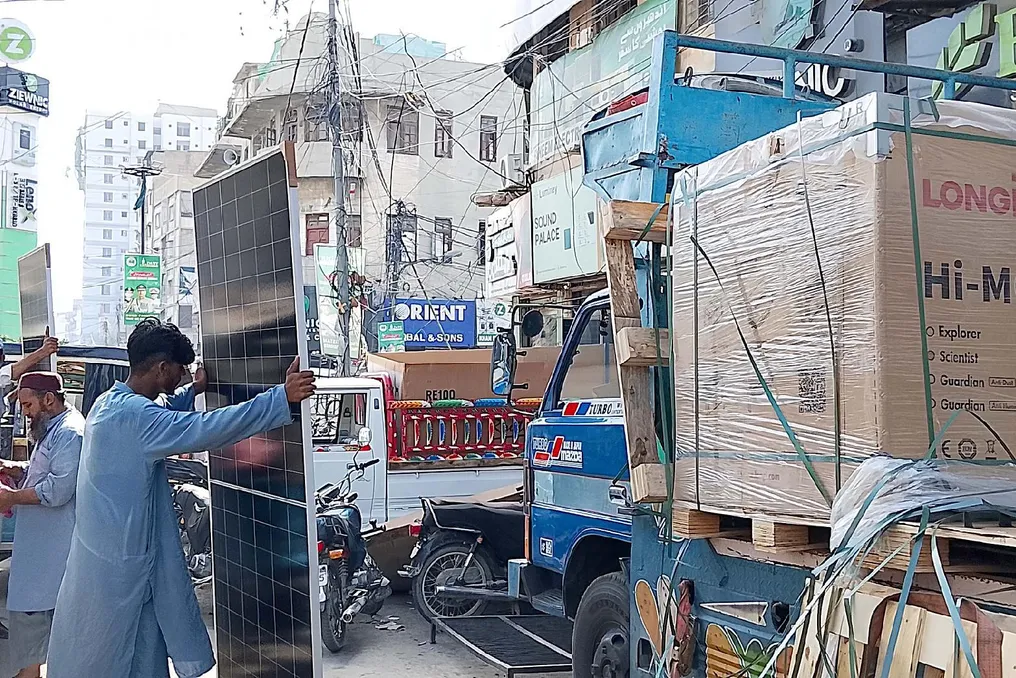
In rural areas of Pakistan, solar panels collected into systems for home energy supply and storage are transforming daily life. These installations not only provide electricity but also support the irrigation of agricultural lands, offering farmers a more reliable energy source. In several regions of Pakistan, Chinese solar panels have become a popular wedding gift, often displayed alongside wedding vehicles as a symbol of practical home investment. The panels are valued for their affordability, durability, and ability to meet the energy and storage needs of ordinary families.
The growing popularity of such products reflects a broader evolution of cooperation under the BRI. According to cinic.org.cn, in the first seven months of 2026, China's exports of electric vehicles, lithium-ion batteries, and photovoltaic products to BRI partner countries reached 482.24 billion yuan (approximately 71.85 billion US dollars), an increase of 59.8% compared to the same period last year.
From Trade Volume to Technological Partnerships
Chinese companies are increasingly exporting not just goods, but comprehensive high-tech solutions that help partner countries develop their own industrial base. For example, on August 28, 2026, a heavy F-class gas turbine set with a capacity of 50 megawatts, intended for power generation, was shipped from Deyang, Sichuan Province, China, to Kazakhstan. This export became the first fully domestic high-end heavy gas turbine set from China sent abroad. Upon completion of the project, it will be the first combined cycle gas turbine power plant in Kazakhstan and has been noted by the country's energy authorities as a key project.
In Malaysia, traditional rubber processing enterprises are being modernized using artificial intelligence algorithms and industrial robots developed in China. This technology has allowed for a reduction in labor costs by 20–30% while simultaneously increasing production accuracy, meaning each 35-kilogram block of rubber now has a weight difference of less than 20 grams. After launching the first modernized production line in January 2025, the factory promptly began upgrading its second and third lines.
Beyond physical infrastructure, digital connectivity is becoming a new pillar of the BRI. The Digital Silk Road is transforming methods of trade and interaction between countries—from smart ports and digital customs clearance systems to cross-border electronic payments, thereby reducing transaction costs and increasing efficiency. The expansion of digital infrastructure and services helps bridge the global digital divide and opens up new opportunities for developing economies in the digital economy.
A Bilateral Path to Common Growth
The BRI also dispels the misconception that cooperation represents a one-way transfer of resources from China to other countries. Instead, projects are increasingly focusing on the participation of local populations, skills development, and achieving mutual economic benefits. The Jakarta-Bandung high-speed railway in Indonesia is a prime example. In the first half of 2026, the railway served 10,640 trips, achieving a punctuality rate of 99.4% and an overall passenger satisfaction score of 95.79.
During the project implementation, Chinese specialists trained Indonesian staff through mentorship programs and practical experience, enabling local personnel to independently take on key roles in passenger service and technical maintenance. Industrial cooperation zones have also turned into platforms for local growth. For instance, the Suez TEDA China-Egypt Economic and Trade Cooperation Zone has attracted over 200 companies, over $4.7 billion in investments, and created more than 10,000 local jobs.
Meanwhile, the 'Luban Workshops' training center network, launched in BRI partner countries, has expanded opportunities for professional skills development. Since the opening of the first center in 2016, over 100 vocational programs have been launched worldwide, enrolling more than 30,000 students and providing over 160,000 training opportunities in fields such as renewable energy, smart manufacturing, and automotive repair, according to data from the Ministry of Education of China.
From village solar panels to digital networks and advanced manufacturing, the Belt and Road Initiative is moving beyond traditional trade ties, striving to build a broader ecosystem of technology, skills, and shared development.