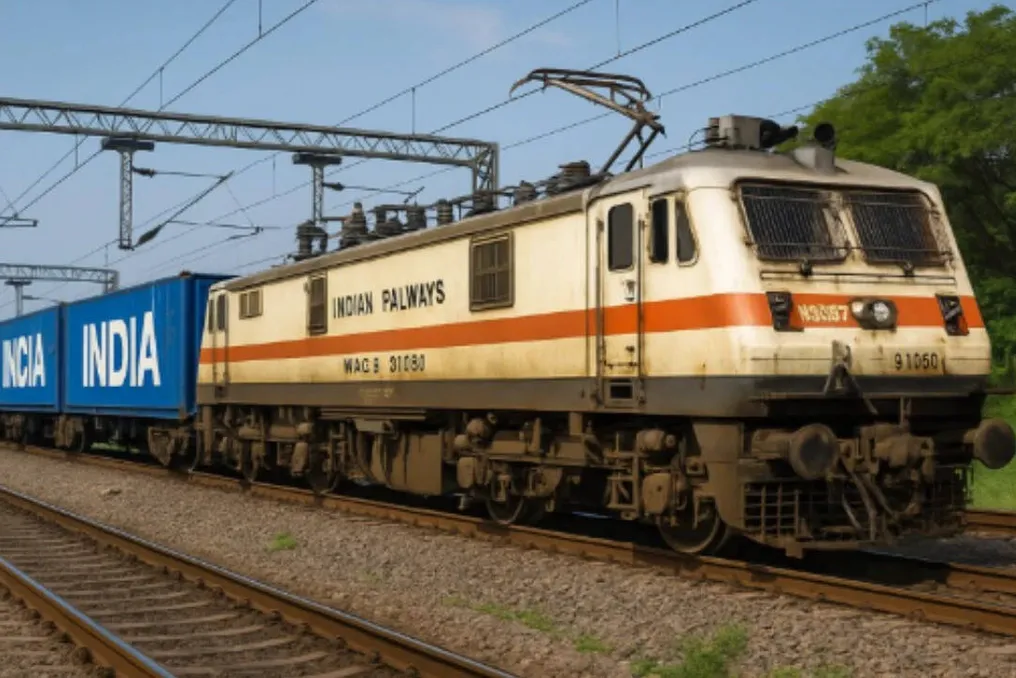
Nearly twenty years after the project was approved, India's Dedicated Freight Corridor (DFC) railway network, connecting the eastern, northern, and western regions, will become fully functional on Tuesday. This follows the inauguration of three remaining sections of the Western Dedicated Freight Corridor (WDFC) by Prime Minister Narendra Modi.
The WDFC connects Jawaharlal Nehru Port in Mumbai with Dadri in Uttar Pradesh, where it intersects with the Eastern Dedicated Freight Corridor (EDFC), thereby completing the backbone of the country's dedicated rail network.
On the eastern side of the DFC, running from Sonanagar in West Bengal to Ludhiana in Punjab, is already fully operational. Although the EDFC was originally planned from Dankuni in West Bengal, a 538 km section from Dankuni to Sonanagar was excluded from the DFC project, and railways are currently engaged in multi-track construction of this part.
A total of 2843 km of WDFC and EDFC will come into operation. A statement from the Prime Minister's Office (PMO) indicated that the three sections—New Sanand-New Makarpura, New Umbergaon-New Safale, and New Safale-New JNPT—which Modi will dedicate to the public, cover 326 route kilometers and were built with investments exceeding 20,700 crore rupees.
Direct connectivity to the Jawaharlal Nehru Port will ensure faster movement of export-import goods, strengthen the link between industrial centers and ports, reduce logistics costs, and help decongest the Mumbai railway network.
Railways Minister Ashwini Vaishnaw noted that no physical work had been done on the project before 2014. The NDA government has advanced the project, resolving long-standing issues and addressing concerns across various sections.
According to the railways, the already operational sections of the DFC processed about 5.2 lakh freight trains by August, averaging around 435 trains per day. The dedicated freight network generated approximately 658 billion freight tonne-kilometers (GTKM) and 360 billion net tonne-kilometers (NTKM).