Mohammed Ashraful set world record by scoring a Test century at the age of 17
Read more
Aaj Tak
www.aajtak.in

Mohammed Ashraful set world record by scoring a Test century at the age of 17

25 years ago, on September 8, 2001, Mohammed Ashraful achieved a historic feat in cricket by astonishing the world with his Test century. At the young age of just 17 years and 61 days, he scored a sensational century that continues to be discussed.

This momentous match took place at the Sinhalese Sports Club stadium in Colombo between Bangladesh and Sri Lanka. In the first innings, Sri Lanka scored 555/5 runs. In response, Bangladesh lost, losing all 90 runs in the first half of the game, creating a deficit of 465 runs.

Under such difficult circumstances, Mohammed Ashraful demonstrated outstanding play, scoring 114 runs in the second half of the match. Thanks to this innings, he became the youngest player to score a century in the history of Test cricket.

Despite Ashraful's brilliant performance, the Bangladesh team could not avoid defeat. In the second innings, they were bowled out for 328 runs, and the match ended with the team losing by 137 runs.

Ashraful's achievement marked the breaking of a long-standing record. Previously, this record belonged to Mushtaq Mohammad of Pakistan, who scored 101 runs against India in 1960-61 at the age of 17 years and 78 days. At that time, Bangladesh was considered a weak team, so Ashraful's innings became a new ray of hope for Bangladeshi cricket.

In the match, Sri Lanka showed strong play: Marven Atapattu scored 201 runs, and Mahela Jayawardene scored 150 runs. For their combined contributions to the match, including 10 wickets taken by Mutaiy Murlidirna and Ashraful's century, both players were named 'Player of the Match'.

In Test cricket, Ashraful played 61 matches, scoring 2737 runs at an average of 24.00, including 6 centuries and 8 half-centuries, with a highest score of 190 runs.

In ODI format, he played 177 matches, scoring 3468 runs at an average of 22.23, with 3 centuries and 20 half-centuries, and his best score was 109 runs.

In T20 International, he participated in 23 matches, scoring 450 runs at an average of 19.56 and a strike rate of 126.40, without scoring any centuries but recording 2 half-centuries, with his maximum score reaching 65 runs.

Similar stories

Smriti Mandhana overtakes Mithali Raj in women's cricket, setting new records
Read more
www.aajtak.in

Smriti Mandhana overtakes Mithali Raj in women's cricket, setting new records

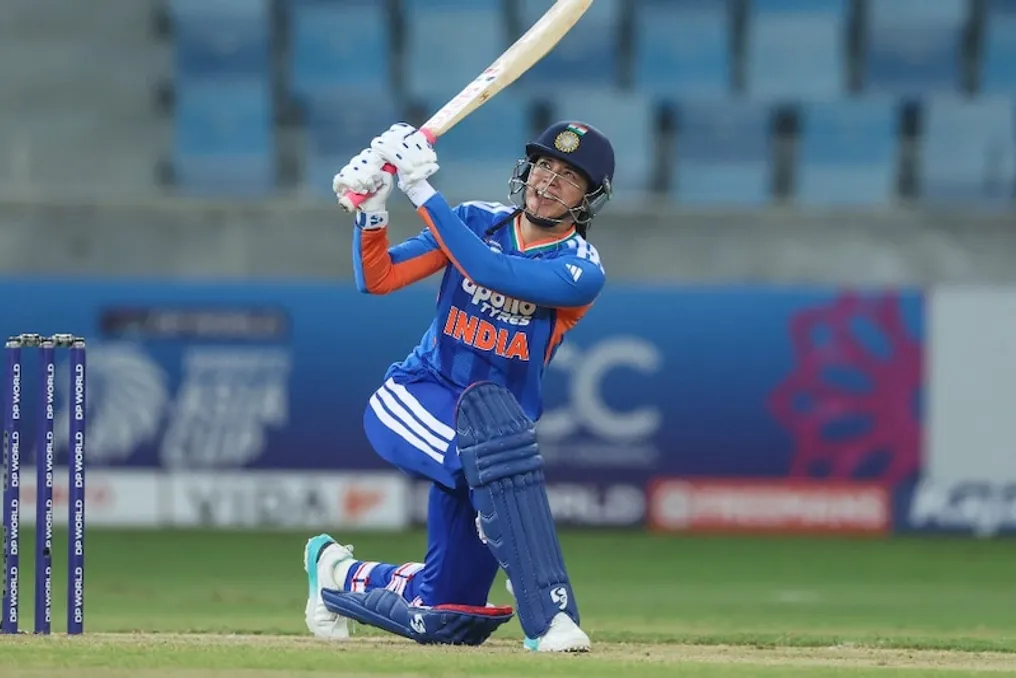
Smriti Mandhana has reached the highest level in women's cricket, a dream for any batter. Playing an impressive innings against Hong Kong in the Women's T20 Asia Cup, Mandhana not only led her team to a large score but also claimed the most significant record previously held by Mithali Raj.

In her international career, Mandhana has scored 10,880 runs, making her the leading run-scorer in women's international cricket. She surpassed Mithali Raj's record of 10,868 runs. Thus, Mandhana's name is now recorded where Mithali once dominated.

But the story does not end there. During this same match, Mandhana created another major historical moment.

Mandhana's tally of international centuries has reached 18. No other batter in women's cricket has this many centuries. She has overtaken Meg Lanning of Australia and Laura Wolvaardt of South Africa, who both have 17 international centuries.

These 18 centuries by Mandhana include 14 in ODI format, 2 in Test format, and 2 in T20 International format. This means Mandhana is now the best batter in women's cricket in terms of total runs scored and number of centuries.

Against Hong Kong, Mandhana improved her best performance in T20 International for Indian women's cricket. Her best score is now 124 runs. Previously, the record for the highest score in a Women's T20 International for India also belonged to Mandhana, when she scored 112 runs against England in 2025.

This innings gave her another special milestone: Mandhana became the first Indian woman batter to score more than one T20 International century. The second Indian batter to score a T20 International century is Harmanpreet Kaur, who scored 103 runs against New Zealand in the 2018 T20 World Cup.

Mandhana's impact was not limited to fours and centuries. Against Hong Kong, she hit 7 sixes, becoming the top T20 International batter for India in terms of sixes. She now has 95 sixes in T20 International. In this aspect, she has surpassed Harmanpreet Kaur. Globally, her ranking is fourth.

Hitting 7 sixes in a single match is also a significant achievement for India. She ranks second in this category after Harmanpreet's 8 sixes.

Mandhana has not only broken records for runs and centuries. She has also equaled Mithali Raj in the number of matches with over 50 runs in international cricket. Mandhana now has 93 scores of over 50 runs. In this regard, Mithali and Mandhana are joint leaders in women's cricket.

The most outstanding feature of Mandhana's innings was that she accounted for a large part of India's total score. India scored 193/5 against Hong Kong, and 124 of those runs belonged to Mandhana. This means that 64.25 percent of India's total score came solely from Mandhana. The only Indian batter whose contribution in a completed match exceeds this percentage is Harmanpreet Kaur, who scored 41 runs out of 62 for India against Australia in 2011.

India also tied the record for sixes. India's total of 9 sixes against Hong Kong consisted of 7 from Mandhana and 2 from Shafali Verma. This is a joint record for India for the highest number of sixes in a single match in Women's T20 International. India had previously scored 9 sixes in a match against Australia at the DY Patil stadium in 2022.

Mandhana's innings was historic in the Women's T20 Asia Cup. Her score of 124 runs was the highest individual score in the tournament. Before this, this record belonged to Chamari Atapattu, who scored 119 runs unbeaten against Malaysia in 2024.

Furthermore, India's total score of 193/5 is the second-highest team score in the Women's T20 Asia Cup. In this regard, the record belongs to India, which scored 201/5 against the UAE in 2024.

Mandhana's innings against Hong Kong is important not only because it was a century. Its true significance lies in the fact that through this single explosion, she has put her mark on many major records in women's international cricket. Now, the names on the records set during Mithali Raj's era belong to Smriti Mandhana. The story of the transition from one great era to another great one in women's cricket may not be told better.

Smriti Mandhana sets record by scoring one hundred runs, surpassing Mithali Raj in total runs scored
Read more
www.aajtak.in

Smriti Mandhana sets record by scoring one hundred runs, surpassing Mithali Raj in total runs scored

Indian batter Smriti Mandhana delivered an outstanding performance, scoring 124 runs off 64 balls in the match against Hong Kong during the Women's T20 Asia Cup. This match took place at the Dubai International Cricket Stadium in Dubai on Thursday, August 3rd.

This century marked her second hundred in her T20 international career and her eighteenth overall in international cricket. With this innings, Smriti Mandhana set a new record, becoming the batter with the most runs in women's international cricket.

She surpassed the record of former Indian captain Mithali Raj, who previously scored 10868 runs in international cricket. Smriti Mandhana's total runs now stand at 10880.

According to statistics, Smriti Mandhana is now the leader in total runs in women's international cricket, ahead of Mithali Raj (10868), Suji Bates (10740), Charlotte Edwards (10273), and Stephanie Taylor (10007).

Furthermore, Smriti Mandhana became the top scorer in the Women's T20 Asia Cup match, breaking the record of Sri Lankan captain Chamari Athapaththu, who scored 119* runs against Malaysia in the 2024 season. Her score of 124 runs against Hong Kong in Dubai in 2026 surpasses the previous record.

In her innings, Smriti Mandhana hit 7 sixes. Among Indian batters, Harmanpreet Kaur has hit more sixes in a single Women's T20I innings. Smriti Mandhana now ranks second in this list.

Leaders in the number of sixes in a Women's T20I innings among Indian batters: Harmanpreet Kaur (8 against New Zealand in 2018), Smriti Mandhana (7 against Hong Kong in Dubai in 2026), Harmanpreet Kaur (5 against Sri Lanka in 2018), Shafali Verma (5 against South Africa in 2021), Shafali Verma (5 against Malaysia in 2023), Rich Ghosh (5 against West Indies in Mumbai DYP in 2024).

Smriti Mandhana also became the batter with the most sixes in the history of Women's T20I for the Indian team, accumulating 95 sixes, surpassing Harmanpreet Kaur's record of 89 sixes. Additionally, she topped the list for the most centuries in international cricket (18 centuries).

Thanks to her century, the Indian team scored 193 runs in 20 overs, losing 5 wickets. This was the second-highest score in the Women's T20 Asia Cup.

Highest scores in the Women's T20 Asia Cup: India vs UAE (201/5 in Dambulla in 2024), India vs Hong Kong (193/5 in Dubai in 2026), Bangladesh vs Malaysia (191/2 in Dambulla in 2024), Sri Lanka vs Malaysia (184/4 in Dambulla in 2024), and India vs Malaysia (181/4 in Sylhet in 2022).

Vaibha Suryavanshi played an impressive innings in the Dalip Trophy semi-final, falling 8 runs short of a century
Read more
www.aajtak.in

Vaibha Suryavanshi played an impressive innings in the Dalip Trophy semi-final, falling 8 runs short of a century

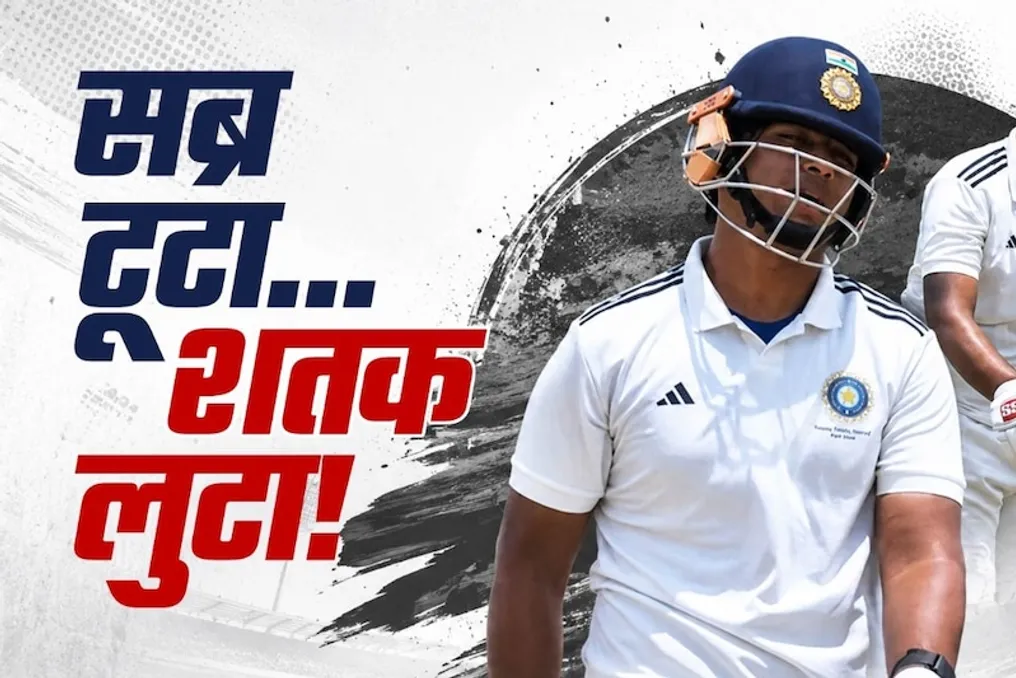
15-year-old Vaibha Suryavanshi demonstrated outstanding abilities in the Dalip Trophy semi-final on Monday, although he could not reach a century, falling short by only 8 runs. After being dismissed at 92 runs, Vaibha showed significant disappointment and angrily threw his bat. RP Singh, a former Indian fast bowler and selection committee member, also looked surprised by his dismissal from the stands watching the match.

Century Milestone in 42 Balls

Starting for the East Zone against the Central Zone, Vaibha reached a half-century in just 42 balls. This allowed him to enter the history of the Dalip Trophy as the youngest batsman to score a half-century. Vaibha was born on March 27, 2011, and achieved this milestone at the age of 15 years and 157 days, breaking a record that stood for about six decades. Previously, this record was set by Lakshman Singh of the Central Zone in 1968-69, who was 16 years and 23 days old when he scored 63 runs against the North Zone.

Aggressive Start Against Bowlers

After the Central Zone scored 266 runs, the East Zone began its innings, and Vaibha immediately declared his intentions. In the very first over, he hit two fours, reaching a score of 21 runs off 14 balls. Within 21 balls, he scored 31 runs. By the end of the 12th over, he had already scored 40 runs off 28 balls. During this period, he also had a chance to save a shot: his lofted shot went in the air but was not caught. Vaibha was heading towards the dressing room but returned to the field upon seeing that the ball was not caught. He then seized the moment and completed his half-century in 42 balls.

Demonstration of Understanding Beyond Attacking Style

A feature of this innings was not only Vaibha's aggressive style of play. At times, he showed respect for the ball, using defense, playing ground shots, and rotating the strike. Thus, this young batsman, known for his explosive style in T20 cricket, demonstrated an understanding of the requirements of classical cricket. This innings is also important for Vaibha, as his first-class statistics were not as impressive before this. Before the semi-final, he had scored 215 runs in 13 matches, with an average of 16.53. His best first-class score was 93 runs, which he scored for Bihar against Meghalaya.

Dream Shattered by 8 Runs Short of a Century

After reaching a half-century, Vaibha did not stop and aimed for his first first-class century. However, his innings ended at 92 runs. He attempted to hit a big shot to the left side off Harsha Dubey's bowling but got trapped at deep mid-wicket. His disappointment after being dismissed was evident, and he angrily threw his bat. His score of 92 runs was the highest in the Dalip Trophy, and only one run less than his best first-class score of 93 runs.

RP Singh's Surprise

Vaibha's dismissal also attracted the attention of the selection committee members present in the stands. RP Singh, a former Indian fast bowler and selection committee member, was watching Vaibha's game. As soon as the 15-year-old batsman was dismissed at 92 runs, RP Singh also looked surprised. Besides RP Singh, Ajay Ratra and SS Das were also watching the match. According to the new BCCI policy, two selection committee members are present in every Dalip Trophy playoff match. Thus, Vaibha's innings was noticed by the selection committee members.

Significant Signal for Test Cricket?

So far, Vaibha has been known mainly as a player capable of explosive attack in limited-overs cricket and setting age-related records. However, this innings in the Dalip Trophy showed another side of his game. In addition to setting the record for the youngest player to score a half-century in the Dalip Trophy, he demonstrated patience, defense, and strike rotation in his 92-run innings. Although the century fell short by 8 runs, this innings clearly showed that Vaibha is quickly mastering the challenges of classical cricket.

Popular