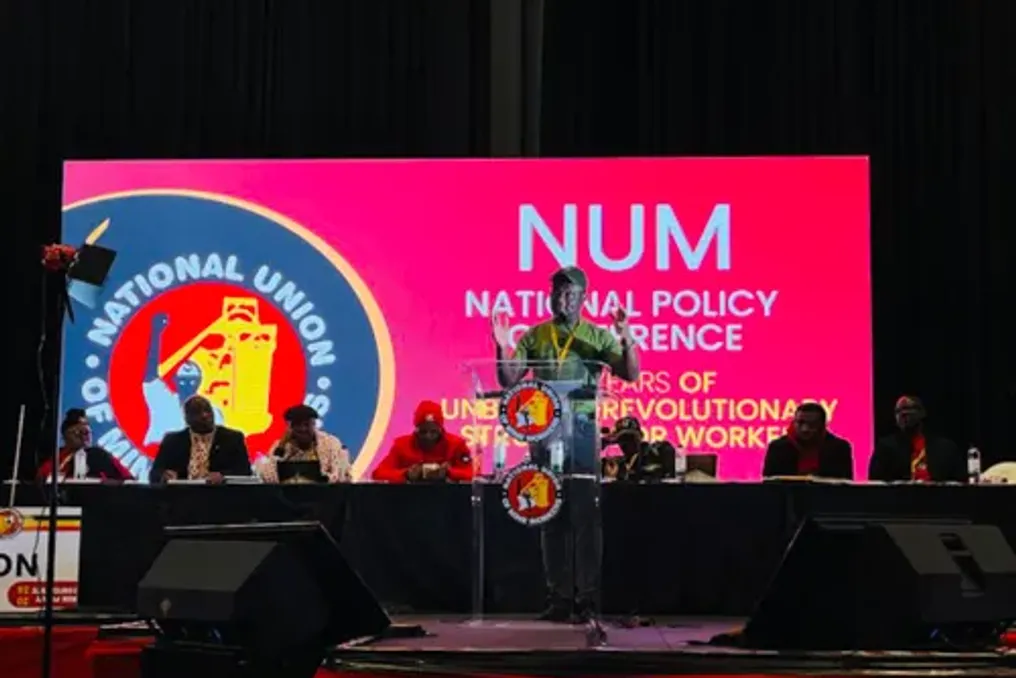
The South African trade union body (Cosatu), the continent's largest labor federation, has criticized Western capital for its predatory business practices on the African continent. Activists argue that this activity has forced millions of Africans to leave their countries in search of a better life.
Mike Singange, Deputy President of Cosatu, stated that current migration trends are a direct result of uncontrolled extraction of natural resources by European and American companies, which leaves most African countries in a more precarious position.
Singange noted that companies extract wealth and mineral resources, generate profits, and leave behind depleted settlements and needy communities. He cited examples of local mining companies that can operate for 40–50 years, leaving communities in difficult situations while profits go abroad. He explained that workers follow their wealth: 'When workers realize that we worked well here, developing business in Rustenburg or Mpumalanga, and now we are poor, and the mineral resources are in Italy, they will go to Italy to find their wealth.'
Cosatu's call aligns with a United Nations committee directive requiring countries to legally consider reparations for the transatlantic slave trade and take measures to eliminate the long-term legacy of racial discrimination.
According to guidance published by the Committee on the Elimination of Racial Discrimination on Monday, these obligations stem from the legally binding 1965 Convention on Racial Discrimination, not from legal standards that existed during the slave trade. The Committee characterized this approach as a 'paradigm shift' in contrast to debates over historical responsibility, which governments often used to resist calls for reparations.
The UN stated in a legally binding document that 'States parties must implement comprehensive restorative measures for people of African descent, covering all aspects of remedies.'
Demands for reparations, including official apologies and financial compensation, are gaining momentum worldwide, although opponents argue that countries and institutions should not be held responsible for historical crimes committed by their predecessors.
Singange also pointed out that the current immigration crisis in South Africa is a result of the exploitation of various parts of the continent by the private sector. He added that South African companies operating across the African continent extract wealth and profit, and then build institutions and universities in the country, attracting people for education funded by this wealth.
Cosatu represents at least 2.2 million workers across 21 affiliates distributed throughout the economy and is politically linked to the ruling African National Congress and the Communist Party of South Africa. The Deputy President also confirmed the federation's support for the continental campaign demanding financial compensation for colonialism and the transatlantic slave trade, which have been declared crimes against humanity.
He emphasized that the issue of immigration is a global phenomenon, but its root lies in the crisis of capitalism, which divides the African people and the working class. Federation President Zingisa Losi stated that African countries must strive for better conditions in natural resource extraction, but stressed that only local processing can ensure necessary industrialization on the continent.
Losi insists that strategic minerals should contribute to the development of the African continent's economy, warning that there will be no raw material exports for investors wishing to extract resources; instead, processing is required, which allows job creation and prevents forced migration.
South Africa is often viewed as a model country committed to restorative justice following the overthrow of the apartheid regime, which oppressed Black people for decades. To level the playing field, democratic South Africa implemented measures such as affirmative action, economic empowerment of the Black population, and expropriation of land without compensation to correct over 400 years of exclusion.