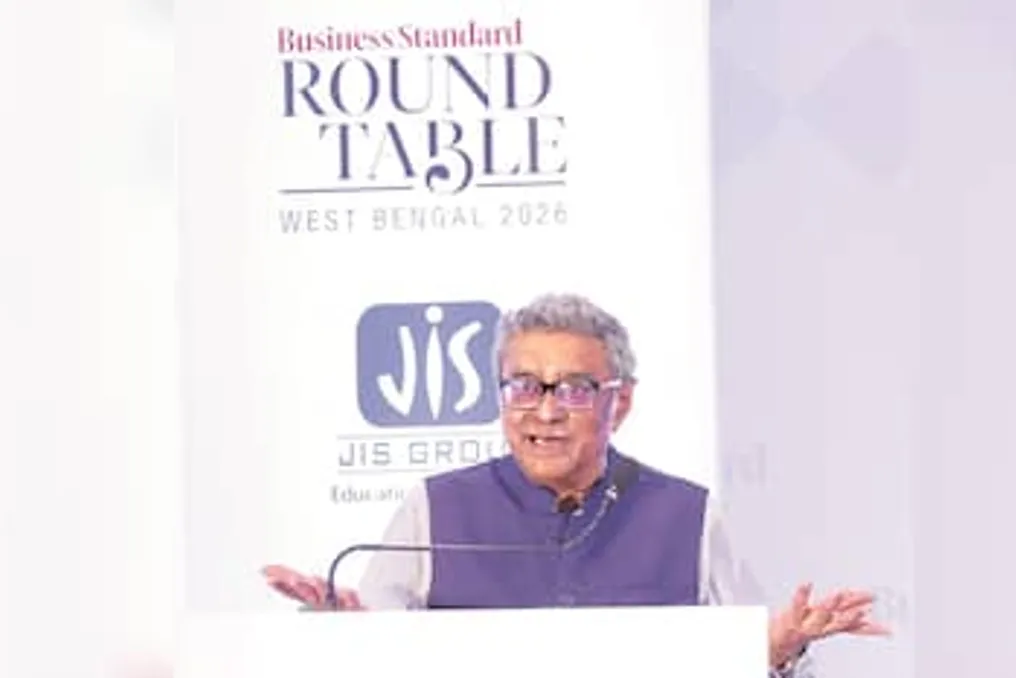
The Finance Minister of West Bengal, Swapnan Dasgupta, presented a comprehensive reform program at the Business Standard Roundtable, Bengal Beckons, on Monday. This program covers the energy sector, global centers of excellence, startups, and building regulations as the state seeks to enhance its attractiveness to investors.
Dasgupta noted that reforming the energy sector is an 'easy target' to achieve. A 'Open Access' policy is currently being considered to reduce the cost of electricity in the state. He emphasized that existing and potential investors recognize the need for tariff reductions.
Explaining this, Dasgupta clarified that the 'Open Access' system will grant corporations the right to purchase energy from any source that best meets their needs, including sources from other states. This is particularly important for data centers, which require water and electricity; he assured that water in the state is sufficient.
Furthermore, Dasgupta highlighted the necessity of developing a policy to attract Global Centers of Competence (GCCs) to West Bengal and stated that startups require certain support. He added that it is necessary to 'integrate with national policy.'
Another area where, according to Dasgupta, there is potential for change is building codes. He pointed out that the floor area ratio permitted for hotels in West Bengal is lower than for residential buildings, whereas in most other regions of the country, the situation is the opposite.
West Bengal's drive to attract investors is accompanied by significant financial constraints. Although incentives are expected in 'the coming days,' Dasgupta pointed to the state's inherited debt obligations. The government has begun working with a state debt of 8 trillion rupees. He compared this to Maharashtra, whose state debt was 9 trillion rupees, but noted that Maharashtra is a viable enterprise, while Bengal has not yet demonstrated full viability.
Referring to Central support, Dasgupta reported that they were fortunate to include various central schemes in their budget. He added that a rough estimate showed that the total value of central resources flowing into the state over the next seven or eight months amounts to about 70,000 crore rupees.
He explained that this 'game' is based on the government's goal—to stimulate entrepreneurship, business, and any other form of economic activity. The government is also betting on attracting a large corporation to India that would entrust its operations to West Bengal. He did not specify the sector—whether manufacturing, high-level deep technology, or something else—but stressed that a breakthrough is crucial, and they will do everything possible to make it happen.
The land issue takes on enormous significance here, and Dasgupta called it a big, complex, and irritating problem with its various forms of lease. Dasgupta acknowledged that this is a problem the government will have to face. He concluded that 'these are certain realities of West Bengal that we must confront. We must face them head-on, otherwise it won't happen.'