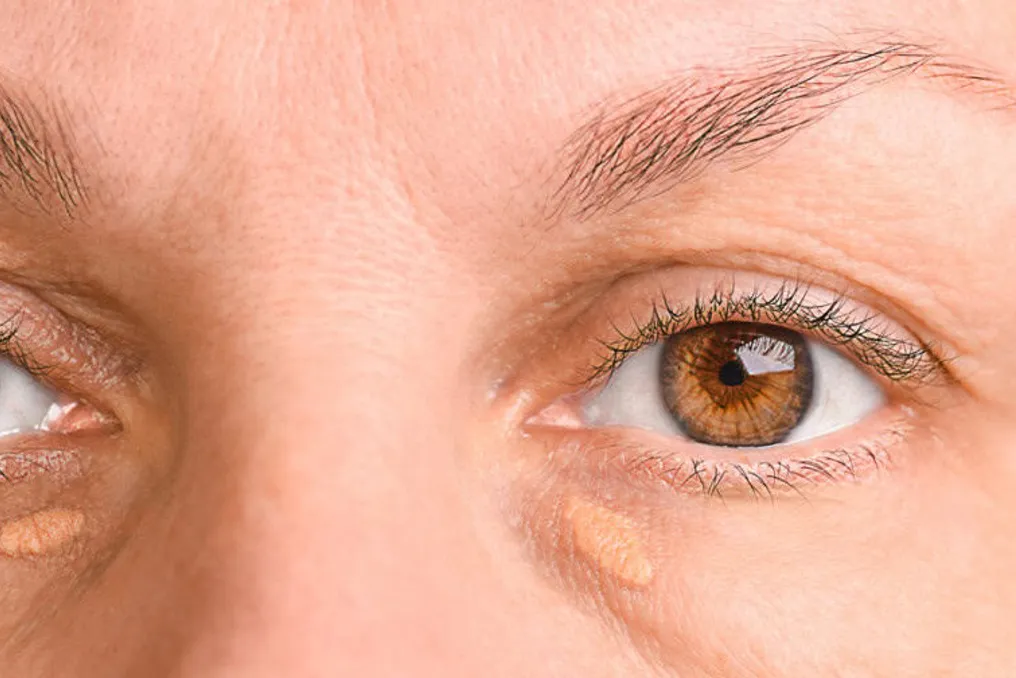
Yellowish spots located around the eyes may indicate an elevated risk of suffering a heart attack or Stroke (CVA). Researchers from Stanford University discovered a correlation between this change, called xanthelasma, and a higher frequency of cardiovascular occurrences.
The objective of this study is to help healthcare professionals detect patients who may have cardiovascular risk factors early on. This link was noted both during the first year of follow-up and in subsequent follow-ups after five and ten years.
Atherosclerosis tends to progress subtly. As fat deposits accumulate in the arteries, blood flow can be restricted, increasing the probability of cardiovascular problems. Seeking signs that allow for earlier identification of this process, researchers focused their attention on xanthelasma.
This condition manifests as the appearance of yellowish plaques in the eyelid area. These plaques increase in volume when macrophages, the body's defense cells, accumulate cholesterol and other fats. Since fat accumulation is also linked to atherosclerosis, the Stanford team investigated a possible connection between the two conditions.
Scientists examined medical records of 17,925 individuals with xanthelasma and compared this data with an equally sized control group. Participants in this second group had presbyopia, a condition that makes near vision difficult, and had also undergone ophthalmological examinations.
In the first year of monitoring, cardiovascular events occurred more frequently among people diagnosed with xanthelasma. Although this disparity slightly decreased over time, the risk remained significantly higher for patients with xanthelasma in the five- and ten-year assessments.
It is important to note that these spots are not considered the direct cause of heart attacks or strokes. The main value of the discovery lies in the possibility that xanthelasma acts as a visual sign related to other cardiovascular risk factors.
Researchers' Conclusions
The researchers stated that "Xanthelasma is associated with a higher incidence of cardiovascular and cerebrovascular events in the short and long term, up to ten years." The study also revealed a relevant finding: the occurrence of these events was similar among patients with xanthelasma, regardless of whether they presented abnormal blood fat levels. This suggests that other elements may be involved in this association.
The researchers observe that many patients with xanthelasma consult dermatologists for purely aesthetic reasons, even if they may have undiagnosed or poorly controlled cardiovascular risk factors. Detecting xanthelasma may, according to the authors, offer an opportunity to investigate the cardiovascular health of these patients and implement preventive measures when necessary.
"The results of our study highlight the importance of evaluating patients with xanthelasma at early stages to identify and control their underlying systemic conditions, helping to prevent potential cardiovascular events," concluded the authors. They recommend measures such as lifestyle modifications, treatment for lipid level changes, and maintaining controlled blood pressure. Further research is still needed to elucidate why xanthelasma is related to an increased risk of heart attack, stroke, and other cardiovascular events.