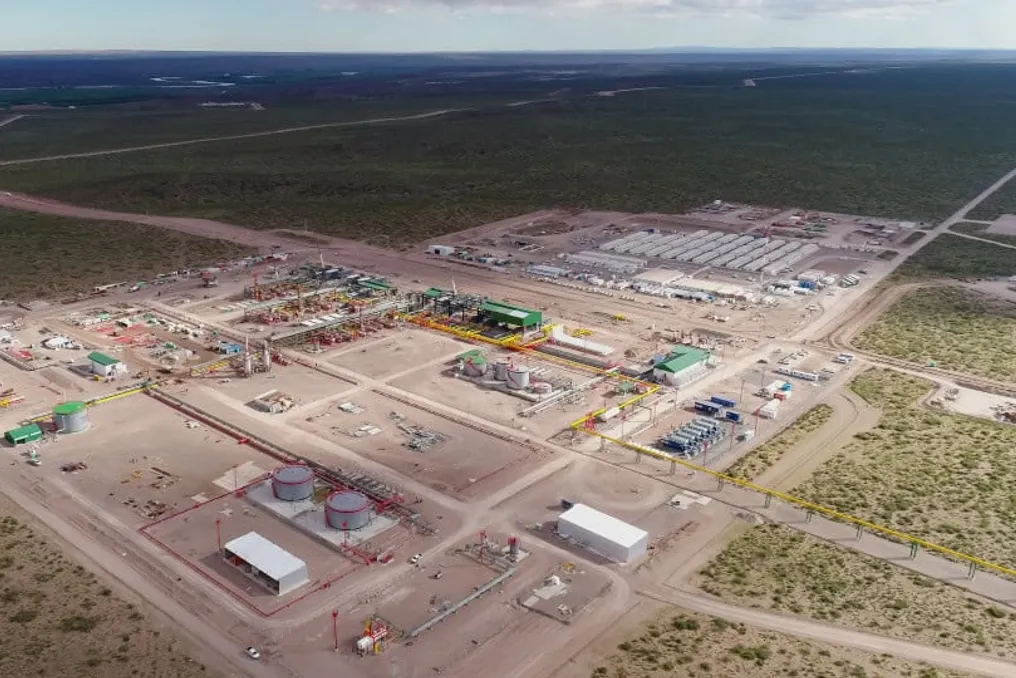
Argentine Patagonia is beginning to take its place in the race for mega data centers. The cold climate, availability of energy resources, and large open territories attract investors looking for alternatives to meet the growing demand for artificial intelligence infrastructure.
According to Reuters, this process is happening against the backdrop of resistance to similar projects in the United States. In Argentina, where data centers are currently small and concentrated in Buenos Aires, initiatives are advancing without similar public reaction.
Projects in the Neuquén Province
In the Neuquén province, Pampa Energía is studying the possibility of installing a data center near the Loma de la Lata thermal power plant. This facility could consume up to 500 megawatts of energy from Vaca Muerta, one of the world's largest shale gas formations.
The climate also plays a crucial role in site selection. Lower temperatures can reduce the costs associated with server cooling. The Neuquén province also has access to hydroelectric power and Vaca Muerta gas.
Ruben Turienso, Commercial Director of Electricity at Pampa Energía, stated: 'We have started noticing firmer interest.' The company is already providing energy prices to potential stakeholders and expects to conclude initial agreements by the end of 2026. However, investors prefer to start with structures ranging from 20 MW to 40 MW before moving to 500 MW.
The electrical infrastructure required to cover this capacity would cost nearly $900 million (about 4.62 billion Brazilian reais).
Projects Underway
Interest increased during the tenure of Javier Milei, who took office as president in December 2023. The RIGI regime offers tax incentives and regulatory stability for large investments.
Steve Sasse, Vice President for Latin America at the consulting firm datacenterHawk, noted: 'Two years ago, no one was talking about Argentina.'
Last October, OpenAI announced a partnership with the Argentine company Sur Energy to build a clean energy-powered data center. This project could reach a value of $25 billion and have a capacity of up to 500 MW.
Milei also aimed to bring the country closer to major technology corporations. In May 2024, he met in Silicon Valley with leaders such as Tim Cook, then CEO of Apple, Sam Altman from OpenAI, Sundar Pichai from Google, and Mark Zuckerberg from Meta.
Neuquén is not the only point of interest. In Chubut, the Polish company Green Capital is planning a data center that will start at 300 MW and could reach 3000 MW. The company also intends to generate wind and solar energy to avoid using the national grid.
In the province of Buenos Aires, Pampa Energía agreed to provide 30 MW for the first phase of a data center in the Baya Blanca free zone, a city known for wind energy production.
For Martin Warsawski, an Argentine entrepreneur and founder of five unicorns, the country began to be perceived differently by investors. He stated: 'It was like planting the Argentine flag, saying: 'This is a country with abundant energy and excellent conditions for investment.''
However, enthusiasm does not eliminate obstacles. Electrical infrastructure and connectivity remain critical issues. Argentina plans to create a second fiber optic cable landing station to make Patagonia more attractive for data centers.
Investors are also watching the 2027 presidential elections. Some prefer to wait for greater political clarity before making multi-billion dollar commitments.
Hadassa Lutz, co-founder of the consulting firm Cloud2Ground, said: 'This is not a product looking for a buyer—someone has to build it.'
Thus, expansion still depends on turning plans and announcements into real projects. This step will determine whether Patagonia can truly establish itself as a destination for large artificial intelligence data centers.