With approximately twenty years of experience in the sector, Juno Cecílio, founder of Gixer Entertainment, has witnessed various phases of game creation in Brazil. His journey began as a freelancer for specialized magazines, after studying Computer Science and Arts, and evolved to working at a company that adapted titles such as Street Fighter, X-Men, LEGO, and Rocky Balboa for mobile devices.
What initially started as a registration as an MEI for issuing invoices scaled up when Cecílio assembled a team to develop an advergame. This period brought the first knowledge about management, accounting, and the sustainability of a studio, challenges that persisted throughout his career.
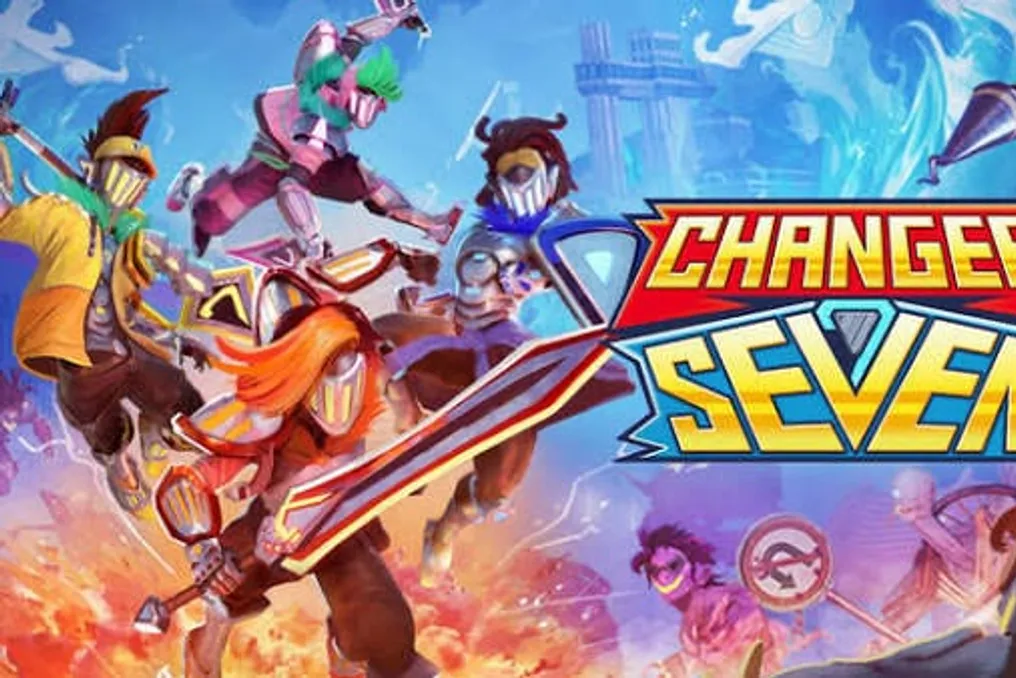
About two years ago, Cecílio established Gixer Entertainment, focused on conceiving intellectual properties with potential to cross multiple media. His central project is Changer 7, a work inspired by tokusatsu and Super Sentai, but set in the Brazilian context. The intention is for this property to go beyond video games, encompassing manga, physical merchandise, shows, and audiovisual content.
This strategic approach attracted the interest of foreign publishers, according to Cecílio, who expressed a desire to acquire the complete intellectual property. However, the developer chose to maintain control to ensure the possibility of expanding this universe.
Despite his vast experience, Cecílio points to funding as one of the biggest obstacles to game production in Brazil. He shared negative experiences with national publishers, citing projects that were shelved and negotiations that dragged on for months without culminating in a contract. In one of these scenarios, Gixer had to maintain its structure while awaiting the agreement, which drained its working capital. As he stated: 'The main problem has always been money.'
Government calls for proposals have also not proven to be a viable solution so far. Cecílio mentioned trying to access this type of resource for over ten years, having made good presentations (pitches), but being eliminated due to various criteria or documentary requirements. He plans to try again in two calls for proposals in 2026.
For Cecílio, a common mistake among novice developers is assuming that a publisher will solve all phases following the game's creation. In his view, a studio must master three fundamental areas: development, business, and marketing. This implies considering what happens after the launch, such as promotions, event presence, creator relations, and new promotional tactics to maintain interest and sales.
Access to platforms also imposes distinct barriers. While publishing on Steam has a relatively accessible initial entry, consoles may require connections with companies, formal approvals, and a prior history of projects. For this reason, his primary advice for beginners is: 'Release the smallest possible game first.' A simple project thus allows learning the entire cycle of production, publication, contracts, and marketing before investing years in a larger-scale production.
Another challenge raised by Cecílio is gaining recognition within the country itself. He observes that Brazilian projects tend to gain greater local visibility only after achieving international validation. However, the national community also presents an advantage, as Brazilian creators often promote independent works out of affinity, unlike the external scenario, where such exposure depends more on marketing investments.
His experience with Changer 7 also underlined the importance of establishing contacts. Cecílio exemplifies this with the collaboration of Katsuhiro Harada on the project, reinforcing that independent developers should not hesitate to seek out more experienced professionals. One of his main guidelines is: 'Ask for help.' Additionally, he advises new studios to hire a lawyer and accountant from the beginning and to formalize all agreements through contracts.
Cecílio's trajectory demonstrates that creating an independent game in Brazil transcends the mere elaboration of a good product; factors such as funding, marketing, contractual issues, platform access, and post-launch planning can be as decisive as the development itself. The original article was published in Olhar Digital.