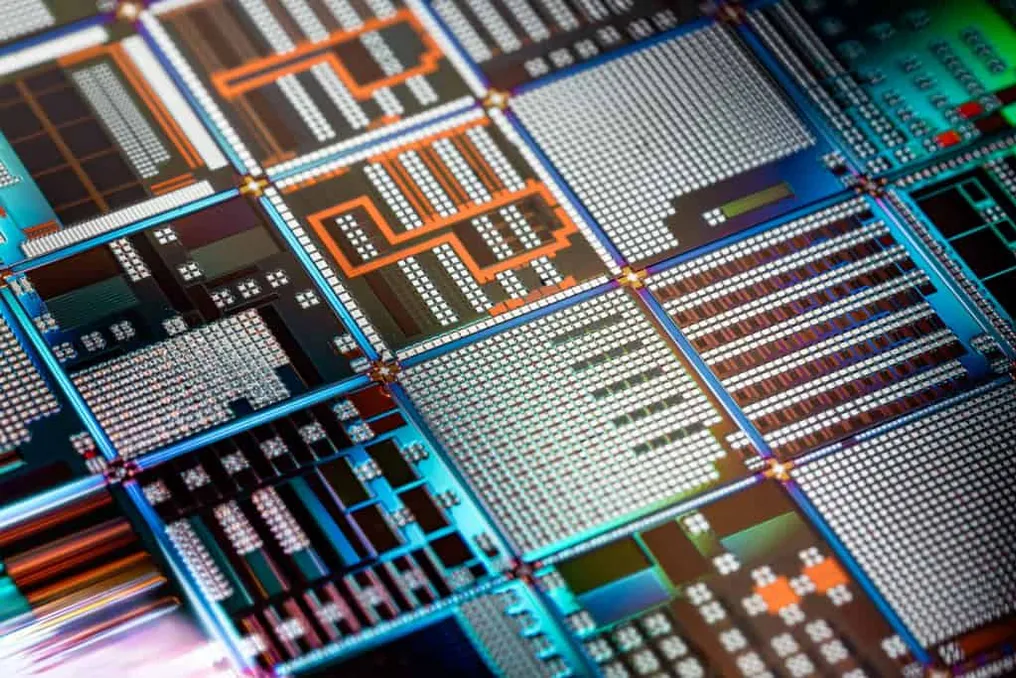
The production cost of electronic devices and smartphones is being pressured by the sharp increase in memory prices. This rise affects smartphone manufacturers and other equipment makers, with artificial intelligence being a factor that intensified the problem, although it was not its origin.
Initially, the difficulty lay in supply failing to keep up with demand. Furthermore, building new factories takes several years to increase production capacity. Previously, memory manufacturers could improve efficiency by fitting more chips on each wafer, but this advancement has begun to slow down.
In 2021, Micron found that technological progress alone would not be enough to meet future demand, necessitating the production of more wafers and the construction of new facilities. However, the current climate has not favored this expansion. After the massive consumption of computers, tablets, and cell phones during the pandemic, sales dropped, leading to increased inventories and reduced growth plans for manufacturers.
When the market began to recover, the demand driven by artificial intelligence emerged on a much larger scale. AI data centers use HBM, a specialized variant of DRAM, which allows for the fast transfer of large volumes of data. This component is more complex to manufacture and consumes a considerable share of industrial capacity.
Micron estimates that producing a certain amount of HBM requires about three times more wafers than the same amount of traditional DRAM. David Naranjo, an associate director at Counterpoint, clarified that it is not just that data centers are consuming RAM, as the types of memory are different.
The effects of this increase are already visible in the values. According to Counterpoint, 16 GB of DRAM intended for smartphones cost approximately US$ 42 (R$ 216) in the second quarter of 2025, rising to about US$ 181 (R$ 929) a year later.
Although the apparent solution is to produce more memory, in reality, a semiconductor factory takes years to become operational. For example, Micron's new facility in New York is only expected to begin generating significant production in 2030, while the company's factory in Idaho should start producing wafers in mid-2027.
Even with investments exceeding US$ 25 billion (R$ 128.25 billion) made this year, Micron cannot define when supply will meet demand. Counterpoint projects this balance only by the end of 2027 or early 2028 under an optimistic scenario, and IDC also predicts that the shortage will last until 2028.
Apple is among the corporations best positioned to absorb high costs due to its premium positioning and product scale; however, the company has already implemented price adjustments for Macs and iPads.
Focus on the iPhone
Currently, attention is turning to the iPhone. It is estimated that the iPhone 18 Pro could have a starting price of US$ 1,299 (R$ 6,664), based on component costs. This price would be US$ 200 (R$ 1,026) higher than the launch price of the iPhone 17 Pro.
Tim Cook described the memory increase as a 'flood that happens once in 100 years,' referring to the magnitude of the cost increase. For consumers, the expectation is higher prices for an indefinite period, given that despite the growth in supply, demand for memory continues to advance. As summarized by David Naranjo: 'There will not be a happy ending anytime soon.'