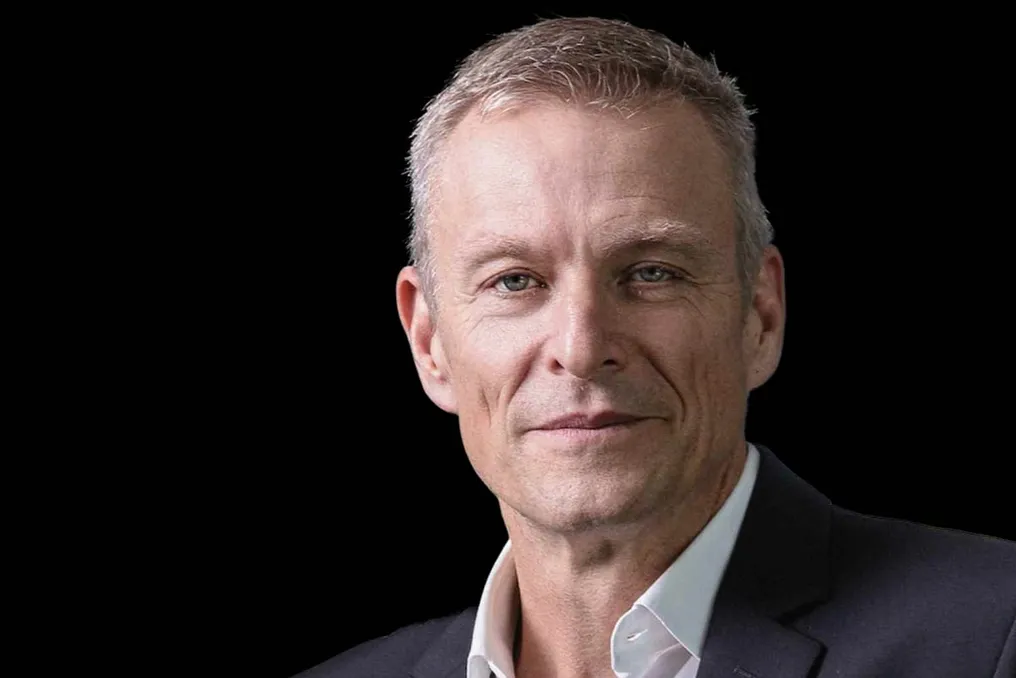
Mncane Mthunzi was appointed Chief Executive Officer of Naamsa starting Monday. The position had been vacant since April after Mikel Mabasa abruptly left the post, having served for over six years.
According to a representative of the industry association, Mabasa left 'to pursue personal interests outside the organization.' At the time of his departure, no successor was named, nor was a resignation date set. Subsequently, Operations Director Shini Gobieza was appointed interim CEO, who has now returned to his primary role.
Public records show that Mthunzi previously held the position of CEO of the South African Consumer Goods Council, giving him experience in managing an industry association. Before that, he worked as an Operations Director at Edcon and participated in the presidential project on reducing bureaucratic barriers as Head of Strategy.
Crisis conditions for exports
Mthunzi begins his tenure during the most challenging period for South African vehicle exports in a generation. In April 2025, the US imposed a 25% sectoral tariff on imported vehicles under Section 232 of the Trade Expansion Act. This tariff took effect on components one month later. At that time, Naamsa warned that these measures could destroy the export industry, calling it a 'social and economic crisis in formation.'
Vehicle exports to the US fell by 74% in 2025, dropping from 25,544 units to 6,530. The downward trend continued: according to Naamsa's half-yearly data, there was a further decline of 36% in the first half of 2026. Almost all of the lost volume is attributed to Mercedes-Benz C-Class vehicles produced in East London—a plant that suspended production for two months in mid-2025 and forms the backbone of the Eastern Cape city's economy.
The two-year extension of the Africa Growth and Opportunity Act, signed in Washington last week, does not resolve this issue. Duty-free access under the Agoa program does not cancel the Section 232 tariff, so the 25% rate remains in place. In 2024, before the tariffs were introduced, the automotive sector accounted for 64% of all trade under Agoa between the two countries and generated export revenue of 28.6 billion rand.
Transition to new energy vehicles
Manufacturers are currently coping with the blow by selling products in other markets—total exports reached a record 414,268 units in 2025. However, this buffer is thinning. In the second quarter of 2026, exports decreased by 5% compared to the previous year, and in the first half, by 7.6%. Port congestion has reached a level where some suppliers are forced to use air freight for components to keep production lines running.
The second major challenge relates to the transition to new energy vehicles. For years, the industry has demanded that the government establish a policy framework in this area, receiving only fragments. Andrew Kirby, CEO of Toyota South Africa, warned in February that without urgent action, the local automotive industry would face deindustrialization. An argument repeatedly put forward by Mabasa himself was that the Department of Trade, Industry and Competition lacked sufficient capacity to adequately support the sector.
Meanwhile, the domestic market is changing under the influence of manufacturers. Chinese brands have captured a significant share in the segment priced up to 400,000 rand, which is purchased by most South Africans. Sales of battery electric vehicles have sharply accelerated this year amid rising fuel prices, with almost none of these vehicles being manufactured domestically.
Naamsa Chairperson Peter van Binnebergen, who is also CEO of BMW Group South Africa, stated in his announcement that the appointment occurs at a 'critical juncture.' He noted: 'We are entering a period that will fundamentally define the future structure and competitiveness of our sector, and we need strong, decisive, and strategic leadership to navigate it.' He added that 'his mandate is much broader than just leading an industry association. It is about serving our members while helping to shape the conditions under which one of South Africa's most vital industrial sectors can compete, transform, and grow globally.'
Mthunzi echoed a similar tone in his statement, saying: 'We cannot assume that past successes will automatically guarantee our future.' He emphasized that 'South Africa must aggressively fight for the investments, technology, skills, markets, and opportunities that will define the next generation of mobility.'
He reported that his priority will be maintaining Naamsa as a 'strong, influential, and unified voice' for the industry that 'engages constructively with the government, challenges where necessary, and promotes practical solutions.'
Naamsa has established eight strategic priorities for the new CEO, covering competitiveness, investment retention, localization, the transition to NEVs, development of export markets, skills, transformation, and closer coordination between the industry, government, and organized labor. The association represents 44 companies that manufacture, assemble, distribute, and import new vehicles. The automotive industry accounts for 5.2% of GDP and 23.8% of national production volume, with exports to 154 markets in 2025 generating 291 billion rand in revenue, employing 113,000 people directly in production.