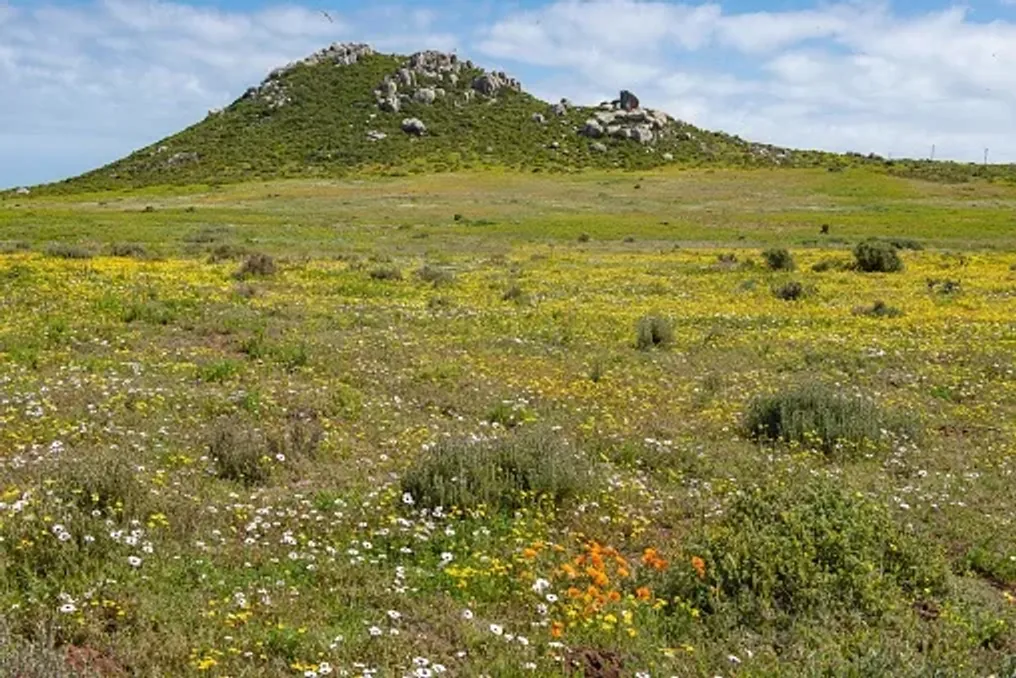
Spring is considered an ideal time for a trip along the West Coast, as the landscape begins to shed its winter brown hue and fills with color. Annually, a usually restricted section of the West Coast National Park, known as Postberg, opens for several weeks, showcasing carpets of seasonal flowers, green pastures, and wildlife against the backdrop of the Atlantic Ocean.
This year, Postberg is accessible to visitors from August 1st to September 30th, offering a limited window to observe seasonal changes. However, it is recommended not to view Postberg merely as a quick stop for flower viewing; it is best enjoyed as part of a full day trip through the West Coast National Park, including stops to admire views, look for wildlife, explore the lagoon, birdwatch, visit rock pools, and find a spot for a picnic by the water.
Planning a Day Trip
The route from Cape Town towards Langebaan itself is part of the region's appeal. As you move away from the city, the vast, low-lying landscape of the West Coast unfolds, where subtle changes occur in spring even before the flowers become prominent. The West Coast National Park is about an hour and a half's drive from Cape Town, making it a convenient option for a day trip.
One should not rush directly to Postberg. The park is designed for stops, and there are several worthwhile locations to explore before and after the flower route. If you have time before heading to Postberg, it is worth taking a detour to Syberg.
The 4.6 km Bakuur walking trail starts at the Langebaan gates and leads to the Syberg viewpoint, which offers views over the Langebaan Lagoon. Along the way, one can spot wildlife such as ostriches, eland, and fox-eared foxes. It is also worth visiting the Syberg Viewpoint building, whose exhibits illuminate the natural and cultural history of the area, including early inhabitants of the West Cape, whaling, shipwrecks, the VOC period, the Langebaan Lagoon, and the region's geology. This serves as a reminder that there is more in this landscape than just spring flowers.
Next, proceed towards Postberg. This section is only open during the flowering season, which visitors feel distinguishes the trip from a regular park stroll. SANParks reports that the 2026 season has already begun, although the timing and intensity of the bloom continue to depend on weather conditions as new species of flowers emerge.
Enjoying the Landscape and Wildlife
At this point, it is advisable to slow down. There is a temptation to stop every few meters for another photograph, but time must be allocated simply to drive through the landscape and observe what is happening around. Although flowers may be an obvious focus, they constitute only part of the experience.
Periodically take your eyes off the road and survey the pastures. The West Coast National Park is home to 15 species of mammals and 281 registered bird species, and Postberg is particularly good for observing large herbivores against the backdrop of the blooming landscape. This combination is what makes the area so special in spring: it is not just a botanical exhibition. One can watch wild animals moving across flowering fields with mountains, the lagoon, or the ocean in the background.
It is important to remember that visitors must remain in their vehicles where required and must never pick flowers or remove plants, animals, or other material from the park.
After you have absorbed the flowers, completely change scenery and head to Cederberg. Here, the colorful spring pasture gives way to the Atlantic coast. SANParks advises exploring the rock pools along the coastline, which is a good place to get out, stretch, and see another side of the park. Cederberg is also suitable for stopping and watching the ocean. This area is known as a whale-watching spot from August to October, adding another seasonal reason to look towards the water.
In one day, one can transition from flowers to wildlife, and then to the rock pools and the ocean.
After exploring Postberg, move towards Kraalbaai. The calm waters of the Langebaan Lagoon create a striking contrast with the Atlantic coast, and Kraalbaai is one of the park's designated areas for relaxation and picnicking by the lagoon. This is a place to slow down the pace of the journey. Bring food, find a spot by the water, and spend time simply watching the lagoon. This is a simple way to break up a long day of driving and sightseeing, especially if traveling with children.
The landscape looks completely different here: instead of flower-covered pastures, there are pale beaches, turquoise water, and a wide sky. The West Coast National Park is one of the best places near Cape Town to combine a spring road trip with birdwatching. The park hosts over 250 bird species, including migratory shorebirds that travel thousands of kilometers between the Northern and Southern Hemispheres. There are four bird hides in the park: Heelbeek, Abrahamskraal, and under the Syberg Viewpoint. If you visit in September, the lagoon is particularly interesting for bird lovers as migratory species return from their northern breeding grounds. SANParks recommends the Heelbeek hide during low tide when incoming water brings shorebirds closer to shelter.
You do not need to be a serious ornithologist to enjoy it. Take a few quiet minutes, grab binoculars if you have them, and see how many species you can identify.
If the flowers are not enough to keep you in the car, there are several trails that allow you to experience the park differently. In the Heelbeek area, there are 7 km and 9 km circular day walks, and the Bakuur trail covers 4.6 km between the Langebaan gates and the Syberg Viewpoint. For a more ambitious plan, the Steenbok trail, 13.9 km long, runs from Cederberg and is available in August and September, but must be booked in advance. There is also a two-day hiking route in Postberg, covering 15.5 km on the first day and 11.8 km on the second, with an overnight stay in Plankiesbaai.
However, for a simple day trip, there is no need to turn the outing into a serious hike. Even a short walk or a stop at one of the viewpoints adds a new level of experience. For something completely different, you can stop at the Heelbeek Visitor Centre to see a replica of the famous footprints of Eve. These fossilized tracks were discovered in Kraalbaai in 1995 and are believed to belong to a young woman who lived about 117,000 years ago. The original tracks are kept at the Iziko South African Museum, and a replica can be seen in Heelbeek. This is an unexpected piece of human history that can be found during a flower-filled car trip, and another reason not to rush in the park.
The Heelbeek Environmental Centre also features exhibits detailing the historical and ecological history of the area. Part of the appeal of visiting Postberg lies in its temporary nature. The flowers will not look eternal, and Postberg itself is not open to the public year-round. The seasonal opening ends on September 30th in 2026. SANParks recommends visiting on sunny weekdays whenever possible, as conditions for viewing flowers are better, and the number of visitors is generally lower.
And if you are reading this during the week of September 7th to 13th, there is an additional reason to go: the West Coast National Park participates in the South African National Parks Week, offering free day access to South African citizens and residents during this period. This offer does not include accommodation, commercial activities, or other paid attractions, and visitors must carry valid identification.
The best part of a spring trip to Postberg is that the flowers should not make up the entire itinerary. Start with the sights at Syberg, follow the road to the flowering Postberg section, stop to look for wildlife, head to Cederberg for the rock pools and the Atlantic, settle by the lagoon in Kraalbaai, spend quiet time at the bird hide, and conclude with learning about the area's human history in Heelbeek. In a landscape that dramatically changes over a few weeks, there are many places to stop along the way.