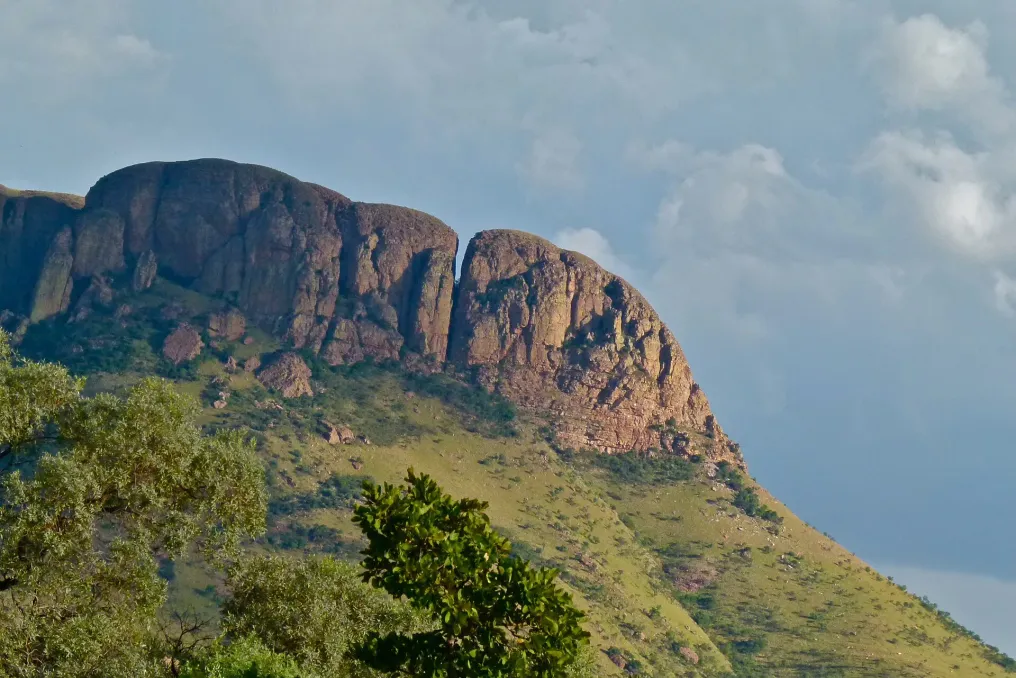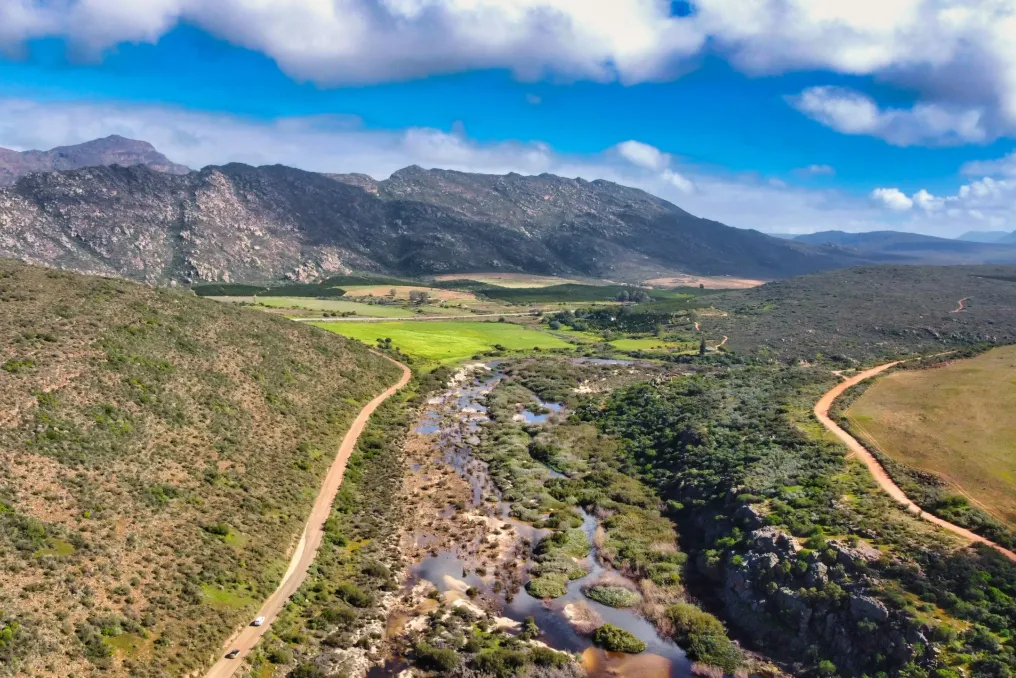
A trip to Upper Taal requires a conscious approach, curiosity, and a desire to explore the adventures that Cederberg offers over the weekend. From Clanwilliam, you should head towards Cederberg, crossing the Paahuys Pass, after which the landscape opens up into the Tra-Tra Valley. The final stretch of the road is a gravel road, the mountains begin to compress, and soon you can spot a small group of whitewashed, straw-roofed cottages nestled between the slopes. This is Upper Taal.
This village was founded in 1830 by German missionaries from the Rhine Missionary Society and remained an active community for almost two centuries. In the modern world, the historic village still has about 700 residents, whose church, cottages, shops, and small businesses are neatly arranged along one of the winding roads.
It is also a great reason to plan a weekend in Cederberg around this corner of the world. Not because Upper Taal has many tourist attractions; quite the opposite. The reason is to get to know what there is to see here, and what is directly related to this place and the people who have lived here for a very long time.
Clanwilliam is a sensible starting point for a weekend, especially if you are driving from Cape Town on the N7 highway. It is also an ideal place to stock up on supplies before diving deeper into Cederberg, as there is no gas station or ATM in Upper Taal, and the journey from Clanwilliam to the village is about 75 kilometers. Instead of driving straight to Upper Taal and trying to fit everything into one day, it is better to spend the first night at Clanwilliam Dam.
Clanwilliam Dam will completely change the character of the weekend. After the mountain roads and dusty tracks of Cederberg, the dam provides a refreshing and tranquil stop before continuing the journey. At the dam, you can fish, swim, and engage in water sports, and there are many camping and self-catering options in the vicinity.
The journey itself deserves time. The Paahuys Pass is paved, but the road into the Tra-Tra Valley becomes gravel, and the changing landscape is one of the pleasures of the drive itself, not just transportation between two points. After all, everyone enjoys moments of road tripping.
Since Upper Taal is small enough to explore on foot, it is worth taking time to study every aspect of this picturesque village. The village center serves as an excellent starting point, where the whitewashed buildings and thatched roofs give the settlement its unique character. The church dates back to the 1830s and remains part of the village life. The old communal yard, Die Werf, includes several important village buildings such as the Mission Shop, the Louis Laypoldt Museum, and the community hall.
The charming cottages along the road are not heritage exhibits, but the people you meet, who are not performing for visitors. Therefore, ask permission before photographing people or their homes; be respectful to passersby and try to spend money locally. This might mean having lunch at a village tea room, a packet of soothing rooibos, or something prepared by local residents.
This distinction changes the experience. You are visiting a community; it is someone's home, not an open-air museum.
Perhaps the most significant craft in Upper Taal is the one you put on your feet. Yes, your feet. The shoe factory in the village was established in the 1830s and holds the title of South Africa's oldest shoe factory. The workshop became one of the first commercial producers of welders in the country, and fortunately, handmade shoes are still produced here. Continuing a tradition that has been preserved for generations, the shoes are cut and sewn by hand.
If the factory is open, and you are curious enough, take time to learn about the craft instead of just buying a pair and leaving. The appeal lies not so much in the shoes themselves, but in the opportunity to see how something is made in the same place where the craft began almost two centuries ago. And if you were looking for a reason to replace your worn-out weekend shoes, Upper Taal can offer you a lot.
Upper Taal has another striking connection with you that you probably encounter often but never think about its origin: rooibos. This plant is native to the Cederberg region and has been cultivated around Upper Taal for many generations. The Upper Taal original rooibos cooperative was founded in 2009 by small farmers from the area, creating a significant path for local producers to collectively sell their harvest.
Buy a packet while you are there. It may seem like a small thing, but one of the simple pleasures of traveling through rural South Africa is the ability to connect an everyday product with the landscape that produced it. The tea in your kitchen suddenly gains a mountain valley and likely a wonderful story you can share with guests while sipping afternoon tea.
Upper Taal is convenient because it can be explored in one day, but the wider valley reveals more of Cederberg. You will encounter remote settlements, hiking trails, rock art sites, and mountain landscapes outside the village. The Huningflay donkey trail is one of the most memorable experiences in the region, following an old route between Paahuys Pass and Huningflay. Other walks lead into the surrounding mountains and valleys.
You don't have to do everything. In fact, for a two-day weekend, choose one experience outside the village and leave the rest for another trip. Cederberg won't go anywhere.
The best part of structuring a weekend around Upper Taal and Clanwilliam Dam is the contrast. After a day among mountain roads, historic buildings, and gravel tracks, returning to the water feels like a genuine change of scenery, not just another stop on the route.
Swim if the weather is warm enough. Fish and perhaps cook dinner for the night. Sit outside with a book that has been on your shelf for two weeks but you couldn't finish the first chapter because of something requiring immediate attention. Take a moment to admire the mountains changing color at sunset. Or do nothing at all. The choice is yours. The dam is a place where adventure stops demanding your attention. And after a day in Upper Taal, that feels satisfying.
Cederberg is known for its massive landscapes: sandstone formations, mountain passes, fynbos, and rock art. While all these are good reasons to visit, Upper Taal offers a different way to penetrate the region. Agriculture, trade, and the traditions of the village community are still connected to daily life. This makes the weekend here less like sightseeing and more like getting acquainted with a space in history that is still palpable and accessible to you.
And then there is the dam. After all those mountain roads, the best way to conclude a weekend in Cederberg is not another hike or another viewpoint. It is when your feet are in the water, the mountains are in the distance, and you don't need to go anywhere else.
Allocate at least two nights for this itinerary: one night near Clanwilliam Dam, and the second either in the Upper Taal area or back near Clanwilliam. If you plan to venture into the wider wilderness of Cederberg, check current access requirements and conditions with CapeNature before departing. And always give yourself more time than you think you need.