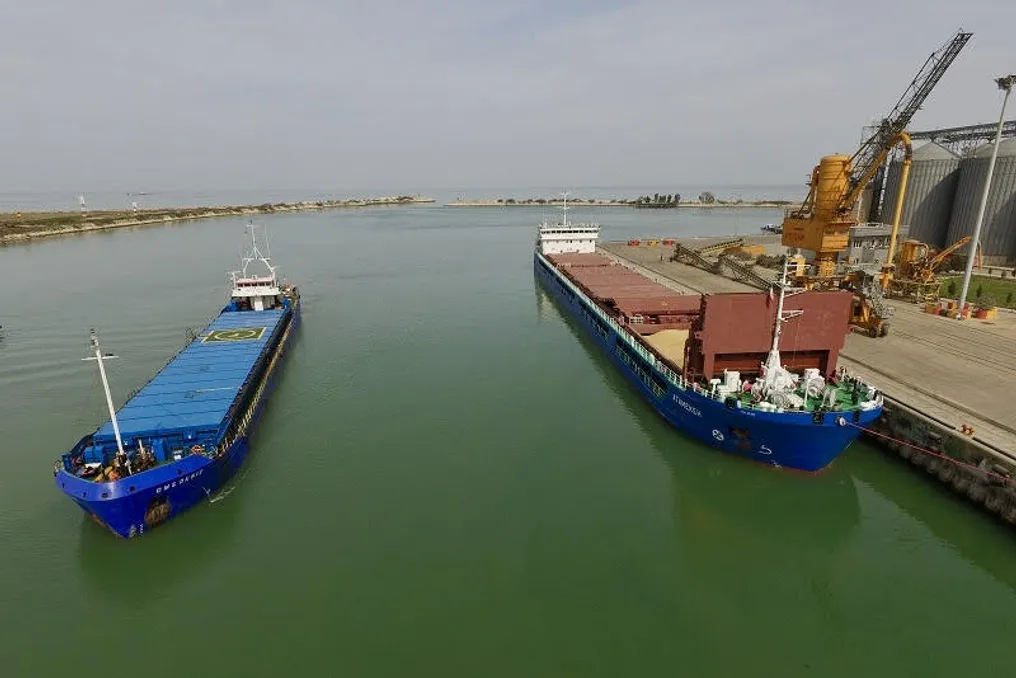
The head of the Iran-Russia Joint Chamber of Commerce stated that the goal of US sanctions is to increase the cost of Iran's economic operations. He emphasized that in the current multipolar world, achieving a complete economic blockade against Iran is extremely difficult, and joint economic interests are an important strategy to counteract these repressive measures.
In an exclusive interview with IRNA, Hadi Tizhush Taban commented on the US Treasury Secretary's statement regarding the tightening of sanctions and the maritime blockade against Iran. He noted that the economic blockade should not be limited only to restricting trade routes; simultaneously, pressure is being exerted on currency revenue from oil sales, transportation, insurance, banking services, and payment systems to increase the cost of trade for the country.
According to him, one of the goals of economic pressure from the US is to reduce the resources available to the Iranian government, especially oil revenues, increase the costs of circumventing sanctions, and limit the country's financial potential. Sanctions have also increased Iran's transaction costs, targeting shipping networks, intermediary companies, shadow banking, and even some cryptocurrency exchanges.
Tizhush Taban specified that the main problem is not just the sanctions themselves. He listed the consequences of this situation: higher discounts on oil sales, increased costs for transportation and insurance, reduced investment, inefficient resource flow, and increased opportunities for corruption.
Iran's Opportunities in the Context of Global Multipolarity
The head of the Iran-Russia Joint Chamber of Commerce, citing the multipolarity of the global economy, noted that while the US may raise the cost of Iran's trade, a complete economic ban is difficult because the modern world economy is multipolar, and countries such as China, India, Russia, and Gulf states have their own economic interests.
He continued that Iran has diverse opportunities and must use them to reduce the vulnerability of its economy. Geographical diversity, the presence of many neighbors in Central Asia, the Caucasus, as well as in South and East Asia, along with the diversity of goods and services, presents opportunities for developing foreign trade.
Tizhush Taban specifically highlighted that crude oil should not be the sole source of the country's foreign currency, and the share of petrochemical products, petroleum products, industrial goods, technical services, agriculture, and technology in foreign trade must increase.
Developing Alternative Trade Routes is Crucial
Speaking about the need to diversify trade routes, he stated that Iran should not depend excessively on one or two routes; numerous land, sea, and combined routes must be created for trade, and the development of regional corridors plays a huge role.
The head of the Iran-Russia Joint Chamber of Commerce added that sanctions are not just a banking issue but also a logistical problem. If Iran can reduce the time and cost of goods transit, it will effectively neutralize part of the sanctions' consequences.
Referring to the potential of the country's northern routes, he reported that they can help reduce dependence on southern ports, but none of them can completely replace the southern routes, and a complex of reliable and competitive routes needs to be created.
Tizhush Taban stressed that creating corridors is not just a construction project but part of the country's economic security infrastructure. He added that these routes will only be effective if they can compete with alternative routes in terms of cost and time.
Optimizing Financial Operations
Pointing out that one of the main shortcomings of Iran's foreign trade is the method of obtaining and transferring funds, he noted that even if Iran can sell goods, exports will be carried out through many intermediaries at high costs if the exporter cannot receive and use export proceeds at a reasonable price, and such a model is unsustainable.
The head of the Iran-Russia Joint Chamber of Commerce proposed solutions to this problem: creating mutual accounts, using joint and regional banks, and developing regional and digital payment systems. He warned that eliminating the dollar itself will not solve the problem, as the dollar is not only a currency but also a financial and banking network; if a transaction is conducted in another currency, but the bank or insurance company is still linked to the network fearing US sanctions, the risk of sanctions remains.
Tizhush Taban also mentioned the possibility of conducting trade in local currencies. He said that some of Iran's trade with Russia may take place in the national currencies of both countries, but there is an important problem—the cost of currency conversion for economic entities. In the current situation, an economic entity can incur significant losses during conversion, sometimes reaching 20–25 percent, which creates serious expenses for the exporter.
He called on the government not to create mechanisms that increase the exporter's costs when providing currency to the importer; instead, the exporter's currency should be converted at a fair rate with only a very small markup compared to the real market rate.
In conclusion, the head of the Iran-Russia Joint Chamber of Commerce stated that by reducing currency conversion costs, developing trade in national currencies, and creating regional payment mechanisms, some problems of Iran's foreign trade can be alleviated and the foundation for developing economic relations with neighboring countries and trading partners can be laid.