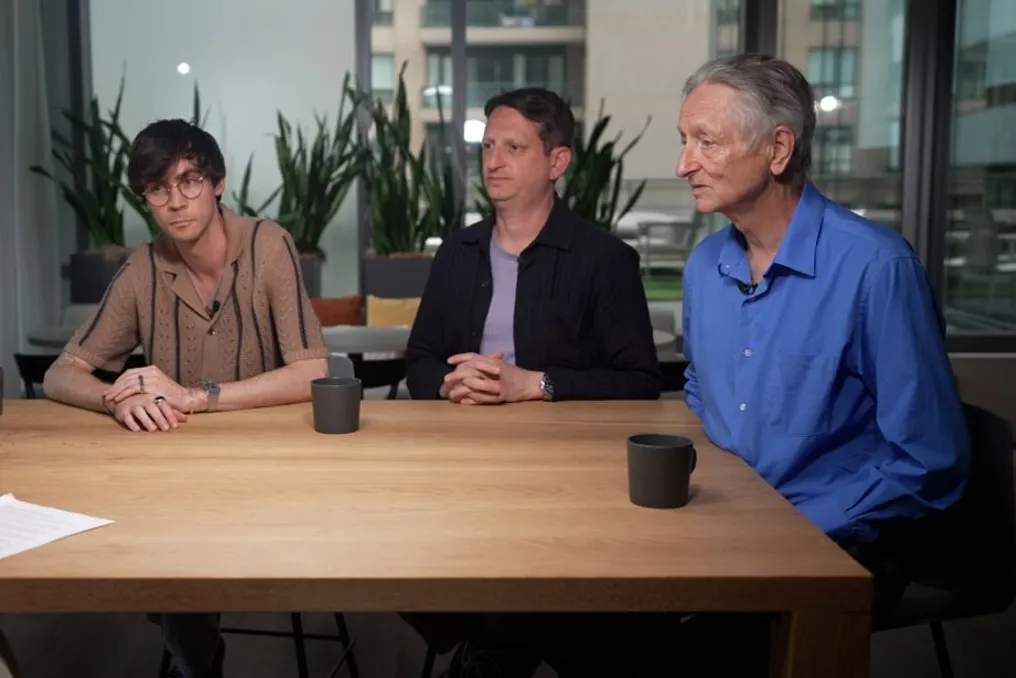
Although Silicon Valley remains the center of the technology industry, a thriving artificial intelligence ecosystem has formed around Toronto. Over forty years, research conducted by Hinton laid the foundation for modern AI system functionality while simultaneously transforming the landscape of this Canadian city.
Major tech companies such as Google, Nvidia, Meta, and Microsoft, along with numerous startups, have opened offices or research labs near the University of Toronto. Even non-tech firms are showing interest in the city: pharmaceutical company Sanofi announced this year an investment of nearly $300 million in the AI Center of Excellence in Toronto.
According to CBRE's annual commercial real estate analysis, Toronto now ranks third globally in the technology talent market, surpassing New York but trailing San Francisco and Seattle. This has been made possible by educational institutions like the University of Toronto and public-private partnership research institutes, such as the Vector Institute, which Hinton co-founded to commercialize AI breakthroughs.
In an interview with CNN in Toronto, Hinton noted: 'I was lucky because twenty years ago very few people were working on this, so smart young students came to Toronto... and they turned into a whole generation of AI leaders.'
Canadian Prime Minister Mark Carney aims to strengthen the local AI ecosystem through a national AI strategy that provides for over $2 billion in spending on research, education, and AI adoption enhancement, as well as new security measures.
Toronto's growing power in AI comes against the backdrop of deteriorating trade relations between the United States and Canada. A trade war flared up in recent weeks, prompting Canadian officials to seek to protect domestic industries. This could be another reason for the importance of technological investment in the country.
Hinton stated: 'I don't think we can afford to get all these technologies from the US or China.'
The Appeal of Living in Toronto
Among the new generation of AI leaders in Toronto is Nick Frost, who studied under Hinton at the University of Toronto and was one of the first employees at the Google AI lab in Toronto in 2017. Frost later became a co-founder of the $7 billion corporate AI company Cohere.
Frost chose not to follow the traditional path and move to Silicon Valley to start his company for a simple reason: he likes living in Toronto. He emphasized: 'There is a great tech ecosystem here, there is also a great arts community here, there is also a great academic community here, there is also a great business community here. It's all here.'
Many other founders in the city share this view. Gennady Pekhmenko, who sold his startup CentML to Nvidia last year and now serves as Senior Director of AI Software for the chip giant, believes that Toronto's international culinary scene serves as a useful tool for attracting talent from other cities.
Tommy Pautanen, founder and CEO of the AI healthcare firm Signal 1, mentioned the advantages of the Canadian healthcare system and Toronto's famous 'Hospital Row.'
Hinton added that, unlike in the United States under the Trump administration, Canada welcomes immigrants, on whom tech firms have long relied as a source of talent. One of Pekhmenko's early employees at CentML was an Amazon engineer who could not extend his H1-B visa to stay in the United States. However, he was able to obtain work authorization in Canada.
Jordan Jacobs, managing partner of the investment firm Radical Ventures, noted that the more friendly immigration policy facilitates the attraction of international specialists who likely possess the ability to think about serving the global market.
Toronto also benefits from its proximity to major markets such as New York, Washington D.C., and Chicago. Jacobs explained: 'You can hop on a 90-minute flight and reach 200 million people.'
Development Outside the Silicon Valley Bubble
According to CBRE, San Francisco remains the undisputed center of the technology industry, having approximately 20% more tech workers than Toronto. Tech companies are also actively returning to the city center after a period of dispersal during the Covid-19 pandemic.
Nevertheless, builders in the Toronto AI ecosystem argue that the benefit of being located outside Silicon Valley is evident. Local founders note that the cost of living in Toronto is generally lower, partly due to lower housing prices, social healthcare, and good public schools. This also means that high-quality talent can be attracted more cheaply (although many Toronto AI firms also have presences in California).
Furthermore, according to Ray Reddy, former Vice President of Shopify who is secretly developing a new startup, Toronto does not face the same high employee turnover rates as San Francisco. Reddy previously worked at Google's headquarters in Silicon Valley and observed that even 'mission-driven people in Silicon Valley constantly look around asking: wouldn't it be better there?'
San Francisco is often characterized by its hype and unrestrained enthusiasm for AI, but Frost argues that Toronto possesses a unique openness to friendly debate. Frost cited his relationship with his friend and mentor Hinton: they frequently disagree on fundamental issues, such as whether creating AI constitutes creating a new type of being or merely a tool. Nevertheless, they regularly play chess, and Frost raises this discussion hoping to throw Hinton off balance (Hinton, he says, is usually unflappable).
Frost explained this by saying that 'I think it's related to the fact that Toronto and Canada are not a monoculture. Not only technical specialists work here; there is a little bit of everything, and I think that leads to innovation, it leads to people thinking about what is not popular.'
AI Opportunities for Canada
According to government data, Canada's digital sector already contributes over $140 billion to the country's GDP. In Hinton's view, the local AI ecosystem brings the country and others other benefits.
Hinton noted: 'If AI causes large-scale unemployment, we want the profits derived from worker replacement to remain in Canada so that they can be taxed in Canada to support displaced workers.'
Moreover, governments and companies worldwide are increasingly seeking to diversify their procurement of advanced technologies, rather than relying solely on the United States. Frost called this a 'constant advantage' for Canadian firms.
Cohere received a surge of new client inquiries after the White House imposed export controls on Anthropic's advanced AI models in June. Frost stated: 'The Canadian flag is a flag that inspires trust. We strive to increase the resilience and independence of anyone using our technology, and overall, I believe Canada as a country is interested in the same for all our partners.'
Even though the most prominent tech investors are in Silicon Valley, being located elsewhere is no longer a barrier to attracting funding. Rachel Urtasun left her position as head of autonomous driving lab at Uber in Toronto to found the self-driving semi-trailer company Waabi five years ago. She founded the company in Toronto, although its trucks are mainly tested in the Southwestern US. Earlier this year, Waabi raised over $1 billion in a Series C round, marking the largest funding round in Canadian history.
Urtasun told CNN: 'Ultimately, what attracts investors is which company will become a leader in a huge market. Whether we are dealing with Canada or Silicon Valley, it didn't matter much.'