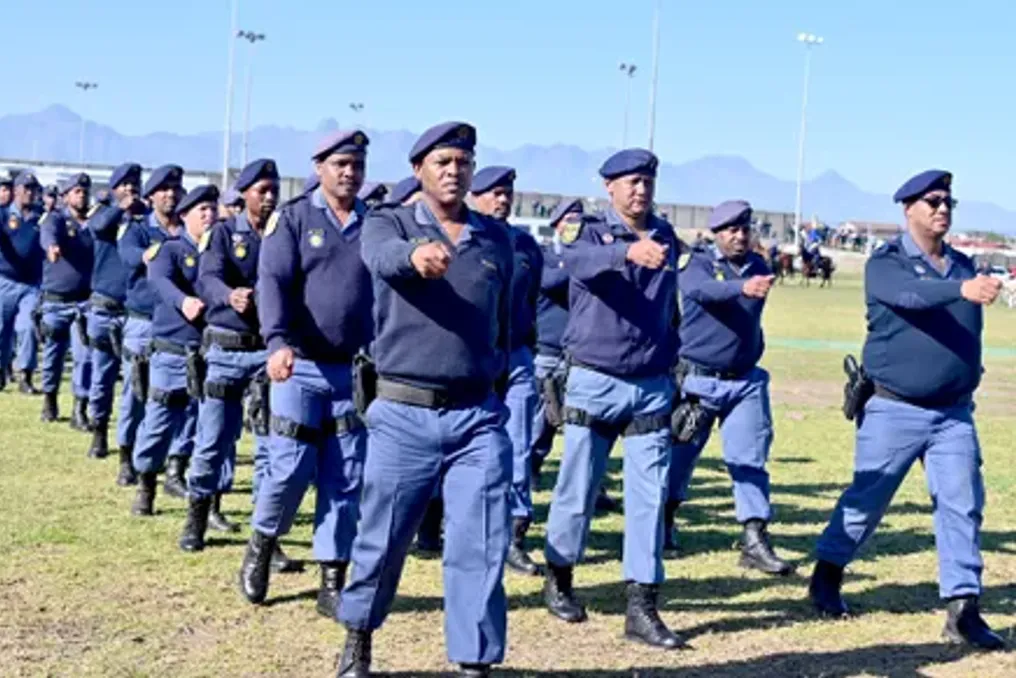
The implementation of body-worn and in-car cameras is viewed as a key element in modernizing law enforcement in South Africa, capable of increasing accountability and improving evidence collection.
For the 2025/26 financial year, R14 million has been allocated for the procurement of such cameras at the national level. The South African Police Service (SAPS) planned to acquire 450 body-worn cameras and 200 in-car cameras.
The Acting Minister of Police, Professor Phiroz Kachalia, recently confirmed that the camera procurement process for SAPS is in the final stages of defining technical specifications and quality assurance. After the State Information Technology Agency (SITA) took on the technical refinement, including solution architecture, evidence management, and video systems, the project is nearing publication.
Once the service provider is appointed, the final system scheme will be determined, allowing SAPS to develop a comprehensive national implementation plan and operational base.
Professor Mpho Matlala, an expert from the UNISA Law College, School of Criminal Justice and Department of Policing Practice, Crime, Security and Law Enforcement, explained that cameras provide audiovisual recording, evidence preservation, monitoring of officer conduct, and the ability to reconstruct incidents during police operations.
He suggested that Armscor might participate in the procurement, given their previous collaboration with the Border Control Agency. Matlala noted that the results could include higher quality policing outcomes, a reduction in violations and complaints, as well as improved police-public interaction and enhanced SAPS reputation, since citizens would know their interactions are being recorded.
However, Matlala warns that the allocated R14 million is insufficient to cover the costs of necessary infrastructure, storage, and equipment, which would only allow for a small pilot project in several SAPS clusters, rather than a full-scale rollout.
In addition to the initial budget, the program faces significant operational, technical, and political hurdles. These challenges include financial-administrative aspects, such as the need for long-term maintenance planning and licensing fees; technical risks related to equipment failure, battery limitations, network infrastructure requirements, cyber threats, and potential data manipulation; and legal and political frameworks requiring clear protocols for camera activation, data storage, and evidence management to comply with ethical standards and protect privacy.
Matlala recommended conducting a pilot project in high-crime provinces such as Gauteng, Western Cape, Eastern Cape, and KwaZulu-Natal.
A DA NCOP member on the Portfolio Committee on Safety and Justice, Mzamo Billy, stated that political will is necessary to realize the desired reforms. He believes this technology should become part of the necessary police reform.
Billy emphasized that these cameras can protect lawfully acting officers, provide objective evidence in disputed situations, strengthen crime investigations, and assist the Independent Police Investigative Directorate (IPID) in resolving complaints. He also noted that the need for this technology extends across all of South Africa, especially in areas with high crime rates and hotspots in the Western Cape, KwaZulu-Natal, Gauteng, and Eastern Cape provinces.
He insisted that deployment must be based on reliable crime data and operational necessity, not political considerations. Billy added that recordings must protect both citizens and the police, and must not be switched off, deleted, manipulated, or concealed without consequences.
Billy also intends to demand that the Portfolio Committee on Safety and Justice summon the Minister, SAPS leadership, IPID, and relevant procurement officials to report on the full budget and number of cameras, procurement timelines and implementation, criteria for selecting priority provinces and areas, activation/deactivation rules, storage procedures and chain of custody, integration with SAPS investigation systems, IPID access, privacy protection measures, and responsible officials.
Furthermore, Parliament must hear from a wide range of independent experts in policing, criminology, digital evidence, cybersecurity, privacy rights, and police oversight before public funds are allocated and the final implementation structure is approved. Billy concluded that the Minister must inform Parliament whether SAPS has a properly funded, enforceable, and independently verifiable camera program, or if it is just another promise that will disappear once the headlines fade.