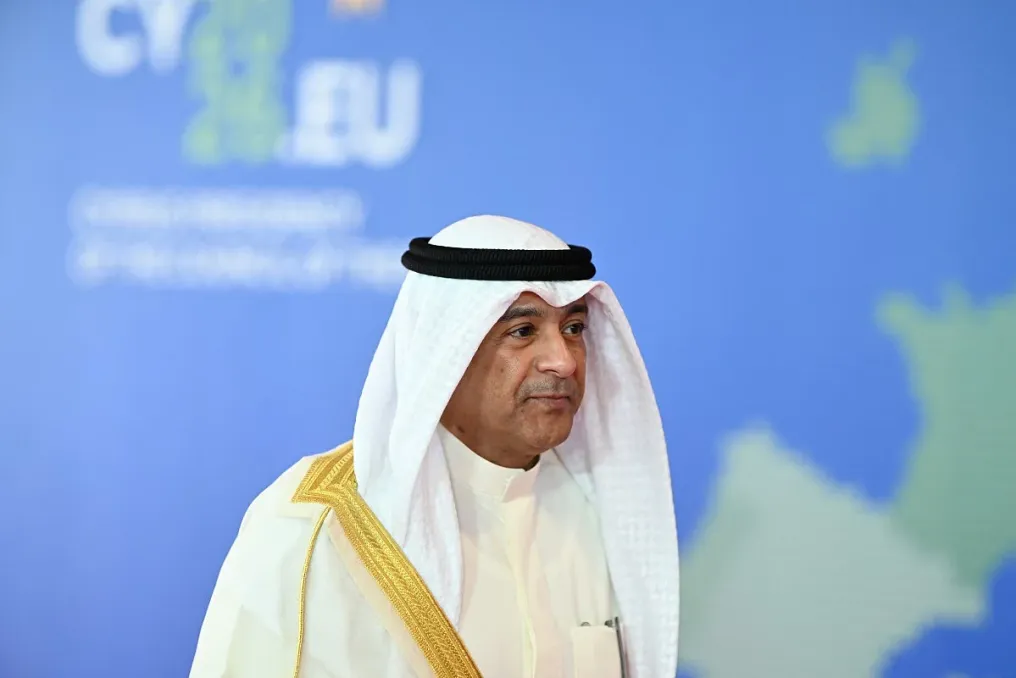
The head of the Gulf Cooperation Council (GCC) emphasized that the economies of the Gulf countries should be viewed not as separate entities, but as an interconnected system that serves as a gateway to the wider region and global markets. He noted that the GCC countries remain 'open to the world' and strive to create long-term investment partnerships based on mutual interests.
GCC Secretary-General Jassem Al Budaiwi stated that today the GCC countries cannot be seen as six isolated markets. Instead, they represent an integrated economic and investment system, which ensures that investors entering it are not cut off from the entire region.
He explained that an investor who invests in one of the GCC countries enters not just a national market, but a regional system connecting the Gulf markets with each other and with the global economy. These statements were made during the XV AIM Congress, a three-day event held at the Dubai International Trade Centre.
Al Budaiwi shared data indicating that the Gulf economy ranks among the top ten globally, with a Gross Domestic Product (GDP) of $2.4 trillion. Furthermore, he reported that the assets of Gulf sovereign wealth funds are valued at over $5 trillion, and the total assets of commercial banks will reach approximately $3.9 trillion by 2025.
Regarding investments, the total inflow of foreign direct investment into the GCC reached approximately $792.7 billion in 2025, of which $171.4 billion was intra-GCC investment. Al Budaiwi added that these figures reflect the level and progress of the interconnectedness of GCC economies, confirming that the integration of the Gulf itself has become an incentive for investment.
The Secretary-General noted that merely having opportunities is insufficient to attract investment, citing recent geopolitical changes. Despite serious supply chain disruptions due to issues in the Strait of Hormuz, GCC economies have maintained stability thanks to the 'wise leadership' and 'joint coordination' of the respective countries.
He concluded that the GCC countries possess resources such as economic resilience, significant financial and investment opportunities, established institutions, clear development plans, and economies rapidly moving towards greater diversification and innovation.