When it comes to housing construction, people traditionally think first of bricks, cement, and lengthy construction processes, as the dream home does not appear instantly. First, a frame is created from walls, columns, and beams using bricks and cement, followed by the finishing stage, and then work on the interior and exterior. This entire process takes a significant amount of time until construction is complete.
However, this picture is changing. Many Indian startups are implementing modern methods, such as 3D printing, transforming approaches to building structures. Thanks to this technology, strong and modern buildings are built in a much shorter time. Let's look at how exactly this technology has given a new direction to the construction industry.
With 3D printing technology, the house is ready much faster compared to traditional methods because labor-intensive operations related to manufacturing bricks, mortar, gravel, and laying walls are eliminated. Furthermore, this technology reduces the need for a large number of workers.
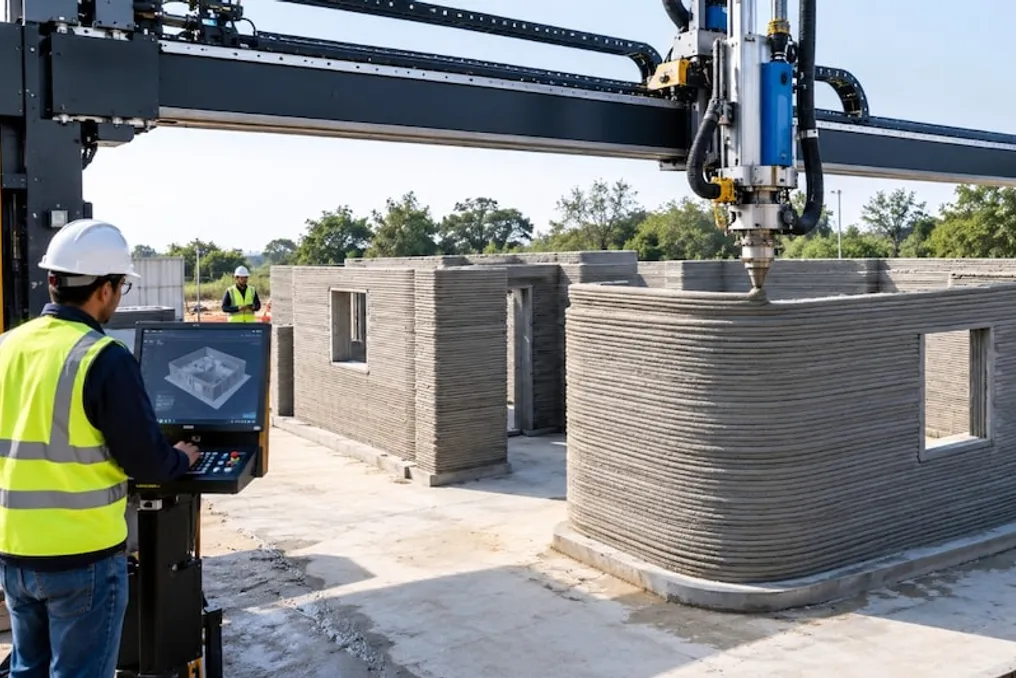
The application of this technology begins with creating an accurate three-dimensional model or blueprint of the house using computer software. This model specifies the exact dimensions of doors, windows, and other elements. Then, a large-scale 3D printer or robotic arm is installed on the construction site. This giant robotic 3D printer contains data about the house design and receives commands from the computer.
After that, the machine's robotic arm begins to build the house layer by layer, using its large nozzles. The printer precisely extrudes a special mixture of concrete or cement in layers on top of each other, forming the walls, roof, floor, and the rest of the structure. These layers quickly harden, allowing the walls to rise continuously, which significantly saves time in construction. In addition, labor costs are reduced because 3D printing is fully automated, unlike traditional construction which requires a large number of workers. With this technology, only a few specialists control the entire construction process.
3D printing technology eliminates the need for bricks and plastering. There is no need to separately connect walls or lay bricks; essentially, a huge 3D printer connected to a computer prints the walls directly, using cement and other composite concretes as material.
Thanks to 3D printing technology, the frame of a standard-sized house or office can be ready in just 24–48 hours or within a few weeks. This modern technology also prevents the waste of building materials, as only the necessary volume of material is used thanks to robotic precision and automation. This also helps avoid loss of time.