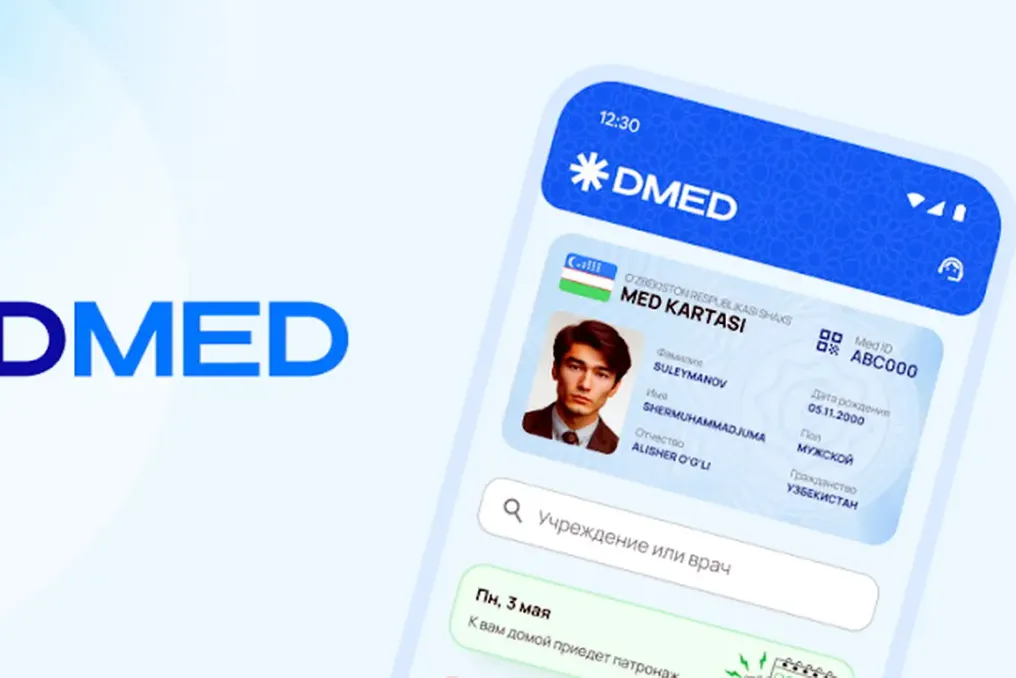
Uzbekistan continues its transition from paper prescriptions to an electronic medical prescription system, which has helped solve several problems accumulated over the years of using traditional paper documents in healthcare.
The issue was discussed on the program Studiya 24 on the Uzbekistan 24 television channel. Participants in the discussion were Nafisa Kodirova, a specialist from the Republican Center for Digital Healthcare; Jamshid Okhunjonov, head of the DMED implementation department at the unified integrator Uzinfocom; Nigora Bozorova, chief physician of Family Polyclinic No. 59 in the Yakkasaray district; and Mukarram Makhkamova, chief physician of Family Polyclinic No. 37 in the Chilanzar district.
According to Kodirova, paper prescriptions created systemic difficulties. Illegible handwriting by doctors could lead to errors when dispensing medications in pharmacies, and the loss or damage of prescriptions forced patients to return to doctors. There were also instances of prescribing duplicate or incompatible medications to the same patient.
Okhunjonov noted that before the introduction of a unified system, about 53 disparate information systems operated in the Uzbek healthcare sector without integration. Patient data obtained in one clinic was unavailable in another medical institution, requiring the presentation of paper documents for every consultation.
The situation changed after the Ministry of Health and Uzinfocom developed the unified medical information system DMED. Currently, about 4,000 medical institutions are connected to this system, and approximately 38 million people are covered by a single electronic medical record. The system covers primary, secondary, and tertiary care and includes more than 20 functional modules, including the electronic prescription module.
Okhunjonov explained that after examining a patient, the doctor issues the prescription directly through the system and confirms it using the doctor's personal PIN-FL code. This prevents the possibility of issuing a prescription in another specialist's name.
After processing, the prescription is automatically sent to the patient's mobile application, which also contains information about their medical history and test results. Each prescription receives a unique barcode, which is used to obtain the medication at the pharmacy. Doctors prescribe drugs by their international nonproprietary name, not by brand name, allowing the patient to choose a specific product in the pharmacy based on price and other characteristics.
Bozorova noted that initially, the system's implementation caused some confusion among the population, including questions about the need to see a doctor for common painkillers. She reported that people can check whether a certain medicine is prescription-only or available without a prescription via the Farmgo website.
Furthermore, Bozorova emphasized that before the introduction of the unified system, test results obtained at a local clinic were not displayed when the patient visited the hospital later. As a result, patients, including children, sometimes had to undergo the same examinations again, causing additional stress and financial costs.
According to her, long queues were often observed in clinics previously. Now, patients can schedule appointments themselves through the mobile application at a convenient time, including outside the standard clinic hours of 8 am to 8 pm.
Bozorova stressed that electronic prescriptions have increased the personal responsibility of doctors. Since each prescription is confirmed with the doctor's personal code, it is impossible to issue it in someone else's name.
According to Cabinet of Ministers Resolution No. 570, a doctor can prescribe no more than five medications for one diagnosis. If the doctor attempts to prescribe more, the system automatically blocks the prescription.
Bozorova added that it was not uncommon before for patients to be prescribed two or three drugs from the same pharmacological group, with the total number of prescribed medications sometimes exceeding 10.
Makhkamova reported that the system cross-references the prescribed medication with the diagnosis entered according to the International Classification of Diseases and highlights incompatible or non-corresponding medications in red. This warns the doctor before final confirmation of the prescription. Before confirmation, the system prompts the doctor to review and, if necessary, edit the prescription. However, once confirmed, the prescription cannot be changed; it can only be completely revoked.
Okhunjonov stated that the system includes a special analytical panel that allows managers of medical institutions and specialists of the Ministry of Health's situational center to track prescription statistics, including cases of incorrect prescribing, across the country.
Regarding elderly patients who do not use digital services, Kodirova clarified that when issuing a prescription, the doctor can designate a trusted person, such as a guardian or responsible individual, who can collect the medication on behalf of the patient.
She also added that if a printed prescription is lost, the information remains accessible in the DMED application. The prescription can also be found using the patient's identification data through a doctor or pharmacist.
Bozorova indicated that over 1,800 medicines are classified as over-the-counter. All prescription drugs, including injections, are issued exclusively via electronic prescriptions because their use requires the involvement of a medical professional, whether at home, in a hospital, or in a day clinic.
Okhunjonov added that the status of a specific drug can also be checked via the my.gov.uz portal.
The program also focused on antibiotic control. Bozorova emphasized that antibiotics have immunosuppressive effects and side effects, so they must be prescribed by doctors based on clinical standards. The prescription must specify the frequency of intake, the time relative to meals, and the duration of treatment.
She noted that by ministerial order, antibiotics and hormonal preparations can only be dispensed with a prescription.
In response to the question of whether the system can determine dosages that do not match the patient's age, Okhunjonov replied that the system contains monitoring that can automatically select suitable medications based on the diagnosis.
Kodirova confirmed that antibiotics and hormonal preparations can no longer be purchased without a prescription, while over-the-counter remedies remain freely available.
She explained that this was one of the main goals of implementing the system, as there was previously no control over the circulation of strong drugs. Now, all relevant information—who issued the prescription, in which institution, and which pharmacist dispensed the medication—is entered into a unified database and used for analytical and statistical work in the situational center of the Republican Center for Digital Healthcare.
Regarding the workload on doctors, Bozorova stated that electronic prescriptions have simplified their work. Previously, patients had to fill out several registers and obtain the stamp and signature of the head of the department. Now, all information is entered under a single identifier, and the prescription is generated and confirmed with one code without paperwork. Patients with the DMED mobile application do not even need to print the prescription.
Makhkamova added that all medical personnel involved in the system have undergone training in digital literacy and passed corresponding exams at the Professional Development Center.
She also mentioned that patients with chronic diseases who are away from home can receive remote consultations. After an online appointment, the prescription is automatically sent to the patient's mobile application regardless of their location.
In response to the question of actions in case of technical failures, Okhunjonov replied that if a medical institution loses electricity or internet connection, the doctor can issue a prescription via the mobile application or tablet by manually entering the patient's PINFL. The data will still be transmitted to the unified database.
Pharmacists have a similar option when processing prescriptions, using either barcode scanning or manual entry of the patient's PINFL.
Regarding the protection of personal medical data, Okhunjonov explained that access to the system is divided by user roles. A pharmacist sees only the prescription, not the patient's diagnosis, while a registrar has access only to the information necessary for their work. Full access to the medical history is granted only to the attending physician.
A specialized unit of Uzinfocom is responsible for the system's cybersecurity and constantly monitors potential threats.
Among the achieved results, Bozorova highlighted a noticeable reduction in polypharmacy, i.e., the practice of prescribing an excessive number of medications to one patient. According to her, the number of repeat and duplicate prescriptions has significantly decreased, including in the Yakkasaray district.
She also noted a reduction in corruption risks previously associated with directing patients to specific pharmacies to purchase specific medications. Since prescriptions only indicate the international nonproprietary name of the active substance, patients can choose from available analogues regardless of the country of origin.
In response to the question of what to do if the prescribed medication is not available in the pharmacy, Okhunjonov replied that the system tracks whether the patient received the medication fully, partially, or not at all. The remaining part of the prescription can be purchased within one month from the date of issuance.
Kodirova added that thanks to prescribing medications by international nonproprietary names, pharmacists can offer an equivalent containing the same active substance but under a different trade name if a specific product is unavailable.
Okhunjonov reported that the system is integrated with the Farmgo database, which helps prevent counterfeit or unregistered medicines from entering the pharmacy circulation. If a medicine is not included in the registry, it cannot be dispensed via an electronic prescription.
To date, about 9 million electronic prescriptions have been issued through the system. This allows authorities to compile statistics on the most demanded medications and regional needs, which are used for planning preventive measures.
In conclusion, Bozorova concluded that doctors now bear greater responsibility, and patients have become more attentive to their health and realize that effective treatment does not always require taking a large number of medications.
Makhkamova added that the system prevents the entry of medications with approaching expiration dates, thus preventing their subsequent sale. She urged patients visiting pharmacies to request exactly the medication specified in their electronic prescription.