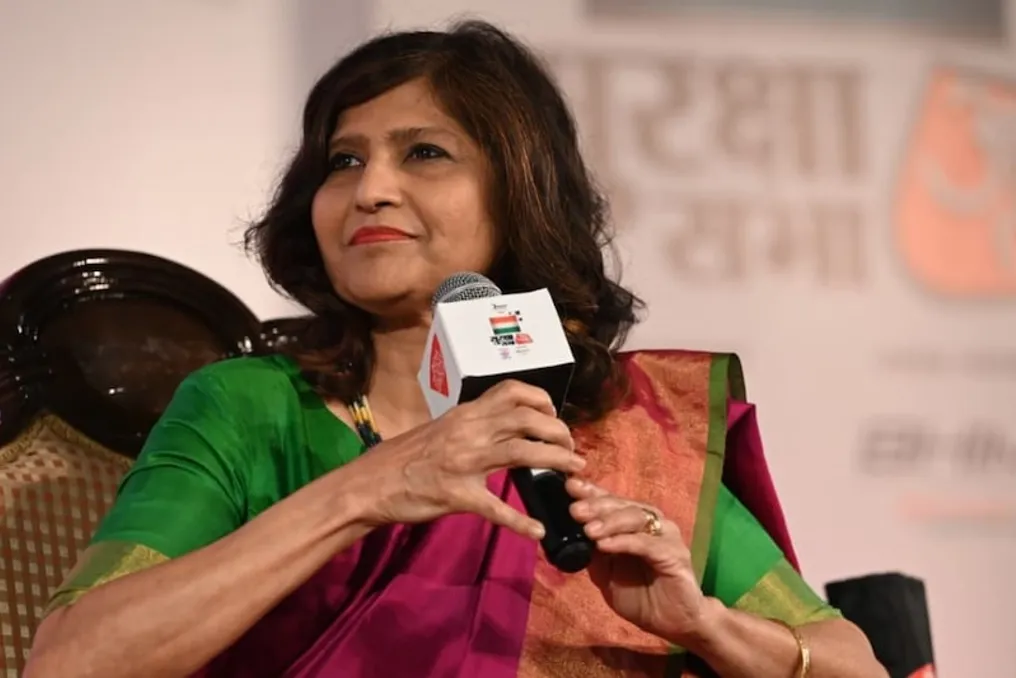
During the 'Woman is Strength' session at the Suraksha Sabha AajTak event, Vice Admiral (Retd) and former Director of the Armed Forces Medical Service, Arti Sarin, discussed in detail the growing role of women and the changing opportunities within the armed forces. Recalling the early stages of her career, she noted that the number of women in the army was extremely low at that time, but changes in policy, infrastructure, and available opportunities have opened new paths for women.
Arti Sarin shared that when she joined the Armed Forces Medical Corps in 1986, the conditions were vastly different from today, and there were very few women in the army. Gradually, the appointment of female officers began, and their numbers have steadily increased. In 1993, female officers not related to medicine started being appointed, which further expanded women's participation in the armed forces.
Responding to a question about changes in deployment locations and service conditions for women in the armed forces, Arti Sarin recounted her first posting in Port Blair. She mentioned that back then, women also had to work in remote areas, while many male officers serving with her were deployed to field areas. Approximately two years later, she had the opportunity to pursue a master's degree.
According to Arti Sarin, as the representation of women grew and policies changed, so did their opportunities. Today, female officers perform all types of duties to their full capacity. She emphasized that women are provided not only with opportunities but also with the necessary infrastructure and amenities. Because of this, they prove that anyone competent in their profession can perform their duties anywhere.
'I didn't think I would reach this level'
When asked if she envisioned reaching senior positions in the Armed Forces Medical Service early in her career, Arti Sarin replied no. She said that initially, her sole goal was to become a good doctor and wear a uniform. Her desire to join the armed forces arose from the beginning because she came from a military family. For her, wearing a uniform was a great achievement in itself; she noted that she gained the opportunity to wear one of the most respected uniforms in the world, and this became the initial motivation for her career.
Arti Sarin explained that a career in the Armed Forces Medical Service is not limited to medical training alone. An officer undergoes continuous training at various levels, and over time, leadership and administrative skills develop. She recounted that initially, her focus was on becoming a good doctor, providing quality patient care, obtaining a master's degree, and then specializing. After that, she continued to receive training at all levels within the Armed Forces Medical Corps system.
Gradually, officers take on leadership responsibilities and develop administrative capabilities. If an officer consistently demonstrates good results, shows potential, and maintains professional excellence, they are gradually promoted. Arti Sarin noted that today, women in the armed forces hold many important leadership positions. These changes are not just about an increase in the number of women, but rather indicate that they are given equal opportunities to make leadership decisions and take responsibility.
During the session, when asked if achieving a high rank brought her a special sense of accomplishment late in her career, the conversation shifted to the spirit of soldiers and the role of military doctors. Arti Sarin stated that viewing any position merely as a title is insufficient. Achieving that position is a long journey during which a person experiences many events that change and strengthen them internally.
She added that military doctors have the opportunity to closely observe wounded soldiers during operations. Often, the inspiration for doctors comes from the resilience and positive mindset of soldiers who cope with circumstances despite severe injuries.
'Got bullets, amputated a leg, but still says 'I am fine''
Speaking about the fighting spirit of soldiers, Arti Sarin said that soldiers serving in the Indian Armed Forces undergo training that awakens in them the desire to make the ultimate sacrifice for the country. This thought motivates military doctors to perform their work to the fullest. Doctors know that soldiers rely on them, and they must do everything possible to save them. That is, military doctors are protectors of those who protect the country. According to her, numerous examples are observed during operations where soldiers remain extremely positive despite serious injuries.
She also noted that the work of the Indian Army is not limited to battlefields; various types of conflicts and anti-terrorist operations are constantly conducted. Every story arising from such operations is in itself a source of inspiration. She mentioned that there are incidents that she publicly...