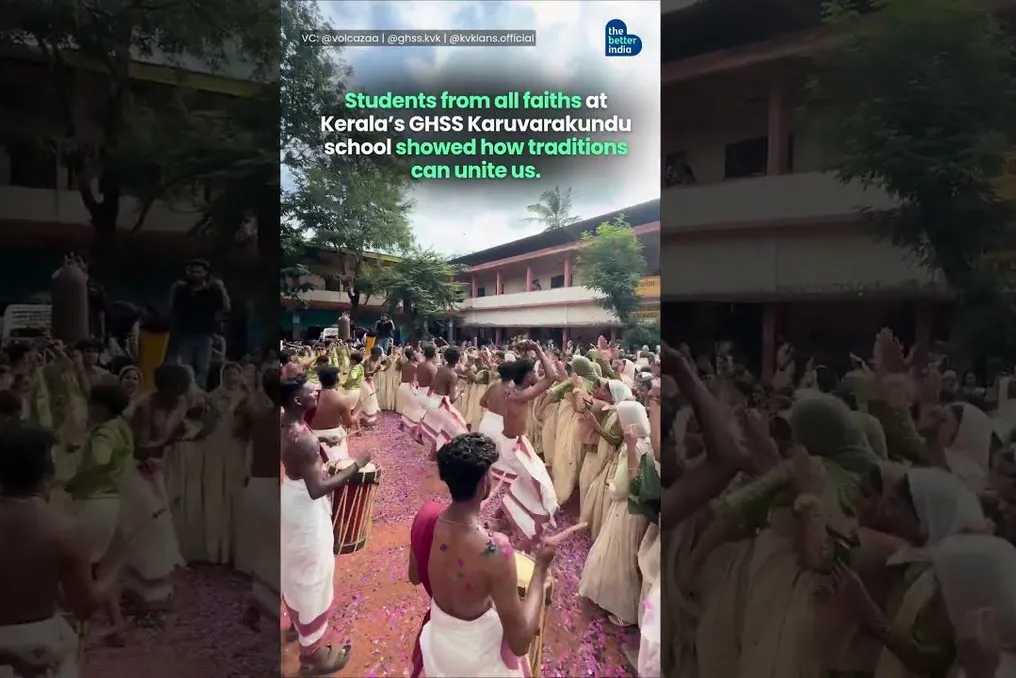
The annual Onam festival in the state of Kerala, India, celebrated as a harvest festival, unites Hindus, Christians, Muslims, and representatives of other faiths in a shared display of secular tradition and social harmony. Although the roots of Onam lie in Hindu legend, it functions primarily as a festival of cultural identity for all Malayalis.
Shared traditions, such as neighbors creating colorful floral carpets called 'pookalams' in front of homes and schools, and the custom of 'Onasadhya' with the communal consumption of a multi-course vegetarian feast served on fresh banana leaves, underscore this commonality.
Similar joint celebrations flourished in South Africa. From the arrival of the first indentured laborers on the colonial Natal plantations to their settlement in places like Magazine Barracks, Riverside, and Kearsney, people easily found common ground.
For instance, Muharram served as an important cultural expression for indentured laborers, regardless of their religious affiliation. European colonists referred to it as the 'Coolie Christmas.' The renowned historian Professor Ghulam Waheed, in his work 'Constructions of Community and Identity among Indians in Colonial Natal, 1860-1910,' noted: 'Despite the hardships of indentured labor, Indians set about restoring their culture and religion in Durban... forming a Pan-Indian identity within the white and African colonial society.'
Later, Professor Fatima Mir's fundamental study, 'Portrait of Indian South Africans,' emphasizes cultural expression as a critically important part of local life, stating: 'They began as improvised expressions of poor indentured laborers...' The initial group of free Indians included musicians, storytellers, and dancers who improvised entertainment.
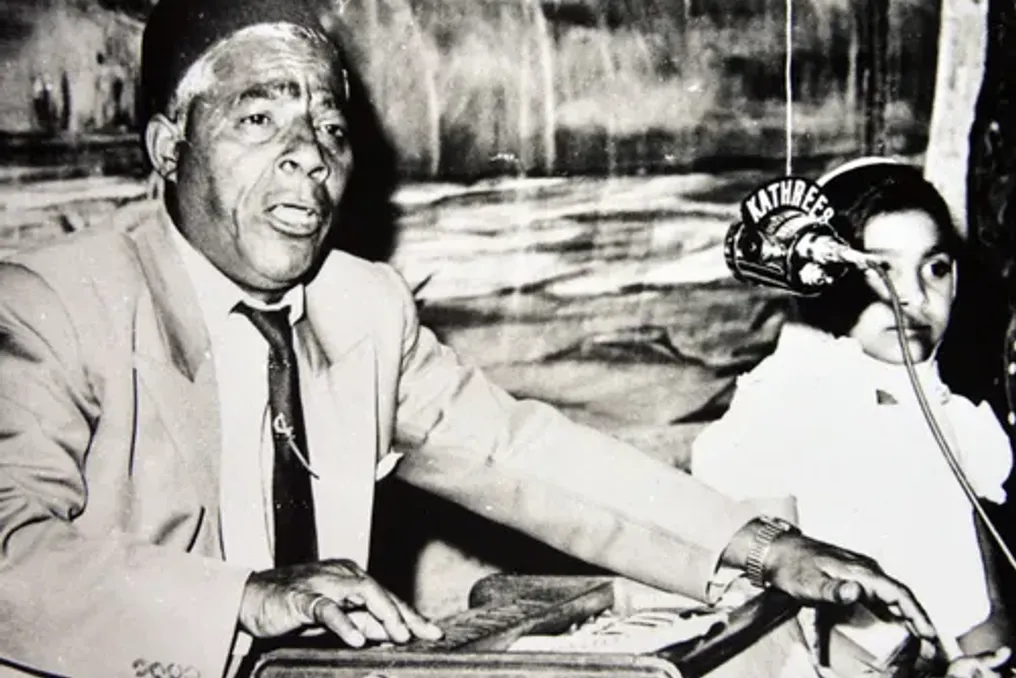
Mir added that 'their meager talents and instruments provided the basis for all their entertainment in small Indian communities settled in the rural and pristine areas of the city.' The narratives for these performances were drawn from dramatized stories of the Mahabharata, Ramayana, and Puranas, performed in Hindustani and Tamil languages. Among them, Muslims sang Qawwali in honor and devotion.
In former times, Indo-Africans supported each other despite religious differences. This is a lesson in unity at a time when suspicious motives threaten to sow discord in South African society.
From improvisation with limited resources, performances became more organized as artists performed at large temple ceremonies and weddings. By the 1930s, full professional orchestras became commonplace.
Muharram marked the convergence of Muslims, Christians, and Hindus during what was called the 'Coolie Christmas' period of Indian indentured labor in South Africa.
Dr. Naresh Denny Viran's study on working-class orchestral music provides a wonderful insight into the mechanisms of musical identity. Viran identified the elders of a rich orchestral tradition, including Railway Youth, Golden Lily, and Ranjeni Orchestras. Not a single wedding between the 1950s and 1980s passed without an orchestral ensemble. Unfortunately, this great orchestral tradition has almost disappeared.
Before the existence of the orchestral tradition, there were three other types of semi-professional forms of artistic expression. Therukoothu—a South Indian dance drama dramatizing religious scriptures; Saranji Taal—North Indian groups performing religious songs and dances in the rapidly disappearing Bhojpuri language; and a third form of expression presented by Muslim performers of Qawwali, which was performed through energetic expression, often lasting all night.
In most cases, props and costumes were created by 'natchathinis' (men portraying women) from Sarangi Tal, dressed in richly decorated costumes. Therukoothu dancers made masks and accessories from papier-mâché for their performances. The rigid patriarchy 'forbade' women from participating in such performances.
Patrick Ngcobo, who passed away in February 2015, was a Carnatic classical musician born in Kloof (Gillets). Although he was a Zulu singer, he specialized in Indian classical music and could sing in seven languages, including Tamil, Kannada, Telugu, and Malayalam. His teacher was the renowned Indian singer Dr. KJ Yesudas.
Only in the 1950s did women, such as Dr. Ansuya Singh, a doctor and innovative novelist, begin paving a new path by taking to the stage in dramatic productions.
The plantation barracks in Mount Edgecombe are considered a citadel of Therukoothu, masterfully illustrated in Dr. Satasivan (Sachu) Annamalai's study of this once-flourishing art form. Pilgrims from other plantations even received 'special railway service' to attend festive events. Since alternative forms of entertainment were scarce, Therukoothu held a central place, and performers achieved celebrity status. This did not require elaborate stage sets; performances took place outdoors, some without a platform. Cloths raised by the performers served as curtains.
Unlike modern Kerala, the rural traditions of Indo-Africans, especially in KwaZulu-Natal, have declined over time. Racial segregation under apartheid, urbanization, and the mistaken cultural superiority of Western traditions pushed a significant part of this heritage into memory and history books.
However, not everything has been lost. Brilliant examples exist in the schools of nagara groups, Bharatha Natyam, and Kathak, as well as in theatre figures and individual musicians. Flash Entertainers and Nagara Touch remain well-known names. Acharya Ratna Isai Selvamani Karthigesan Pillai is considered one of the greatest Carnatic voices on the planet, based in Durban.
In Kerala, Hindus, Muslims, and Christians celebrate Onam together. Professor Suria Govender breathed new life into Bharatha Natyam, merging it with traditional African dance forms through the Surialanga Dance Company. The mastery of Manesh Maharaj and Verushki Pazer contributed to the flourishing of their respective dance traditions through creative collaboration.
Currently, the stage is being energized by the exceptional performance of Pat Pillai with the piece 'My Cape Town' in collaboration with academic and jazz master Melvin Peters. Peters laments that the great jazz tradition among Indo-Africans, which was prevalent before the early 1980s, is now declining among the current generation. Hope lies in the flame of revival, bravely supported by actors and impresarios such as Rajesh Gopi, who conducted consistent Red Mango festivals at Sastri College. This festival stands shoulder-to-shoulder with Gramstown and Edinburgh, despite receiving support from only a few dedicated philanthropists.
The common theme of Red Mango, similar to Onam in Kerala, was promoting the collaboration of Sufis, mystics, and Qawwali, uniting the talents of Zoliswa Mchunu, Vishen Kemradj, Master Kirthana Pillai, and their team. Kemradj's call to the great legacy of Sufi poetry, performed on supposedly Hindustani musical scores, elevated the soul. Pillai demonstrated that a comprehensive Hindu could enchant the audience with Qawwali that would make even Ustad Nusrat Fateh Ali Khan rise to their feet.
Music, the stage, and art in general represent a unique platform for recovering lost positions in the cultural life of Indo-Africans at the southern tip of the African continent. Festivals such as Easter, Eid, Diwali, Kawadi, Christmas, Muharram, and Navratri should be used both for worship and for unifying celebration, as shown to us by the people of Kerala.