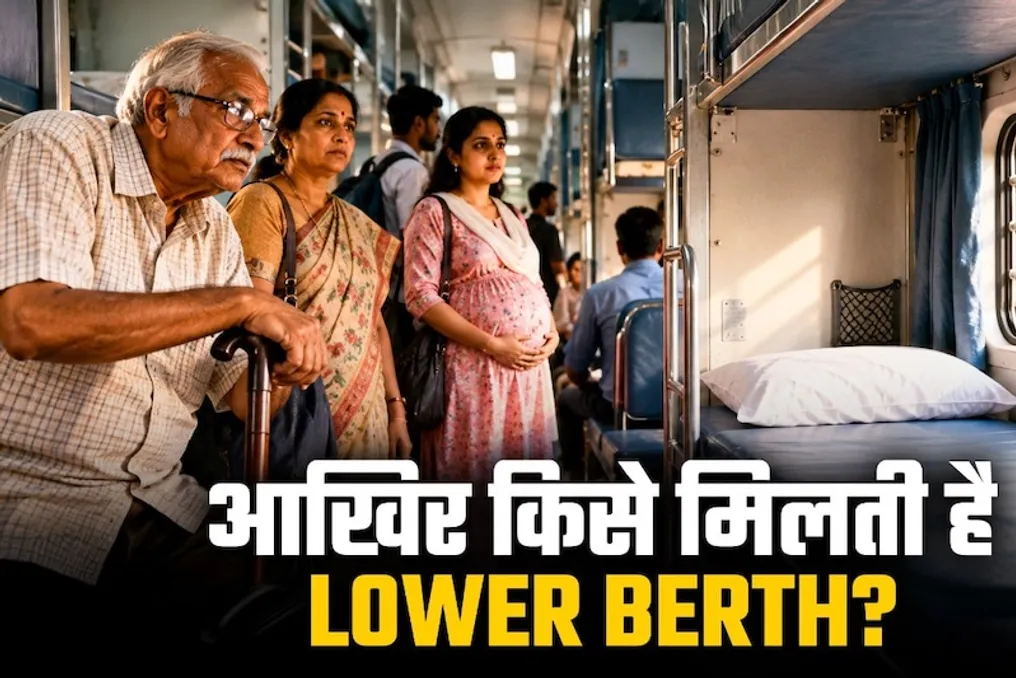
Lower berths are the most popular choice when traveling on Indian Railways trains. They are particularly convenient for the elderly, pregnant women, and passengers who may find it difficult to climb to upper berths.
According to the current rules of Indian Railways, if lower berths are available, they can be automatically allocated to senior citizens and women over 45 years old, even if they did not request them when booking the ticket.
The system of lower berths for elderly passengers is designed so that they do not have to constantly climb up and down. If a sufficient number of lower berths are available, the railway booking system prioritizes such passengers. However, this does not guarantee that every elderly person will receive a lower berth in every situation; it depends on availability.
Women aged 45 and above are also entitled to priority in receiving a lower berth under the railway rules. Even if the lower berth option was not selected when purchasing the ticket, the system may provide one if it is available. The goal of this measure is to enhance travel comfort for women, especially on long routes.
Special provisions are also made for pregnant women to ensure they can get a lower berth, as climbing or moving to upper or middle berths during pregnancy can be difficult and uncomfortable. The railway has established a joint quota of lower berths for various categories: senior citizens, women over 45, and pregnant women.
According to current railway information, the combined quota for these passengers is from 6 to 7 lower berths in the sleeper class per coach, 4 to 5 in 3AC, and 3 to 4 in 2AC. This number may change depending on the number of coaches of that class in the train.
There is also a separate booking system for passengers with disabilities. In Mail and Express type trains, designated seats/berths are provided for passengers with disabilities and their attendants. Lower and middle berths are included in the set quotas for Sleeper and 3AC/3E. Furthermore, if a lower berth becomes vacant after the train departs, and an elderly citizen, a passenger with a disability, or a pregnant woman was assigned a middle or upper berth, the onboard controller may allocate them the vacant lower berth according to the rules.
Many believe that if they select a lower berth when buying a ticket, it will definitely be provided to them. However, this is not the case. The number of lower berths is limited, and they cannot be obtained by everyone who desires them. Seat allocation is based on availability and railway booking rules. Therefore, even after prioritizing certain categories of passengers, the remaining seats are distributed based on availability. Thus, when booking tickets in the future, if you are traveling as a senior citizen, a woman over 45, or a pregnant woman, this service from the railway may prove very useful to you.