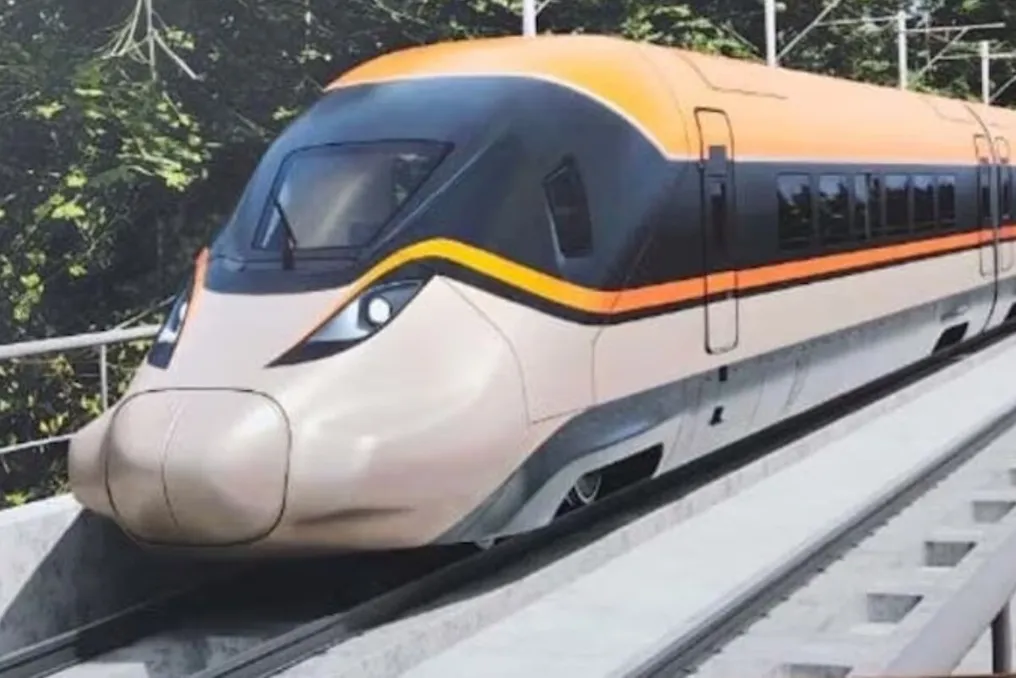
India's first high-speed railway to start operations in a decade; 600 km journey will take 2 hours
Read more
Aaj Tak
www.aajtak.in

India's first high-speed railway to start operations in a decade; 600 km journey will take 2 hours

India's first high-speed railway is preparing to enter service. Construction work on both tracks and stations is proceeding at an accelerated pace. After ten years since the project began, the launch date for the high-speed train has been virtually determined.

The Bullet Train Project started in India in 2017. Phased operation of the Mumbai-Ahmedabad high-speed rail line is planned to begin on August 15 of next year. Despite the project taking longer than initially anticipated, and according to reports, the cost having roughly doubled, the project continues to gain momentum. Videos of work on tracks and stations are regularly published by Indian Railways on social media, causing widespread resonance.

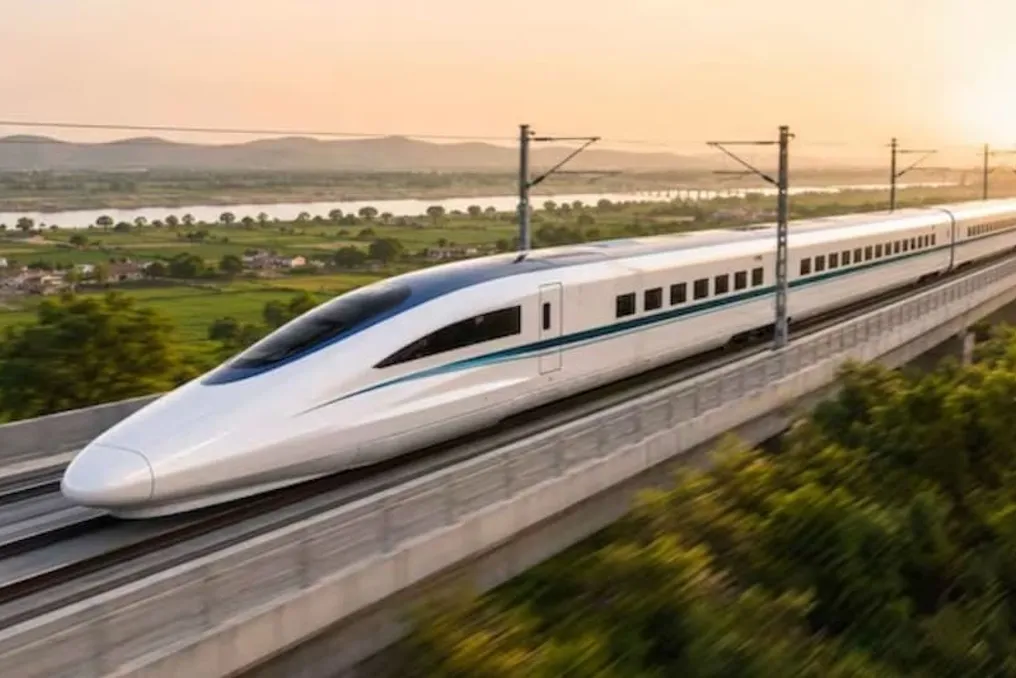
According to available data, work on launching the first phase of the high-speed train on the Mumbai-Ahmedabad section is scheduled for August 15, 2027. The Surat-Bilimora section may start operating as early as August. Trains will be launched in phases. The speed of these high-speed trains will range from 280 to 350 kilometers per hour. These trains, codenamed B-28, are being built using advanced precision control technology to suit Indian operating conditions.

The Bullet Train project will introduce Japanese Shinkansen technology into Indian Railways. The first train will run between Mumbai and Ahmedabad, significantly reducing travel time between the two major Indian cities. The Mumbai-Ahmedabad corridor is 508 kilometers long. The high-speed train will travel at an average speed of about 300 kilometers per hour between Ahmedabad and Mumbai. Previously, the journey between these cities on the fastest trains took approximately six hours, whereas after the high-speed train launches, this distance can be covered in just two hours.

According to available information, the Mumbai-Ahmedabad corridor will have stops at 12 key stations. These include Mumbai (BKC), Thane, Virar, Boisar, Vapi, Bilimora, Surat, Bharuch, Vadodara, Anand, Ahmedabad, and Sabarmati.

It is important to note that the Mumbai-Ahmedabad project is only part of a broader program of high-speed rail transport for Indian Railways. A total of seven such corridors are planned. These include: Mumbai-Pune, Pune-Hyderabad, Hyderabad-Bengaluru, Hyderabad-Chennai, Chennai-Bengaluru, Delhi-Varanasi, and Varanasi-Siliguri via Patna.
Similar stories

Transport Minister announces plans for new high-speed rail corridor connecting Delhi with six cities
Read more
www.aajtak.in

Transport Minister announces plans for new high-speed rail corridor connecting Delhi with six cities

Railways Minister Ashwini Vaishnaw provided an update on the proposed high-speed rail scheme, which is intended to connect Delhi, as well as the states of Uttar Pradesh and Bihar.

Speaking during the inauguration of new electrified broad-gauge lines on the Nepalganj Road-Nanapara-Bahraich section, the minister noted that following the completion of the Mumbai-Ahmedabad corridor, the next project will be a high-speed corridor linking Delhi with the cities of Agra, Kanpur, Lucknow, Varanasi, and Patna.

This project will be the first high-speed railway line connecting the capital Delhi with Uttar Pradesh and Bihar. After the project is implemented, the journey from Delhi to Patna will take only a few hours. It is planned that the distance between Delhi and Patna, which is about 1170 kilometers, will be covered in just 4.5 hours, whereas currently, by train, it takes approximately 12 hours.

The main advantage of the proposed corridor is the significant reduction in travel time. It is projected that the journey of about 1170 km from Delhi to Patna will take approximately 4.5 hours, allowing for savings of about seven and a half hours compared to current rail routes. Similarly, the trip from Delhi to Lucknow is estimated to take about 2 hours and 12 minutes. The launch of this high-speed railway will significantly accelerate movement between many major cities in Uttar Pradesh and Delhi.

The proposed route starts in Delhi and passes through several major cities in Uttar Pradesh, ending at the capital of Bihar—Patna. Key cities included are Agra, Kanpur, Lucknow, Prayagraj, and Varanasi. According to calculations, the train will reach the following time metrics:

  • Delhi – Agra (approx. 200 km): approximately 58 minutes
  • Delhi – Kanpur (approx. 455 km): approximately 1 hour 50 minutes
  • Delhi – Lucknow (approx. 495 km): approximately 2 hours 12 minutes
  • Delhi – Prayagraj (approx. 750 km): approximately 3 hours
  • Delhi – Varanasi (approx. 945 km): approximately 3 hours 33 minutes
  • Delhi – Patna (approx. 1170 km): approximately 4.5 hours

This railway corridor is considered the next major phase in expanding the country's high-speed rail network after the Mumbai-Ahmedabad corridor. The Mumbai-Ahmedabad corridor is about 508 kilometers long and is preparing for operation at a maximum speed of 320 kilometers per hour, with a design speed of up to 350 kilometers per hour. The first services on this corridor are expected to begin in August 2027, possibly starting on the Surat-Vapi section. In this initial phase, a journey with four stops may take about 1 hour and 58 minutes, while the entire route from Mumbai to Ahmedabad with 12 stations is estimated to take approximately 2 hours and 17 minutes.

Railway connectivity between Delhi, Uttar Pradesh, and Bihar is traditionally very busy, especially during festivals like Diwali and Chhath, when there is a large number of passengers and severe overcrowding on trains. The high-speed corridor could become an additional, faster option for travel in this direction in the future. If the project is implemented and completed on time, it will have a positive impact not only on passengers but also on economic activity, tourism, business, and investment in cities such as Agra, Prayagraj, and Varanasi, due to improved transport accessibility.

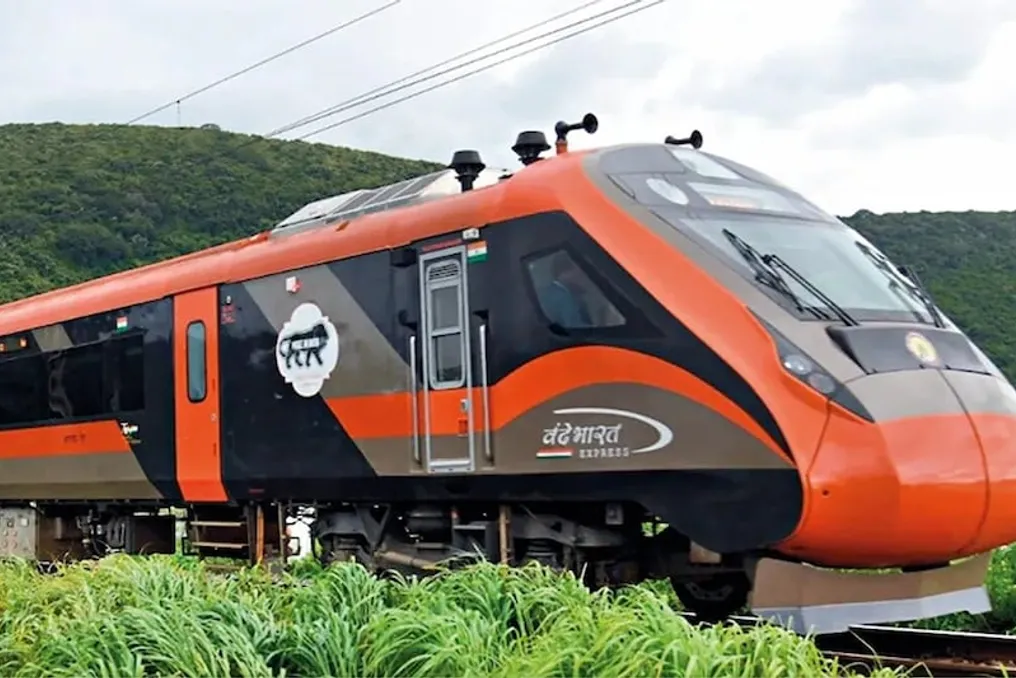
Currently, Indian Railways offers various fast and premium services, such as Jan Shatabdi, Vande Bharat, and Duronto. The high-speed corridor project is designed to operate at speeds up to 320 kilometers per hour, while the Vande Bharat's design speed is around 180 kilometers per hour. This significant difference in speed will help substantially reduce travel time on long routes, such as between Delhi and Patna.

Although the proposal for a 4.5-hour journey from Delhi to Patna represents a potentially huge change for passengers, it must be understood that this service is not immediately available. Numerous stages related to the planning and approval of this corridor remain. Nevertheless, when this project is realized, it will completely change the perception of long-distance rail travel between Delhi, Uttar Pradesh, and Bihar. Currently, attention is focused on when the railways will provide the next official report on this corridor.

120 Vande Bharat sleeper coaches to be manufactured in Maharashtra; first prototype expected in 2027
Read more
www.aajtak.in

120 Vande Bharat sleeper coaches to be manufactured in Maharashtra; first prototype expected in 2027

Important information has emerged regarding the Vande Bharat Sleeper trains. The first prototype of the Vande Bharat sleeper coach is expected to be presented at the modernized Marathwada Rail Coach Factory (MRCF) in Latur, Maharashtra, in the current financial year. Previously, the completion deadline was set for June 2026, but it has now been extended to March 31, 2027. This was announced by Salim Ahmed, Chairman and Managing Director of Rail Vikas Nigam Limited (RVNL), at the company's 23rd annual general meeting.

According to the company, the production of Vande Bharat sleeper coaches at the Marathwada factory is ongoing. The responsibility for creating the Vande Bharat Sleeper series has been assigned to the joint venture Kinet Railway Solutions Ltd, established between Rail Vikas Nigam Limited and the Russian company Transmashholding. This JV is tasked with producing 120 such series, with each series consisting of 16 coaches, totaling 1920 coaches.

According to Salim Ahmed, Chairman of RVNL, the Vande Bharat Sleeper project is transforming the company's business. RVNL is now expanding its activities beyond traditional railway construction and infrastructure projects into rolling stock manufacturing. He noted that this change is linked to the revision of the order book, entry into rolling stock production, development of large communication infrastructure projects, and securing contracts through competitive bidding.

Salim Ahmed also emphasized that in previous years, Rail Vikas Nigam Limited strengthened its capabilities in executing complex railway infrastructure projects. The company operates in 16 states across the country, and its international operations are also growing. According to him, RVNL has already handed over 158 projects to Indian Railways. These projects include the construction of new railway lines, track gauge changes, doubling of tracks, electrification, as well as workshop and other critical infrastructure tasks. Over 17,000 kilometers of railway infrastructure have been created through these projects.

RVNL reported that during the financial year 2025-26, the company completed and handed over 173.82 kilometers of railway infrastructure to Indian Railways. Among these is the Fefna-Indra-Mau-Shagandj section measuring 150.28 kilometers. The company asserts that these projects have contributed to improving the safety, speed, and efficiency of rail transport.

During this period, the company also carried out electrification work on 173 kilometers of railway tracks. This work included the installation of four traction substations, eight switching stations, and 12 SCADA systems. These works were conducted as part of track doubling projects and related third-line projects.

RVNL worked on numerous projects even in challenging geographical conditions. In the financial year 2025-26, the company completed earthworks for the construction of a 23-kilometer tunnel. Furthermore, the company made progress in major mountain railway projects being implemented in Uttarakhand, Himachal Pradesh, Madhya Pradesh, and Maharashtra. During the same period, 19 workshop projects were launched.

The company also reported progress on workshops for Periodic Overhaul (POH) of coaches in Kajipet and on the electric locomotive POH shop in Vadodara. Both these projects are planned to be commissioned in the current financial year. Salim Ahmed added that to advance connectivity projects, the company has already established five Special Purpose Vehicles (SPVs) in the form of joint ventures.

Indian homemade assault rifle 'Sher' successfully passes tests; military trials scheduled for next month
Read more
www.aajtak.in

Indian homemade assault rifle 'Sher' successfully passes tests; military trials scheduled for next month

India conducted the first successful test of the fully indigenous assault rifle AK-203 'Sher' at the Korwa facility in Uttar Pradesh state. This rifle was developed by Indo-Russian Rifles Private Limited (IRRPL).

IRRPL was established in 2019 as a joint venture between India and Russia to manufacture AK-203 rifles in India. According to the CEO and Managing Director of IRRPL, Major General S. K. Sharma, the first fully indigenous prototype was successfully produced and tested, including automatic fire mode. The initial results were deemed promising.

A key aspect of this achievement is that all components and raw materials used in the prototype were sourced from Indian industry. This is not merely the localization of individual parts, but a completely indigenous configuration. Previously, the program was conducted under a license production framework, but it is now transitioning to full domestic manufacturing.

This transition has expanded India's industrial base and reduced dependence on imported equipment. IRRPL is currently working on creating another fully indigenous prototype, which is planned to be handed over to the Indian Army for testing in September 2026. The army's evaluation will be an important step before adopting the fully indigenous configuration.

The company is also working on a contract to supply 601,427 rifles to the armed forces. Although the initial deadline for this contract was October 2032, the company aims to complete the program by December 2030, 22 months ahead of schedule.

IRRPL is also striving to increase production rates to the level of one rifle every 100 seconds. There are plans to significantly increase the annual production volume by improving capacities and production processes to fulfill the army's order ahead of time. The achievement of 'Sher' demonstrates that India is capable of creating a complete ecosystem of domestic production around a globally recognized assault rifle design.

This reduces the dependence of defense production on imports and strengthens the 'Self-Reliant India' initiative. In the long term, this could not only meet the needs of the Indian Army but also increase defense export potential, representing significant progress in India's defense manufacturing.

Popular