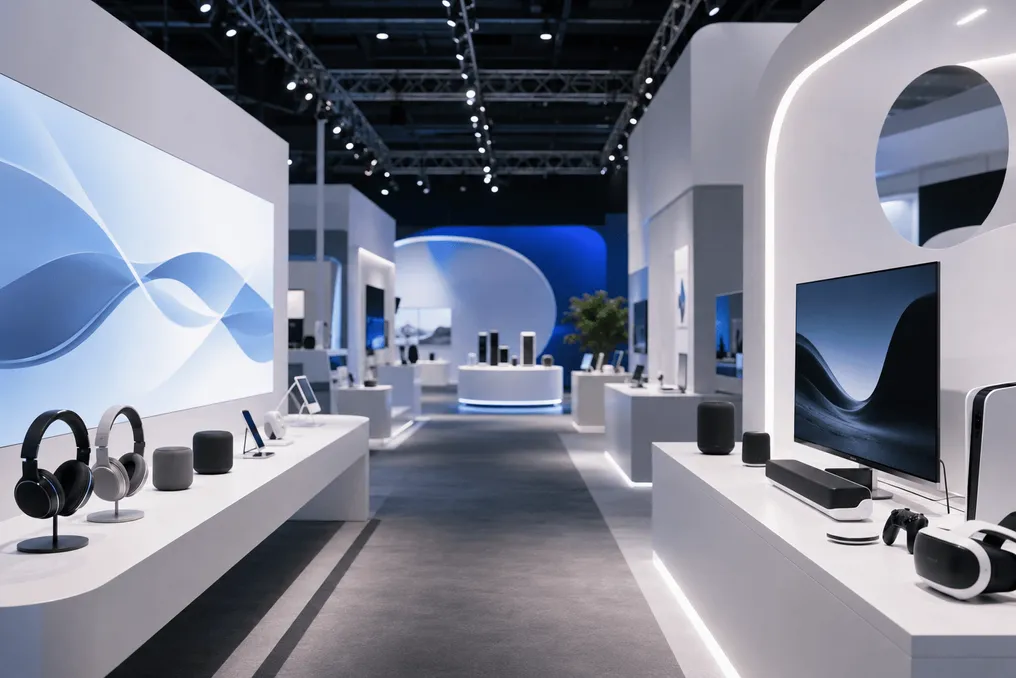
At IFA 2026, which opened in Berlin on September 4th under the slogan 'The future is here,' over 1900 exhibitors from 49 countries and regions participated. Chinese brands accounted for approximately half of the exhibition space. Among them, AliExpress Brand+ made an unusual debut by presenting a pavilion that did not promote AliExpress's own products but instead showcased a carefully selected set of nine Chinese artificial intelligence hardware brands.
This assortment included flying robots from Yingkan Zhiyi, AI desktop computers from GMKtec, cleaning devices from ILIFE, pool robots from Seauto, smart e-bikes from ENGWE, consumer 3D printers from ANYCUBIC, MagicLab robots, portable devices from ETENWOLF, and Qwen AI glasses running on Qwen models. Brand+ positions itself as support for marketing and distribution for long-term local brands, clearly contrasting this with white-label dumping strategies.
The company presented growth metrics, noting that by August 2026, brand sales penetration exceeded 50% in 11 countries, including Germany, France, and Poland. The total sales volume of the platform's AI hardware category increased by about double year-on-year from January to July. ILIFE is featured as a robot vacuum brand in Poland, where AliExpress's total sales almost tripled over the last year, and in Poland alone, annual turnover exceeded $10 million.
At IFA, Brand+ announced three improvements: the implementation of proven European marketing plans for the US, Korea, and Brazil markets; providing AI tools for small sellers concerning assortment, pricing, and multilingual content; and expanding local warehousing in the EU. In addition to Spain, France, and Poland, a German official warehouse is planned to open in mid-September, promising a reduction in logistics costs by approximately 10%. Furthermore, an exclusive strategic agreement between MagicLab and AliExpress in July led to Berlin becoming the first venue for joint international appearance under this agreement.
The main message is this: this is the next chapter of Chinese exports—a shift from OEM production and cheap white labels to a focus on technology, brands, and standards. Following disruptions with EU tax rules for cross-border platforms, AliExpress reported that its market in the EU continued to grow by 97% year-on-year in August, asserting that branding helped mitigate tariff turbulence. The real test will be the ability of this nine-brand group to convert stand traffic into a sustainable shelf presence, but the format itself demonstrates how platforms intend to organize equipment exports.